Pakistani musicians use folk songs and rap to raise climate change awareness
Advertisement
Read this article for free:
or
Already have an account? Log in here »
To continue reading, please subscribe:

Digital Subscription
One year of digital access for only $205*
- Enjoy unlimited reading on winnipegfreepress.com
- Read the E-Edition, our digital replica newspaper
- Access News Break, our award-winning app
- Play interactive puzzles
*First annual payment billed as $205.00 + GST for one year. This annual subscription will automatically renew at $233.00 + GST every 52 weeks (10% off the regular annual price of $259.35). Offer available to new and qualified returning subscribers only. Cancel any time.
To continue reading, please subscribe:
Add Free Press access to your Brandon Sun subscription for only an additional
$1 for the first 4 weeks*
- Enjoy unlimited reading on winnipegfreepress.com
- Read the E-Edition, our digital replica newspaper
- Access News Break, our award-winning app
- Play interactive puzzles
*Your next Brandon Sun subscription payment will increase by $1.00 and you will be charged $17.95 plus GST for four weeks. After four weeks, your payment will increase to $24.95 plus GST every four weeks.
Read unlimited articles for free today:
or
Already have an account? Log in here »
Hey there, time traveller!
This article was published 05/08/2025 (436 days ago), so information in it may no longer be current.
UMERKOT, Pakistan (AP) — Villagers hush when Pakistani folk musician Sham Bhai starts singing about climate change, her clear voice rising above the simple squat dwellings.
“We are the people of the south. The winds seem to be blowing from the north. The winds seem cold and warm. My heart is burned from seeing the collapsed houses in the rain. Oh, beloved, come home soon.”
Sham is from Sindh, the Pakistani province worst-hit three years ago by climate-worsened deluges that affected tens of millions of people nationwide and washed away homes, farmland and infrastructure.
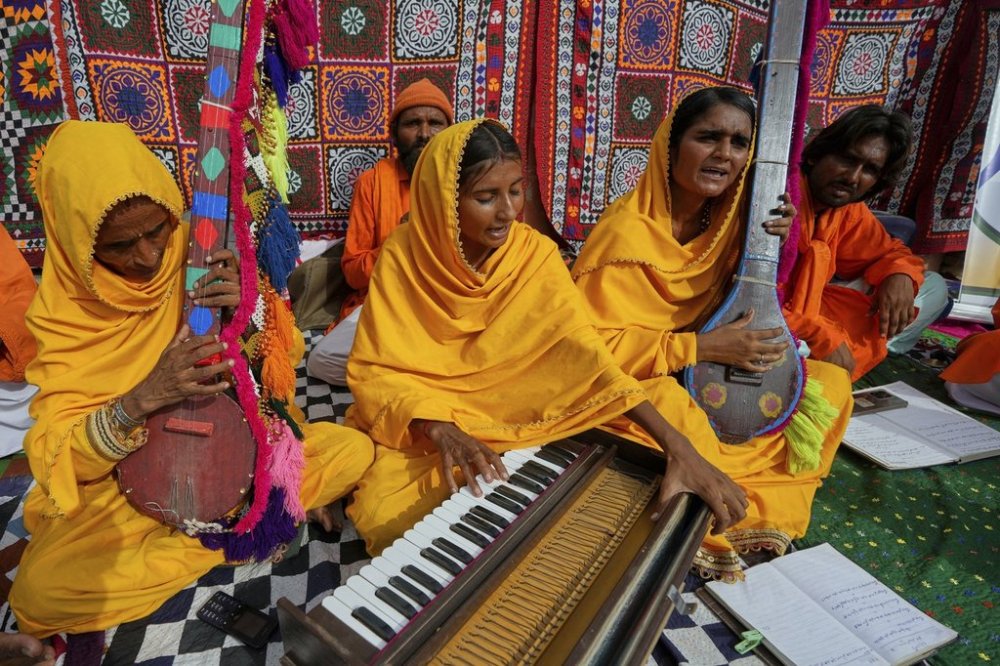
She has toured a dozen villages in Sindh during the past two years, teaching people about climate adaptation and resilience through song, a useful medium for sharing information in places where literacy is low and internet is scarce.
“When we give a message through song, it is easy to communicate to people because they understand it,” the 18-year-old singer told The Associated Press. She was performing in Umerkot district, singing in her native tongue and official provincial language, Sindhi, which is more likely to be spoken and understood in places like Umerkot than the official and national language of Pakistan, Urdu.
Sindh recorded more than 1,000 rain-related deaths in a few months in 2022. The damage remains visible. Broken roads and flattened houses that residents never rebuilt. Floods submerged swaths of Sham’s district, Tando Allahyar. News footage showed people wading through waist-deep water.
“The meaning of the song is that poor people’s homes built on mud are not strong,” Sham explains. “Women and children face hardship during the rains because they are vulnerable in the absence of men who go away to work. The women of the house call on their men to return because the weather is so bad.”
Poverty and illiteracy deepen people’s vulnerability
Alternating patches of parched and lush farmland flank the road to Umerkot. Dry and wet spells buffet the province, and local farmers have to adapt. They now focus on winter crops rather than summer ones because the rain is more predictable in the colder months.
“The monsoon season used to come on time, but now it starts late,” farmer Ghulam Mustafa Mahar said. “Sometimes there is no rain. All patterns are off-course due to climate change for the last five years.”
He and others have switched from crops to livestock to survive.
There is little infrastructure away from the center of the district. Children get excited seeing sedans crunch through the dust. The area is mostly poor and very hot.
Sindh’s literacy rate falls to 38% in rural areas. Sham said singing informs those who can’t learn about climate change because they can’t read.
Mindful of their audience, the three singers warm people up with popular tunes to catch their attention before launching into mournful tunes about the wind and rain, their lyrics inspired by writers and poets from Sindh.
“People are acting on our advice; they are planting trees and making their houses strong to face climate change,” said Sham. “ Women and children suffer a lot during bad conditions, which damage their homes.”
Women and girls of all ages can be seen working outdoors in Sindh, tending to crops or livestock. They gather food and water, along with wood for fuel. They are predominantly restricted to this type of work and other domestic chores because of gender norms and inequalities. When extreme weather strikes, they are often the first to suffer. One villager said when heavy rain battered homes in 2022, it crushed and killed whoever was inside, including children.
One woman is rapping for climate justice
People in rural areas have no idea what climate change is, said Urooj Fatima, an activist from the city of Jhuddo. Her stage name is Sindhi Chhokri, and she is known locally for campaigning on issues such as women’s rights.
But she has turned her attention to raising awareness about climate change since flooding devastated her village in 2022 and again in 2024.
“We can engage a lot of audiences through rap. If we go to a village and gather a community, there are a maximum of 50. But everyone listens to songs. Through rap, we can reach out to hundreds of thousands of people through our voice and our message.”
She said hip-hop isn’t common in Pakistan, but the genre resonates because of its tradition as an expression of life, hardship and struggle.
She has yet to finish her latest climate change rap, but wrote one in response to the 2022 flooding in neighboring Balochistan, the country’s poorest and least developed province, because she felt it wasn’t getting enough attention. She performed it at festivals in Pakistan and promoted it across her social media accounts. Officials at the time said more help was needed from the central government for people to rebuild their lives.
“There are potholes on the road; the roads are ruined,” raps Urooj. “I am telling the truth. Will your anger rain down on me? Where was the Balochistan government when the floods came? My pen thirsts for justice. Now they’ve succeeded, these thieving rulers. This isn’t a rap song, this is a revolution.”
She and her sister Khanzadi campaign on the ground and social media, protesting, visiting villages, and planting thousands of trees. She wants the Sindh government to take climate change awareness seriously by providing information and education to those who need it the most, people living in rural areas.
“This happens every year,” said Urooj, referring to the floods. “Climate change affects a person’s whole life. Their whole life becomes a disaster.”
She cites the disproportionate and specific impact of climate change on women and girls, the problems they experience with displacement, education, hygiene, and nutrition, attributing these to entrenched gender discrimination.
“For women, there are no opportunities or facilities. And then, if a flood comes from above, they face more difficulties.”
She elicits controversy in rural areas. Half the feedback she receives is negative. She is undeterred from speaking out on social taboos and injustice.
“Rap is a powerful platform. If our rap reaches just a few people, then this is a very good achievement. We will not let our voices be suppressed. We will always raise our voices high.”
___
The Associated Press’ climate and environmental coverage receives financial support from multiple private foundations. AP is solely responsible for all content. Find AP’s standards for working with philanthropies, a list of supporters and funded coverage areas at AP.org.