RFK Jr.’s war on mRNA vaccines breeds distrust, threatens Canada’s access to development: experts
Advertisement
Read this article for free:
or
Already have an account? Log in here »
To continue reading, please subscribe:

Digital Subscription
One year of digital access for only $205*
- Enjoy unlimited reading on winnipegfreepress.com
- Read the E-Edition, our digital replica newspaper
- Access News Break, our award-winning app
- Play interactive puzzles
*First annual payment billed as $205.00 + GST for one year. This annual subscription will automatically renew at $233.00 + GST every 52 weeks (10% off the regular annual price of $259.35). Offer available to new and qualified returning subscribers only. Cancel any time.
To continue reading, please subscribe:
Add Free Press access to your Brandon Sun subscription for only an additional
$1 for the first 4 weeks*
- Enjoy unlimited reading on winnipegfreepress.com
- Read the E-Edition, our digital replica newspaper
- Access News Break, our award-winning app
- Play interactive puzzles
*Your next Brandon Sun subscription payment will increase by $1.00 and you will be charged $17.95 plus GST for four weeks. After four weeks, your payment will increase to $24.95 plus GST every four weeks.
Read unlimited articles for free today:
or
Already have an account? Log in here »
Hey there, time traveller!
This article was published 08/08/2025 (372 days ago), so information in it may no longer be current.
TORONTO – Canadian doctors and scientists say Robert F. Kennedy Jr.’s defunding of mRNA vaccine research and development projects will have negative health effects in Canada and around the world.
“I think that Canadians do need to understand that this and a lot of the changes that Kennedy is making to vaccination policy in particular are definitely going to affect Canadians,” said Angela Rasmussen, a virologist at the University of Saskatchewan’s Vaccine and Infectious Disease Organization.
Unlike other vaccines, mRNA vaccines can be made very quickly. They can also be easily modified to fight new viruses and adapt to changing strains — something that we saw as new variants emerged during the COVID-19 pandemic, Rasmussen said.
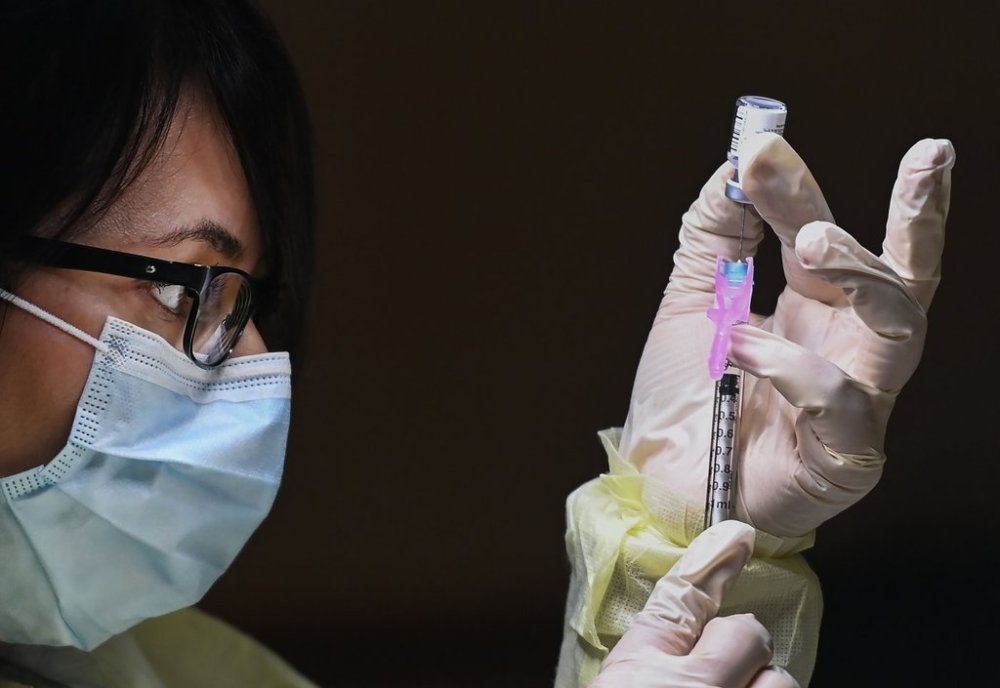
That ability is critical as the world prepares for H5N1 bird flu as a possible next pandemic, she said, but the removal of the enormous funding power of the U.S. puts global mRNA vaccine development at risk.
“We will be delayed trying to make any vaccine should another virus emerge, including H5N1, which is one of my biggest concerns right now.”
On Aug. 5, Kennedy announced the U.S. Department of Health and Human Services was halting funding for 22 mRNA vaccine projects worth nearly US$500 million. It was his latest move in a series of events that demonstrate the longtime anti-vaccine advocate’s “hostility” toward mRNA vaccines as he falsely claims that they aren’t safe and are ineffective, Rasmussen said.
In May, Kennedy cancelled funding for Moderna’s development of an mRNA pandemic influenza vaccine. A spokesperson for Moderna Canada said in an email Thursday that the company is “continuing to explore alternatives for advancing our H5N1 program, consistent with our global commitment to pandemic preparedness.”
Canada Research Chair in Viral Pandemics Matthew Miller says the U.S. is one of the largest funders of medical research in the world and defunding mRNA vaccine research will likely stall development and threaten Canada’s access to vital vaccine technology.
“We have an incredible amount of real-world safety data as it pertains to mRNA vaccines. The notion that this is not an extremely safe technology, given the billions of doses of these vaccines that have been administered in the context of COVID-19, is disjointed from reality,” said Miller, who is director of the Michael G. DeGroote Institute for Infectious Disease Research at McMaster University in Hamilton.
Miller said the spread of disinformation about mRNA vaccines by the U.S. secretary of health and human services can cause “significant damage” on both sides of the border.
“The public expects government to be trustworthy, and to have their best interests in mind. Therefore, policies that appear to legitimize misinformation can create significant confusion and foster additional distrust amongst the public,” he said.
“Given the ubiquity of U.S. news penetration into Canada, it would not be surprising to see the consequences of these U.S. decisions in Canada as well.”
Calgary pediatric infectious diseases specialist Dr. Cora Constantinescu said Kennedy’s actions will cause a “vaccine confidence crisis.”
It “gives more fodder to the anti-vaccine activism movement,” said Constantinescu, who works with vaccine-hesitant patients and families.
She emphasized that mRNA technology is not only being used in infectious disease vaccines, but has also shown a great deal of promise in cancer treatment.
Kennedy’s disinformation can also taint people’s views of non-mRNA vaccines — something that’s especially dangerous right now when both Canada and the U.S. are seeing outbreaks of vaccine-preventable diseases like measles, she said.
In the news release announcing Kennedy’s defunding of mRNA research projects, he claimed to support “safe, effective vaccines for every American who wants them.”
But Canadian experts say that’s not true, given the proven effectiveness of mRNA vaccines in preventing severe illness and death from COVID-19, as well as false claims he has made in the past about routine childhood vaccinations.
They say his rejection of mRNA vaccines is just one step in a campaign to move away from vaccination overall.
“I think all this is a pretty orchestrated anti-vaccine movement agenda,” Constantinescu said.
Rasmussen said the defunding of mRNA vaccines is part of a “multi-pronged attack on vaccines in general,” noting Kennedy’s firing of all the previous members of the Advisory Committee on Immunization Practices — which advises the Centers for Disease Control and Prevention — in June and replacing them with several members who have a history of anti-vaccine advocacy.
Both Pfizer Canada and Moderna Canada told The Canadian Press on Thursday that the U.S. backing away from mRNA vaccines should not affect availability of their updated COVID-19 vaccines in Canada this fall.
When asked about how the Canadian government would respond to the U.S. cancellation of mRNA vaccine projects, the Public Health Agency of Canada said “the COVID-19 pandemic has reinforced the importance of strengthening and maintaining domestic capacity to rapidly develop and produce vaccines at a sufficient scale to protect all people in Canada against pandemics and other health emergencies.”
The federal government has an agreement with Moderna for domestic research and development and manufacturing, including a facility in Laval, Que.

However, its current “pandemic influenza readiness agreements” are with GSK as the “primary domestic vaccine supplier” and two secondary agreements with Sanofi and Seqirus, PHAC’s email said.
But none of those are mRNA vaccines, a PHAC spokesperson confirmed on Friday morning.
Non-mRNA vaccines would take much longer to scale up for large populations if they’re needed in a pandemic, Rasmussen said.
This report by The Canadian Press was first published Aug. 8, 2025.
Canadian Press health coverage receives support through a partnership with the Canadian Medical Association. CP is solely responsible for this content.

Advertisement Advertise With Us
Advertisement Advertise With Us