Duty-free no more: Parcels worth under $800 no longer qualify for a US tariff exemption
Advertisement
Read this article for free:
or
Already have an account? Log in here »
To continue reading, please subscribe:

Digital Subscription
One year of digital access for only $205*
- Enjoy unlimited reading on winnipegfreepress.com
- Read the E-Edition, our digital replica newspaper
- Access News Break, our award-winning app
- Play interactive puzzles
*First annual payment billed as $205.00 + GST for one year. This annual subscription will automatically renew at $233.00 + GST every 52 weeks (10% off the regular annual price of $259.35). Offer available to new and qualified returning subscribers only. Cancel any time.
To continue reading, please subscribe:
Add Free Press access to your Brandon Sun subscription for only an additional
$1 for the first 4 weeks*
- Enjoy unlimited reading on winnipegfreepress.com
- Read the E-Edition, our digital replica newspaper
- Access News Break, our award-winning app
- Play interactive puzzles
*Your next Brandon Sun subscription payment will increase by $1.00 and you will be charged $17.95 plus GST for four weeks. After four weeks, your payment will increase to $24.95 plus GST every four weeks.
Read unlimited articles for free today:
or
Already have an account? Log in here »
Hey there, time traveller!
This article was published 26/08/2025 (415 days ago), so information in it may no longer be current.
NEW YORK (AP) — Low-value imports lost their duty-free status in the United States on Friday as part of President Donald Trump’s agenda for making the nation less dependent on foreign goods and resetting global trade with tariffs.
An executive order eliminated a widely used customs exemption for international shipments worth $800 or less as of 12:01 a.m. Eastern Daylight Time, nearly two years earlier than the deadline set in the tax cuts and spending bill approved by Congress.
Saying they received too little time and information to start collecting duties on small parcels, the national postal services of more than 30 countries have temporarily suspended sending some or most U.S.-bound packages. They include the mail systems of Australia, New Zealand, India, Japan, Mexico, Thailand and almost every country in Europe.
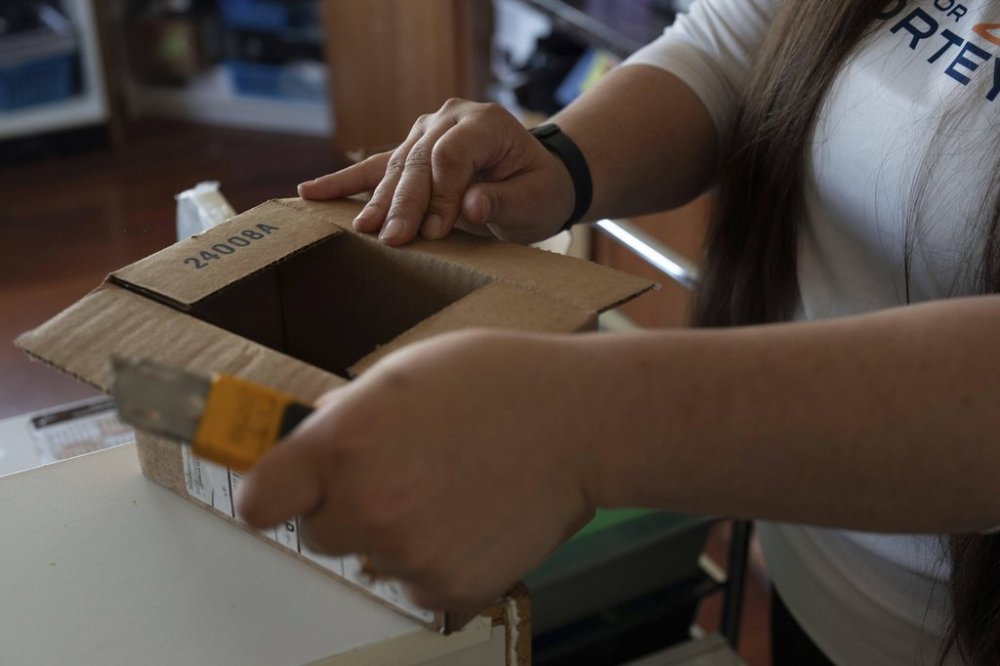
Purchases that previously entered the U.S. without needing to clear customs will require vetting and be subject to their origin country’s applicable tariff rate, which can range from 10% to 50%. For the next six months, mail carriers can instead apply a flat duty of $80 to $200 to packages sent through the global postal network. After that, both mailed parcels and those handled by private courier services will be subject to the value-based tariff rate.
Although the president previously ended the “de minimis” rule for inexpensive items sent from China and Hong Kong, having to pay import taxes on small parcels from everywhere else likely will be a big change for some small businesses and online shoppers. In addition to bringing new costs, the withdrawal of duty-free treatment is likely to delay orders, according to logistics experts.
Exemption created in 1938 for $1 imports
The Trump administration says the exemption has become a loophole that foreign businesses exploit to evade tariffs and criminals use to get drugs, counterfeit products and other contraband into the U.S. Former President Joe Biden and members of Congress also discussed the issue.
Other countries have similar exemptions, but the threshold is usually lower. For example, 150 euros ($175) is the value limit in the 20 European Union countries that use the euro as their official currency. The U.K. allows foreign businesses to send parcels worth up to 135 pounds ($182) without incurring tariff charges.
In the U.S., the “de minimis” — Latin for lacking significance or importance — exemption started in 1938 as a way to save the federal government the time and expense of collecting duties on imported goods with a retail value of $1 or less. U.S. lawmakers eventually increased the eligibility cutoff to $5 in 1990, to $200 in 1993 and to $800 in 2015, according to the Congressional Research Service.
Since then, the number of shipments claiming de minimis treatment has exploded. A total of 1.36 billion packages with a combined value of $64.6 billion reached the U.S. last year, compared to 134 million packages sent under the exemption in 2015, the U.S. Customs and Border Protection agency reported.
About 60% of the 2024 shipments came from China and Hong Kong, according to an analysis logistics firm Flexport prepared based on U.S. government data. Multiple countries and regions accounted for the remainder, including Canada, Mexico, the European Union, India and Vietnam.
Boutique owner anticipates higher costs for European apparel
Proponents of limiting the exemption argue that it has served as a way for China-founded retail platforms like Temu and Shein to flood the U.S. with low-priced goods. The National Council of Textile Organizations said the move would help close a “backdoor pipeline for cheap, subsidized, and often illegal, toxic and unethical imports.” But some smaller American companies that rely on imported products and materials benefited from the exemption too.
Kristin Trainor is worried the end of de minimis will also mean the end of Diesel and Lulu’s, her 3-year-old boutique in Avon, Connecticut. Over 70% of the women’s clothes and accessories she stocks comes from small fashion houses in France, Italy and Spain. Trainor places small batch orders each week that fall under the $800 threshold.
“Our business model is to provide casual chic and unique clothes at affordable prices,” she said. “The added customs and duty charges that will go into effect on Aug. 29 will eliminate that affordability. ”
Trainor said she was looking to replace her European vendors with ones based in the U.S. But her bestselling product categories, such as apparel made of Italian linen, come from other countries. She estimates a simple linen sundress that cost $30 wholesale at the beginning of the year will rise to $43 next month.
After a corporate career, Trainor opened the store to have more time with her 9-year-old son and her 91-year old father. Raising the boutique’s prices to absorb part of the import charges would help offset higher shipping and logistics costs, but Trainor worries her customers will balk at higher prices.
“I have not made any official announcements to my customers just yet, although they have started to ask if I will stay open as they understand the economic impacts that are occurring,” she said. “At this point, I am leaning more and more towards closing the boutique, sadly.”
Trade agreement doesn’t shield products from Mexico and Canada
Ken Huening started CoverSeal, his business making and selling protective covers for cars, motorcycles, grills and patio furniture, in 2020. The company is based in Los Gatos, California, and the covers are manufactured in Mexico and China. When a customer places an order, it ships from Mexico.
Although a trade agreement that took effect in 2020 has made most goods from Mexico and Canada exempt from country-specific U.S. tariffs, the withdrawal of the de minimis rule applies to all countries.

Huening said he’ll either have to raise prices or end free shipping now that his products will be taxed when they are sent from Mexico to U.S. customers. He’s looked at setting up a U.S. production and logistics network but says domestic sewing facilities and textile manufacturers do not exist for the engineered fabric used in CoverSeal’s products.
“We are often asked why we don’t just establish a U.S. supply chain,” he said. “It is not possible in the short term. By the time the infrastructure is established, many companies and small businesses will be out of business.”
Shannen Knight imports hard-to-find sports goggles and glasses as the owner of A Sight For Sport Eyes, her online store and shop in West Linn, Oregon. She routinely received shipments from the U.K., the Netherlands and Italy that fell under the de minimis dollar cutoff.
Knight estimated that she would need to raise the retail price of the rugby goggles she gets from Italy by 50%. It took the International Rugby Board two years of testing to approve the Italian-made goggles, a specialty item without strong prospects for stateside production, she said.
“There are products that it just makes sense to be made internationally, where there is the stronger demand for them, but there still is some demand for in the U.S.,” Knight said.