LSD shows promise for reducing anxiety in drugmaker’s midstage study
Advertisement
Read this article for free:
or
Already have an account? Log in here »
To continue reading, please subscribe:

Digital Subscription
One year of digital access for only $205*
- Enjoy unlimited reading on winnipegfreepress.com
- Read the E-Edition, our digital replica newspaper
- Access News Break, our award-winning app
- Play interactive puzzles
*First annual payment billed as $205.00 + GST for one year. This annual subscription will automatically renew at $233.00 + GST every 52 weeks (10% off the regular annual price of $259.35). Offer available to new and qualified returning subscribers only. Cancel any time.
To continue reading, please subscribe:
Add Free Press access to your Brandon Sun subscription for only an additional
$1 for the first 4 weeks*
- Enjoy unlimited reading on winnipegfreepress.com
- Read the E-Edition, our digital replica newspaper
- Access News Break, our award-winning app
- Play interactive puzzles
*Your next Brandon Sun subscription payment will increase by $1.00 and you will be charged $17.95 plus GST for four weeks. After four weeks, your payment will increase to $24.95 plus GST every four weeks.
Read unlimited articles for free today:
or
Already have an account? Log in here »
Hey there, time traveller!
This article was published 04/09/2025 (359 days ago), so information in it may no longer be current.
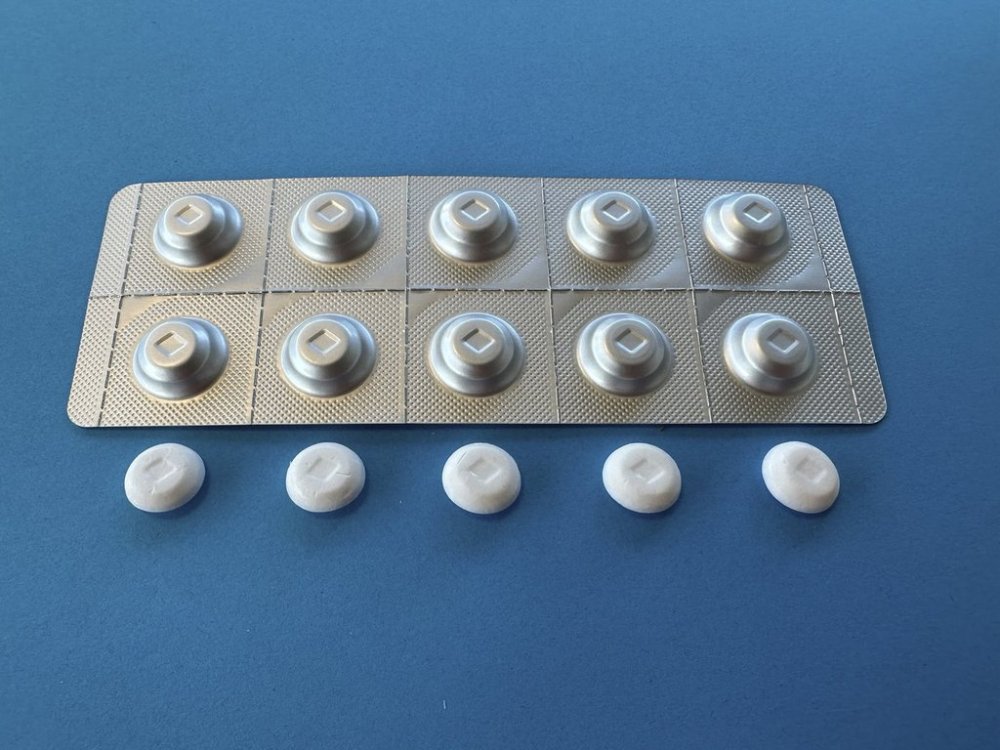
WASHINGTON (AP) — LSD reduced symptoms of anxiety in a midstage study published Thursday, paving the way for additional testing and possible medical approval of a psychedelic drug that has been banned in the U.S. for more than a half century.
The results from drugmaker Mindmed tested several doses of LSD in patients with moderate-to-severe generalized anxiety disorder, with the benefits lasting as long as three months. The company plans to conduct follow-up studies to confirm the results and then apply for Food and Drug Administration approval.
Beginning in the 1950s, researchers published a flurry of papers exploring LSD’s therapeutic uses, though most of them don’t meet modern standards.
“I see this paper as a clear step in the direction of reviving that old research, applying our modern standards and determining what are the real costs and benefits of these compounds,” said Frederick Barrett, who directs Johns Hopkins University’s psychedelic center and was not involved in the research.
Psychedelic research is rebounding
Psychedelics are in the midst of a popular and scientific comeback, with conferences, documentaries, books and medical journals exploring their potential for conditions like depression, anxiety and post-traumatic stress disorder.
The FDA has designated psilocybin, MDMA and now LSD as potential “breakthrough” therapies based on early results.
Still, the drugs have not had a glide path to the market.
Last year, the FDA rejected MDMA — also known as ecstasy — as a treatment for PTSD, citing flawed study methods, potential research bias and other issues.
The new LSD study, published by the Journal of the American Medical Association, addresses some of those problems.
MDMA, like many other psychedelics, was tested in combination with hours of talk therapy by trained health professionals. That approach proved problematic for FDA reviewers, who said it was difficult to separate the benefits of the drug from those of therapy.
The LSD study took a simpler approach: Patients got a single dose of LSD — under professional supervision, but without therapy — and then were followed for about three months.
The paper does not detail how patients were prepared for the experience or what sort of follow-up they received, which is crucial to understanding the research, Barrett noted.
“In many cases people can have such powerful, subjective experiences that they may need to talk to a therapist to help them make sense of it,” he said.
Anxiety eased but questions remain
For the study, researchers measured anxiety symptoms in nearly 200 patients who randomly received one of four doses of LSD or a placebo. The main aim was to find the optimal dose of the drug, which can cause intense visual hallucinations and occasionally feelings of panic or paranoia.
At four weeks, patients receiving the two highest doses had significantly lower anxiety scores than those who received placebo or lower doses. After 12 weeks, 65% of patients taking the most effective LSD dose — 100 micrograms — continued to show benefits and nearly 50% were deemed to be in remission. The most common side effects included hallucinations, nausea and headaches.
Patients who got dummy pills also improved — a common phenomenon in psychedelic and psychiatric studies — but their changes were less than half the size those getting the real drug.
The research was not immune to problems seen in similar studies.
Most patients were able to correctly guess whether they’d received LSD or a dummy pill, undercutting the “blinded” approach that’s considered critical to objectively establishing the benefits of a new medicine. In addition, a significant portion of patients in both the placebo and treatment groups dropped out early, narrowing the final data set.
It also wasn’t clear how long patients might continue to benefit.
Mindmed is conducting two large, late-stage trials that will track patients over a longer period of time and, if successful, be submitted for FDA approval.
“It’s possible that some people may need retreatment,” said Dr. Maurizio Fava of Mass General Brigham Hospital, the study’s lead author and an adviser to Mindmed. “How many retreatments, we don’t know yet, but the long-lasting effect is quite significant.”
Interest from the Trump administration
Health Secretary Robert F. Kennedy Jr. and other administration officials have expressed interest in psychedelic therapy, suggesting it could receive fast-track review for veterans and others suffering psychological wounds.
Generalized anxiety disorder is among the most common mental disorders, affecting nearly 3% of U.S. adults, according to the National Institutes of Health. Current treatments include psychotherapy, antidepressants and anti-anxiety drugs like benzodiazepines.
The possibility of using LSD as a medical treatment isn’t new.
In the 1950s and 1960s more than 1,000 papers were published documenting LSD’s use treating alcohol addiction, depression and other conditions. But a federal backlash was in full swing by the late 1960s, when psychedelics became linked to counterculture figures like Timothy Leary, the ex-Harvard professor who famously promoted the drugs as a means to “turn on, tune in and dropout.”
A 1970 law classifying LSD and other psychedelics as Schedule 1 drugs — without any medical use and high potential for abuse — essentially halted U.S. research.
When a handful of nonprofits begin reassessing the drugs in the 1980s and 1990s, they focused on lesser-known hallucinogens like MDMA and psilocybin, the main ingredient in magic mushrooms, to avoid the historic controversies surrounding LSD.
“LSD was right there in front of everybody, but Mindmed is the first company that actually decided to evaluate it,” Fava said.
___
This story has been corrected to show that the reported effective dose of LSD is 100 micrograms, not 100 milligrams.
___
The Associated Press Health and Science Department receives support from the Howard Hughes Medical Institute’s Department of Science Education and the Robert Wood Johnson Foundation. The AP is solely responsible for all content.