Mount Dave-Lorraine? Naming effort in Rockies faces uphill battle
Advertisement
Read this article for free:
or
Already have an account? Log in here »
To continue reading, please subscribe:

Digital Subscription
One year of digital access for only $205*
- Enjoy unlimited reading on winnipegfreepress.com
- Read the E-Edition, our digital replica newspaper
- Access News Break, our award-winning app
- Play interactive puzzles
*First annual payment billed as $205.00 + GST for one year. This annual subscription will automatically renew at $233.00 + GST every 52 weeks (10% off the regular annual price of $259.35). Offer available to new and qualified returning subscribers only. Cancel any time.
To continue reading, please subscribe:
Add Free Press access to your Brandon Sun subscription for only an additional
$1 for the first 4 weeks*
- Enjoy unlimited reading on winnipegfreepress.com
- Read the E-Edition, our digital replica newspaper
- Access News Break, our award-winning app
- Play interactive puzzles
*Your next Brandon Sun subscription payment will increase by $1.00 and you will be charged $17.95 plus GST for four weeks. After four weeks, your payment will increase to $24.95 plus GST every four weeks.
Read unlimited articles for free today:
or
Already have an account? Log in here »
Hey there, time traveller!
This article was published 07/09/2025 (374 days ago), so information in it may no longer be current.
CALGARY – Naming mountains used to be a hobby for David Jones.
Through the 1970s, the passionate climber and guidebook author would sit atop peaks in Alberta and B.C.’s mountain range, often with a climbing partner, and they would write down made-up names, all to be sent to the government to have them officially recognized.
“That’s Hitchhiker, because there’s a pick with a little thumb on the back. And that’s Whiteface, because there’s a big white scar on it,” Jones offers as examples.
“We just scribbled the names on a map.”
The names were usually accepted, says the 77-year-old, but times and standards have changed.
A seasonal worker in Jasper National Park is attempting to name a little-known mountain there after his parents, generating chatter among mountaineers about which renaming efforts should be taken seriously and why.
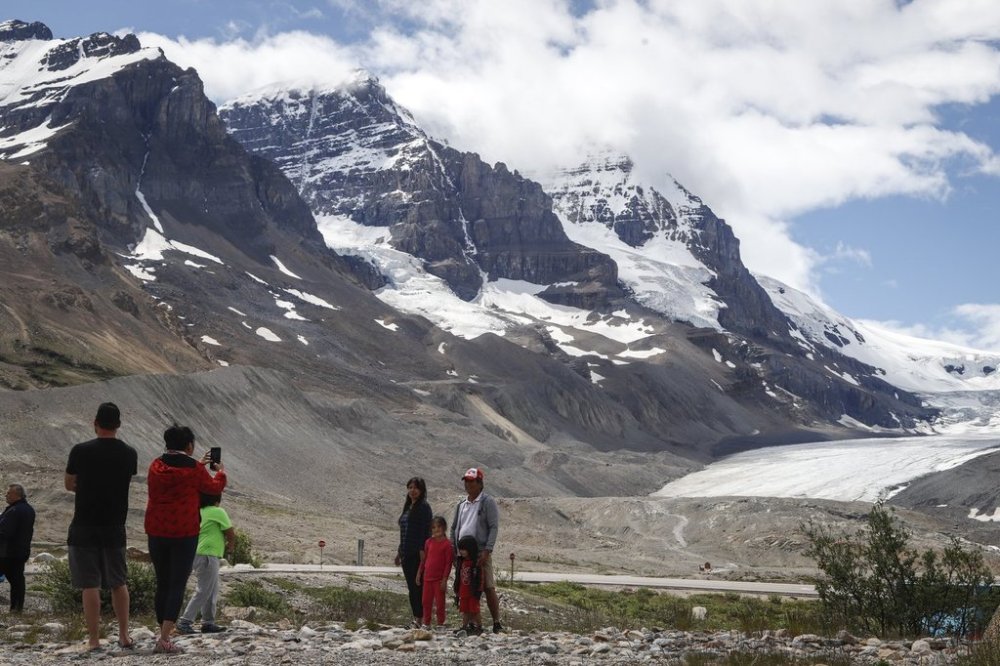
Those discussions started after a news story about Andy Everett’s ascent of a mountain near the Athabasca Glacier known as Nigel SE3.
The tour bus driver at the Columbia Icefields, who is from the United Kingdom, had eyed the peak for months thinking it had been untouched.
But at the top, Everett discovered a rusted jar containing paper with written evidence that the mountain had been climbed as early as 1966 and on several occasions years later.
Even so, Everett submitted an application to Parks Canada in August to rename the mountain after his mother and father living in the U.K.
“I’m a bit curious to see what happens,” Everett says.
His effort will likely end up being solely aspirational.
Geographic landmarks can’t be named after the living. In Alberta, the individual must have died five years before a nomination is submitted.
The name’s origin must also hold significance in the province, says Ronald Kelland, Alberta’s historic places research officer, a longtime history buff and the bureaucrat responsible for recommending new names for landmarks to the province’s minister of culture.
From there, Kelland says he tries finding out whether the name is accepted by local Indigenous people and the broader community near the landmark.
He also needs to be sure the person made some form of contribution to Alberta. (In the early 2010s, Kelland supported naming a small northern Alberta lake after a family who homesteaded the area in the 1930s. Several members went on to serve in the Second World War.)
As it stands, Kelland says, the majority of mountains in Alberta and B.C. are nameless — at least officially.
But that’s a good thing, he says. He would prefer not to rush to name every peak.
“Not every feature, not every mountain, not every creek, not every lake necessarily needs to have a name,” he says. “Future generations should also have the ability to put their mark on the landscape.”
More recently, Kelland has been involved in returning names of peaks in the spirit of reconciliation.
In 2021, an offensive name for a feature on Canmore’s Mount Charles Stewart was formally recognized with its original name: Anu Katha Ipa, or Bald Eagle Peak.
Kelland says the process took years of consultations with the Stoney Nakoda and Blackfoot First Nations, and the final naming recommendation was his because no Indigenous names were recommended by the public.
When it comes to Everett’s campaign to rename Nigel SE3, Kelland says he’s reluctant to dip into a decision that’s not his but he’d be surprised to see Everett’s application go the distance.
“To name this mountain after his parents, unless his parents have made that kind of cultural contribution, I suspect that it would not be received favourably,” Kelland says.
That’s not to say Everett’s desired name won’t catch.
The proposed Mount Dave-Lorraine has caught a foothold among the small group of seasonal workers at the Columbia Icefields Discovery Centre, Everett says.
In that way, his effort follows in the footsteps of mountaineers before him.
Peter Amann, a mountaineer who climbed Nigel SE3 and reached out to Everett after hearing of his naming effort, says climbers have been informally naming unidentified peaks for decades.
One trip, Amann and some friends named a mountain Bob Hope, because they thought it looked like the famous comedian.
“We’d just make up names. They were never meant to be official,” he says.
Amann remembers being a young climber, thinking he’d discovered an unnamed peak and later being told off by a veteran mountaineer that he hadn’t. In that way, he’s sympathetic to Everett’s endeavour.
“I thought it was kind of cute in a way that you get these young kids who come up for the summer, and they’re here for a few years, and suddenly they want to rename all the peaks,” he says.
“I don’t take that negatively. I just think it’s a learning experience.”
Everett’s attempt may end up taking the classic, informal route and become a name remembered by a small group of people for a short period of time.
He says he’ll be pleased if the peak is given a title even without his parents’ names.
“For me, I’ll be happy if it gets any name. It’s a cool mountain.”
This report by The Canadian Press was first published Sept. 7, 2025.