Bolivian fish tale, Manitoba hook Winnipeg-based organization injects federal funds into innovative, economically transformative, women-powered business in South America
Read this article for free:
or
Already have an account? Log in here »
To continue reading, please subscribe:

Digital Subscription
One year of digital access for only $205*
- Enjoy unlimited reading on winnipegfreepress.com
- Read the E-Edition, our digital replica newspaper
- Access News Break, our award-winning app
- Play interactive puzzles
*First annual payment billed as $205.00 + GST for one year. This annual subscription will automatically renew at $233.00 + GST every 52 weeks (10% off the regular annual price of $259.35). Offer available to new and qualified returning subscribers only. Cancel any time.
To continue reading, please subscribe:
Add Free Press access to your Brandon Sun subscription for only an additional
$1 for the first 4 weeks*
- Enjoy unlimited reading on winnipegfreepress.com
- Read the E-Edition, our digital replica newspaper
- Access News Break, our award-winning app
- Play interactive puzzles
*Your next Brandon Sun subscription payment will increase by $1.00 and you will be charged $17.95 plus GST for four weeks. After four weeks, your payment will increase to $24.95 plus GST every four weeks.
Read unlimited articles for free today:
or
Already have an account? Log in here »
Hey there, time traveller!
This article was published 10/10/2025 (356 days ago), so information in it may no longer be current.
YAPACANI, Bolivia — With practised grace, Antonia Olpo slides down the bank of the long, shallow pond and plunges fully clothed into the muddy water.
On the grass above, other women and their male helpers unfurl the net, stretching it across the pond from edge to edge, and let it sink below the surface.
It’s late September, spring in the Southern Hemisphere, and already the heat over Bolivia’s lowland plains is relentless.
The sun glares down on the pond, and on the rugged dirt roads beyond, and on the rice fields where bent-backed farmers toil. It beats on the nearby vestiges of green rainforests, where tiny yellow parakeets perform serenades from the palms.
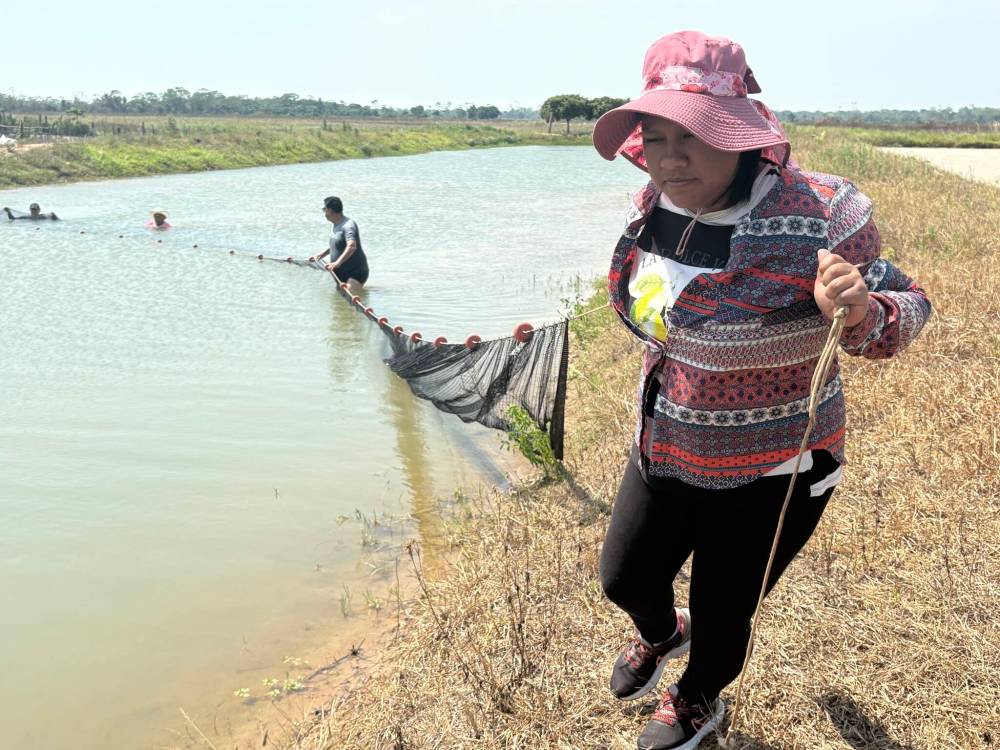
In the water, Olpo grabs the net and slowly pushes forward, wading deeper until she’s submerged up to her neck.
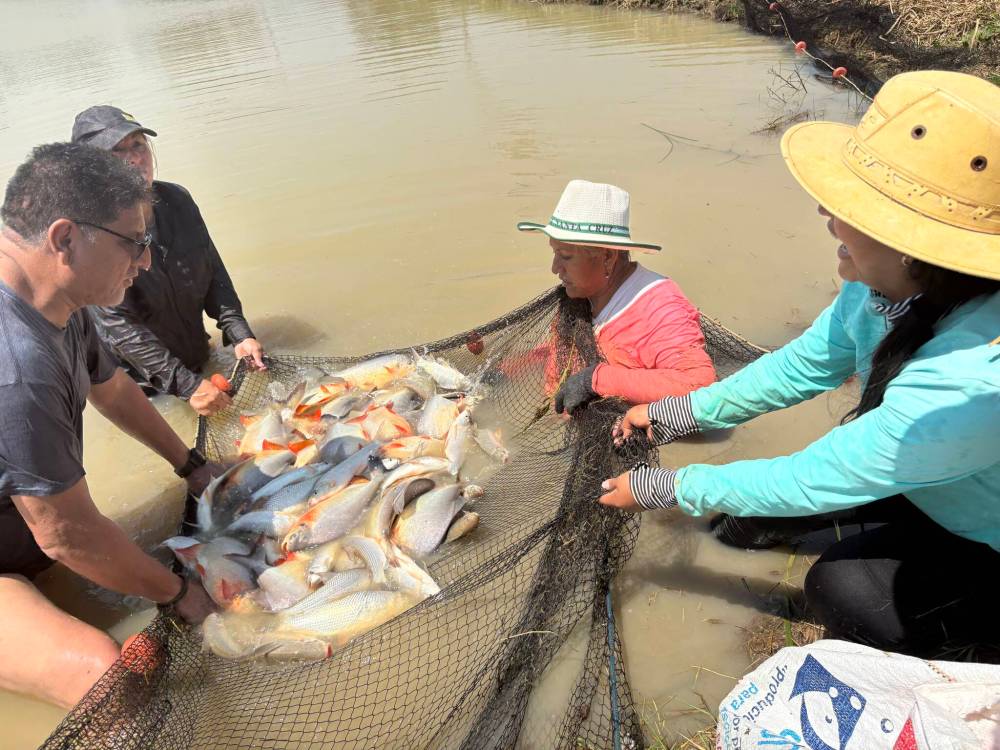
Together, the women and their helpers drag the net across the pond, grunting and laughing as they slip in the mud. As the loop of the net closes, the water inside begins to froth.
“Guantes, guantes,” Olpo shouts, in Spanish — “gloves, gloves.”
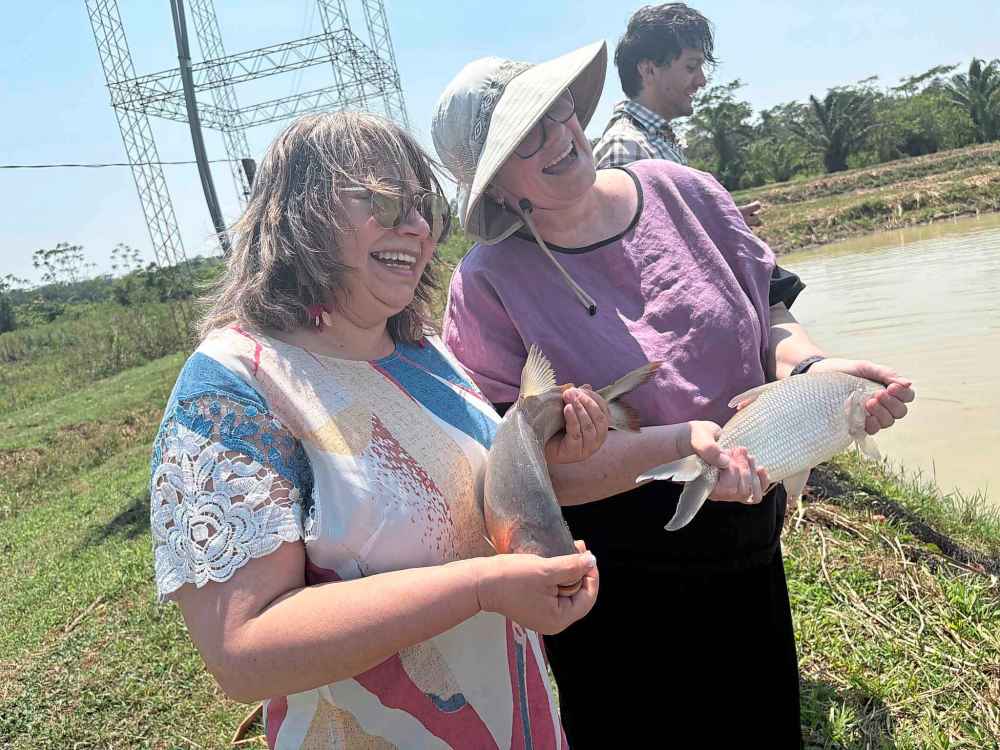
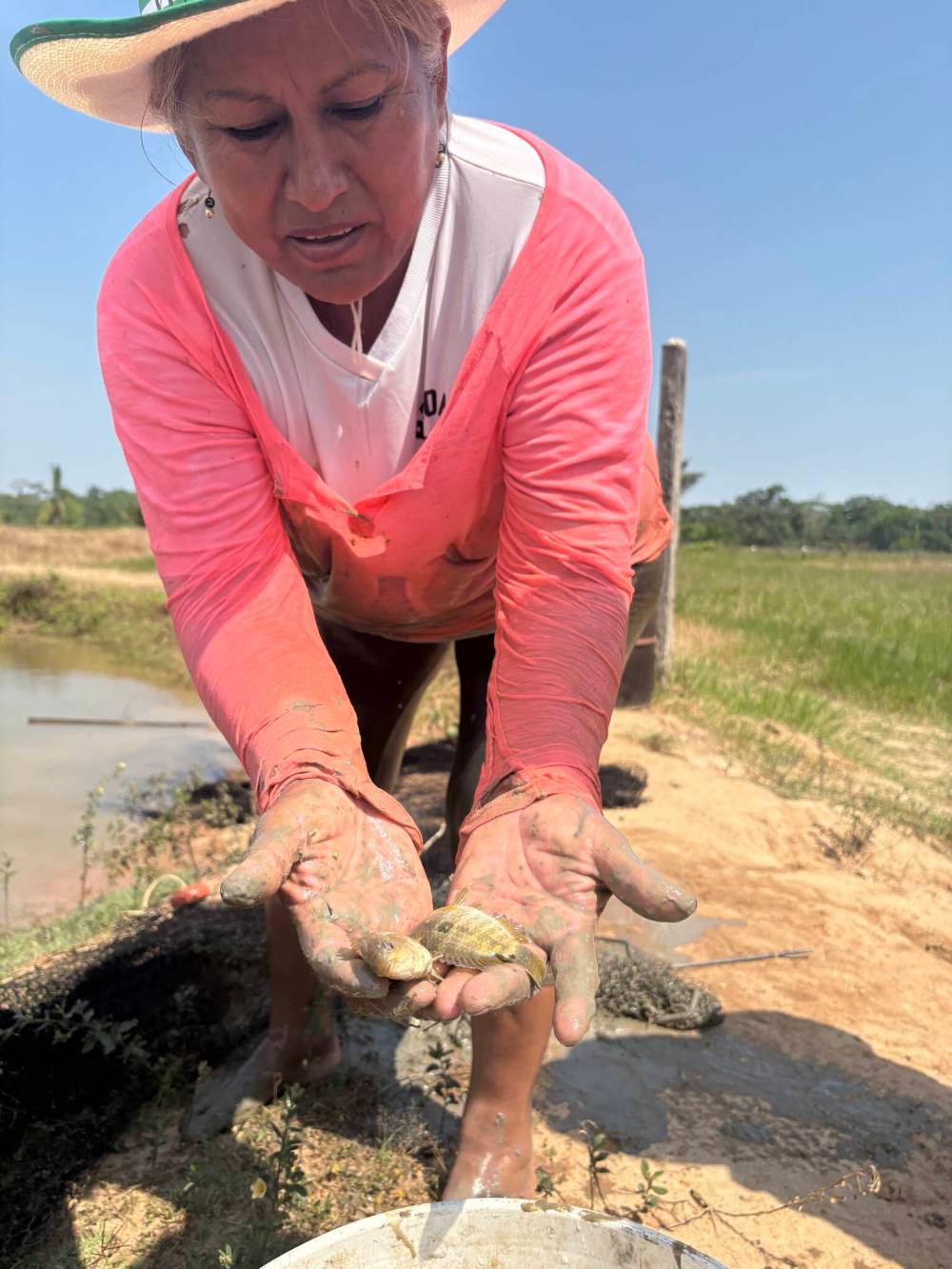
Someone on the banks tosses her a pair. She reaches into the churning water and scoops up an armful of flailing fish: heaps of broad, silver-grey pacu and tambaqui, and the chubby little species Bolivians call sardinas. The women grin as they press the wriggling fish into their Canadian visitors’ hands.
Today, these fish will be lunch, grilled over the fire and served with bowls of spicy salsa and chunks of starchy cassava root.
Yet to Olpo and her colleagues, the catch represents more than a meal. It is the culmination of an economic transformation in this region, one driven by local women, supported by Canadian funding — and, now, linked to Manitoba.
From the shore, Janice Hamilton had watched the women fish. It was the first time the executive director of the Manitoba Council for International Cooperation had visited Bolivia, and she was struck to see how seamlessly Olpo and her colleagues worked together, how eager they were to dive in, how proud they were of their work.
To Hamilton and her Canadian colleagues, that pride was proof they’d come to the right place.
It had been nearly 10 months since MCIC had begun to fund an innovative project, spearheaded by Bolivian women and guided, in part, by a team of local experts and academics from Canada, including a professor from Royal Roads University in Victoria, B.C.
The project’s goal: to help these women try a bold new business idea, one that could transform their families’ lives.
“I think Manitobans understand that when there’s a flood, or a big storm, or forest fires, others come in and assist, and we need to do the same,” Hamilton says at a hotel in Santa Cruz, Bolivia’s largest city, chatting the day after visiting the ponds.
“Manitobans know we’re not alone. We’re part of the world.”
Olpo is a shining example of what is possible. She was born in this area, daughter of Indigenous Quechua-speaking parents. It was, she and other women say, a good place to grow up, rooted in a tight-knit community and rich soil where “everything grows.”
As children, they could walk into the forest and pluck juicy ripe mangoes and tangerines from the trees.
Yet despite the land’s bounty, life in this part of Bolivia can be difficult.
Most of the Yapacani region’s 5,000 rural families live in poverty, eking out a meagre subsistence farming rice and small herds of cattle. The work is hard, the profit spartan; some families still scrape by in small thatched-roof cottages, without electricity or indoor plumbing.
But in the late 2000s, a new opportunity emerged. A consortium of local farmers, hoping to diversify the region’s economy, teamed up with the Bolivian government to explore how to bring fish farming to Yapacani.
At the time, fish was not a large part of the Bolivian diet, but experts believed that could change with the right promotion.
Soon, Canadian development programs took notice. In 2011, with funding from Global Affairs Canada and guidance from an international team that included Royal Roads University, a new program launched in Yapacani.
It offered workshops, led by Bolivia’s foremost aquaculture experts, on how to raise and sell the tasty native fish. They called the program Peces para la vida, or Fish for Life.
Before long, dozens of families had signed up for a government grant to dig their first pond.
Here, observers noted, something interesting was happening: in a culture where men typically account for most of a family’s income, many of the fish businesses were led by women.
Olpo, now 54, was one of the first five women here to jump aboard. At the time, she was freshly divorced: her husband was “very controlling with money,” she says, so she left him and struck out on her own, determined to find a way to support her three children.
She first went to Spain, where she worked two years before returning to Bolivia.
One day, she was listening to the radio, when the announcer began talking about the Fish for Life courses. Right away, she was intrigued.
Aquaculture was less labour-intensive than the rice farms she’d grown up with; the fish, native to the region, needed to be fed affordable soy pellets once a day, and otherwise could mostly be left to grow on their own.
“They were asking who are going to be the first with the ponds in their families and I said, ‘me,’” she recalls.
At first, Olpo says, it was “really hard.” What little money she made went to her children; she worked every day to find ways to sell the fish, even on weekends.
But she learned. Soon, she began barbecuing and freezing the fish to sell at festivities on Aug. 6, Bolivia’s Independence Day.
Money began to roll in; she reinvested it into digging more ponds.
As she became more confident in her methods, she started teaching her neighbours. People in Bolivia, she says, like to work like this, in loose community associations of mutual support.
“Even if I’m not getting paid, I like sharing my knowledge, and people can talk to me if they need some help with their fish,” she says.
“I’m not selfish. I don’t ask them for money, because I’ve been in that situation too, and I know how good the help is to improve yourself and your business. People here really work together to help everybody.”
Their efforts proved more successful than anyone could have imagined. Today, fish is the pride of Yapacani.
At the edge of the city of about 27,000 people, a jaunty fish sculpture greets visitors. Sprawling open-air restaurants serve menus of only local fish, grilled or fried or raw in ceviche. Farmers’ catches are sold at markets all over Bolivia.
For many Yapacani women, the impact was life-changing. As their profits grew, many diversified their income, investing in real estate or other small businesses.
Before long, some were even the main breadwinners for their families; with that came new confidence and increased economic security from which to advocate for themselves.
“Over the course of my life, (the biggest change) is that women nowadays no longer accept abuse,” Olpo says.
“We worked on the laws to stop this… that’s why we’ve been looking for women to start a business, to be economically independent, so as not to suffer from that.”
Yet with that success came a curious problem. In addition to the profitable pacu and tambaqui, the little sardinas began to pop up in the ponds, their eggs likely transplanted from nearby rivers on birds’ feet.
They are edible, but Bolivians weren’t interested in buying them; farm families fried up as many as they could, but most went to waste.
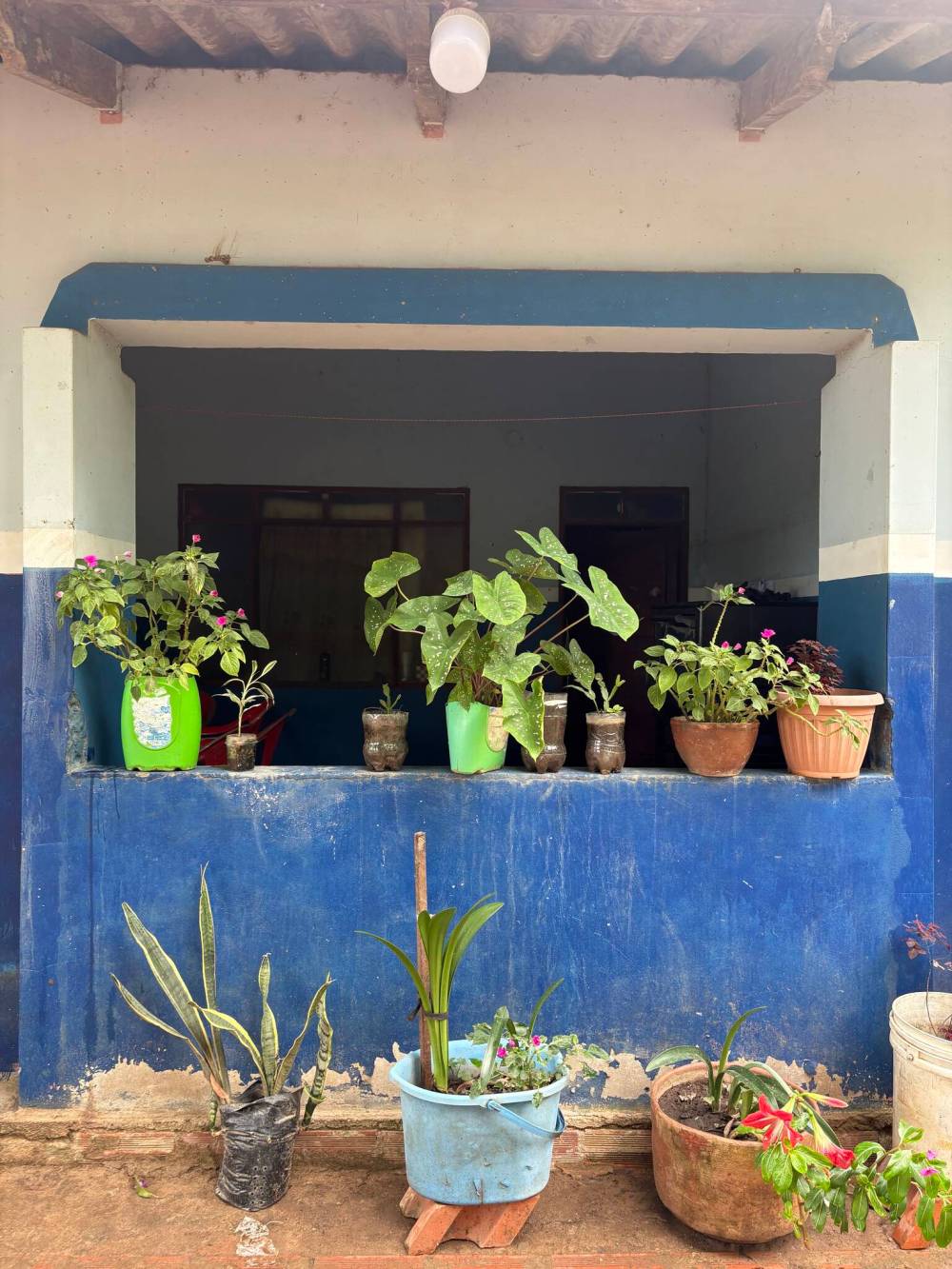
“We didn’t have really a solution for them because we couldn’t sell them,” Olpo says. “So we had to bury them for the smell or just throw them away.”
Then, in late 2024, some of the women, along with Fish for Life experts, came across an intriguing new idea.
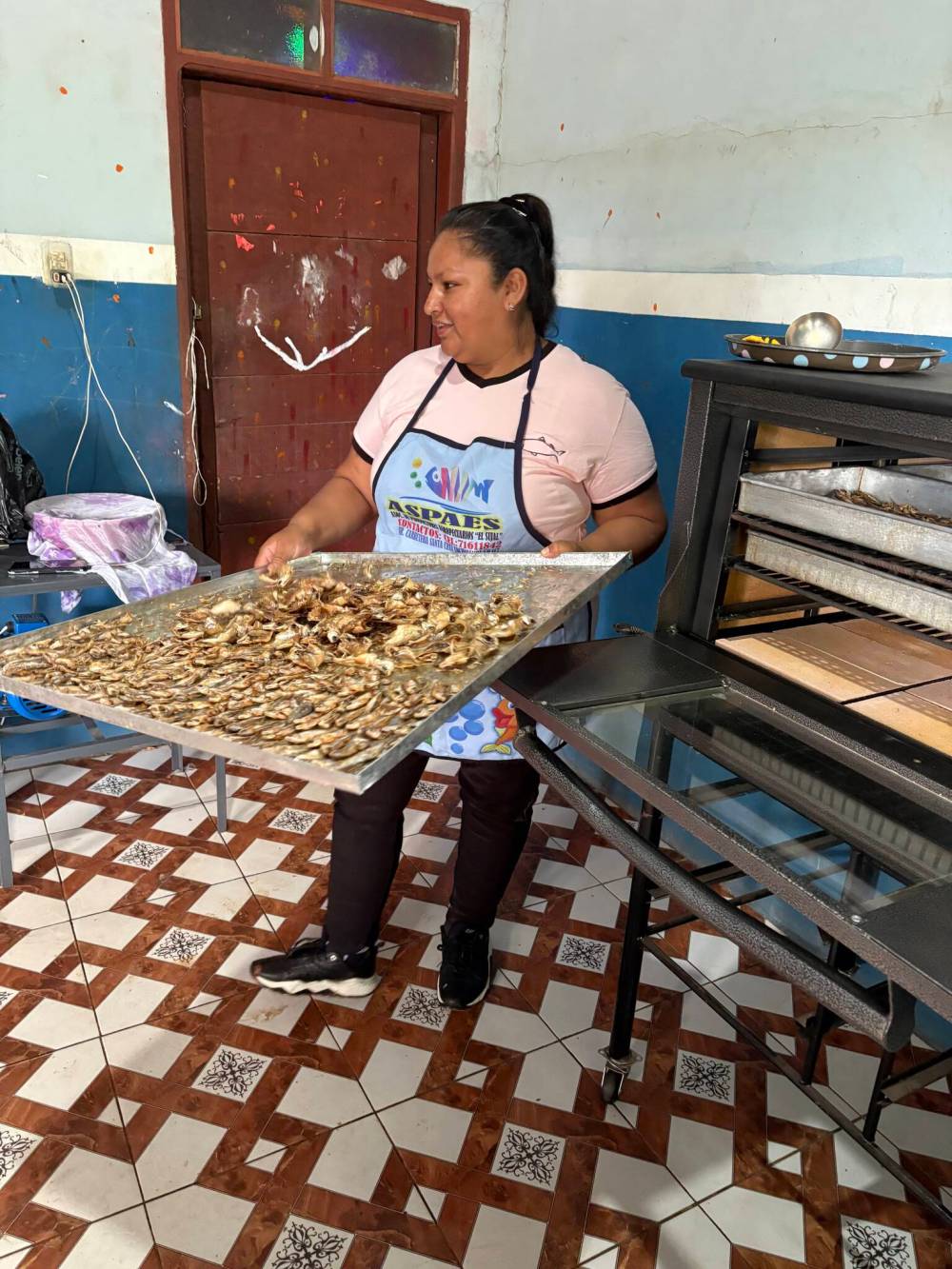
Fish powder. It’s exactly what it sounds like: dried whole fish, finely ground. Sprinkled in food, it acts as a savoury flavour enhancer, akin to salt or MSG.
It’s also richly nutritious: calorie-dense, packed with protein, iron and vitamins. In Bolivia, with one of the world’s highest food insecurity rates, that can be a lifesaver.
The women were eager to try it out. But with tight resources, how would they develop the product, and get it to market?
Enter the Fund for Innovation and Transformation, or FIT. Since 2019, the program — funded by Global Affairs Canada and administered by Winnipeg-based MCIC — has financed innovative, even experimental projects that advance gender equity in the Global South, aiming to support efforts that can slip under the radar of larger development organizations.
The fish powder project fit that agenda. FIT agreed to chip in a $174,325 grant.
“We hadn’t seen a product like this that they would be testing,” says Christina MacIsaac, FIT innovation director.
With that support, the fish-farming women of Yapacani threw themselves into developing the powder.
For 10 months, they researched how to make, package and sell the product. They received workshops from marketing experts from the bustling city of Cochabamba, and enlisted a chef to help develop a recipe book using the powder.
“I thought I already knew everything,” says Marisabel Avendaño, who had also started her successful fish farm as a single mother.
“In reality, when I went through the training, it was surprising to learn small details that I didn’t know were very important. And to be able to do it in a group of women, it was very good to tell our experiences, and connect.”
Together, the women chose a name for the product, SabroPez, and designed a logo, one that echoes the maternal embrace of Pachamama, the divine mother earth goddess of Andean people.
And they came up with a brand to sell it under, with a name that simply, and proudly, celebrates their story: Hecho Por Mujeres. Made By Women.
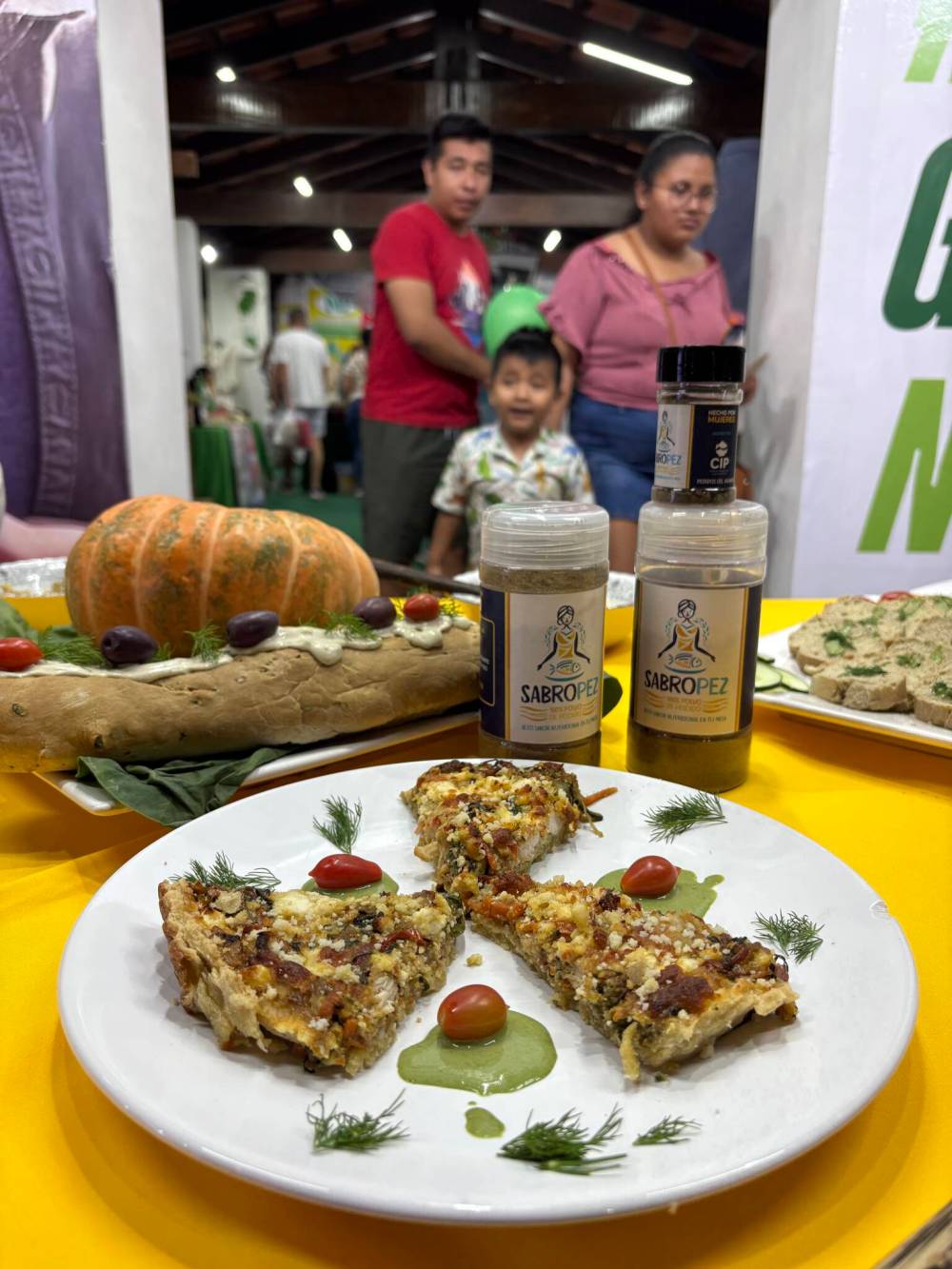
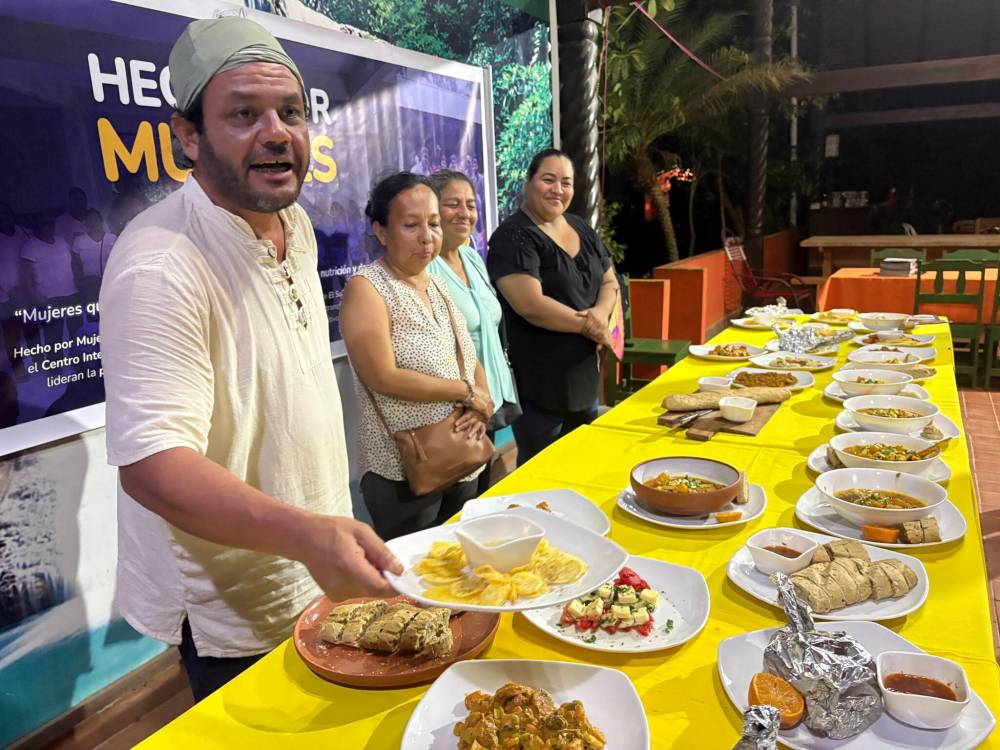
Finally, in late September, they gathered at one of the region’s biggest restaurants to celebrate SabroPez’s public launch. A crew of local chefs — all women — crafted a tasting menu of dishes using the fish powder, and Yapacani’s mayor turned out to award the best dish.
As they watched guests taste their product, the women of Hecho Por Mujeres were beaming.
So was Roxana Dulón, a gender equality expert from the Bolivian city of Sucre, who had been working with the women for years.
The success of this project, she knows, will not be only — or even mainly — measured in fish-powder sales. Rather, it marks another step in a long journey for the women of this region, towards building economic control of their future.
“Even with the short duration of the project, I saw a different approach in leadership for women,” Dulón says.
“I heard so much that it gave them a chance to work in spaces just for women, and develop their own voices. They feel like the project has changed their lives and the perception of their lives.”
That much was evident in the days leading up to the SabroPez launch. The women laughed often when they were together; they spoke of hope for the future, and of plans to take courses, start new businesses or send their children to good colleges.
These are dreams that were once distant for the rural women of Yapacani.
“Gender transformative change does not happen overnight,” MacIsaac says. “It can literally take generations to change mindsets, but it’s been really remarkable to see even little things, like men having more respect for the women in their business endeavours and them not feeling like they have to be the primary income earners in their household.”
Already, the ripples are spreading.
For more than a decade, Olpo has served on a national council for women’s rights, helping craft laws against domestic violence and reform regional governments to include more women.
She’s joined organizations linking women across Latin America, to share knowledge and build solidarity in their struggles.
One day, she hopes to run for mayor of Yapacani. And, she adds with a quiet smile, she does not plan to marry again.
“I never thought I would be a leader,” she says. “But with the training I received, I found a leader in myself I wasn’t seeing before. With everything I’ve learned, I’ve been able to see beyond. I continued to build my house, and I kept moving forward.
“And I always encourage younger women and tell them these stories, to see that it’s possible to achieve it if you work for it.”
melissa.martin@freepress.mb.ca

Melissa Martin
Reporter-at-large
Melissa Martin reports and opines for the Winnipeg Free Press.
Every piece of reporting Melissa produces is reviewed by an editing team before it is posted online or published in print — part of the Free Press‘s tradition, since 1872, of producing reliable independent journalism. Read more about Free Press’s history and mandate, and learn how our newsroom operates.
Our newsroom depends on a growing audience of readers to power our journalism. If you are not a paid reader, please consider becoming a subscriber.
Our newsroom depends on its audience of readers to power our journalism. Thank you for your support.
History
Updated on Friday, October 10, 2025 12:12 PM CDT: Rearranges photos, updates photo cutline