Opponents in rural Nova Scotia challenge cabinet decision on whale sanctuary project
Advertisement
Read this article for free:
or
Already have an account? Log in here »
To continue reading, please subscribe:

Digital Subscription
One year of digital access for only $205*
- Enjoy unlimited reading on winnipegfreepress.com
- Read the E-Edition, our digital replica newspaper
- Access News Break, our award-winning app
- Play interactive puzzles
*First annual payment billed as $205.00 + GST for one year. This annual subscription will automatically renew at $233.00 + GST every 52 weeks (10% off the regular annual price of $259.35). Offer available to new and qualified returning subscribers only. Cancel any time.
To continue reading, please subscribe:
Add Free Press access to your Brandon Sun subscription for only an additional
$1 for the first 4 weeks*
- Enjoy unlimited reading on winnipegfreepress.com
- Read the E-Edition, our digital replica newspaper
- Access News Break, our award-winning app
- Play interactive puzzles
*Your next Brandon Sun subscription payment will increase by $1.00 and you will be charged $17.95 plus GST for four weeks. After four weeks, your payment will increase to $24.95 plus GST every four weeks.
Read unlimited articles for free today:
or
Already have an account? Log in here »
Hey there, time traveller!
This article was published 26/10/2025 (325 days ago), so information in it may no longer be current.
HALIFAX – A group of landowners in eastern Nova Scotia is speaking out for the first time about their opposition to an ambitious plan to build North America’s first coastal refuge for whales retired from theme parks.
But their complaints about the way the project won approval from the province stand in sharp contrast to the views of two other landowners who insist the project has won broad support beyond their tiny, oceanside hamlet.
Last week, the Nova Scotia government issued a cabinet order granting the U.S.-based Whale Sanctuary Project a 20-year lease for 83 hectares of Crown lands and coastal waters at Wine Harbour, N.S., a move that marked a step forward for the much-delayed, privately funded project.
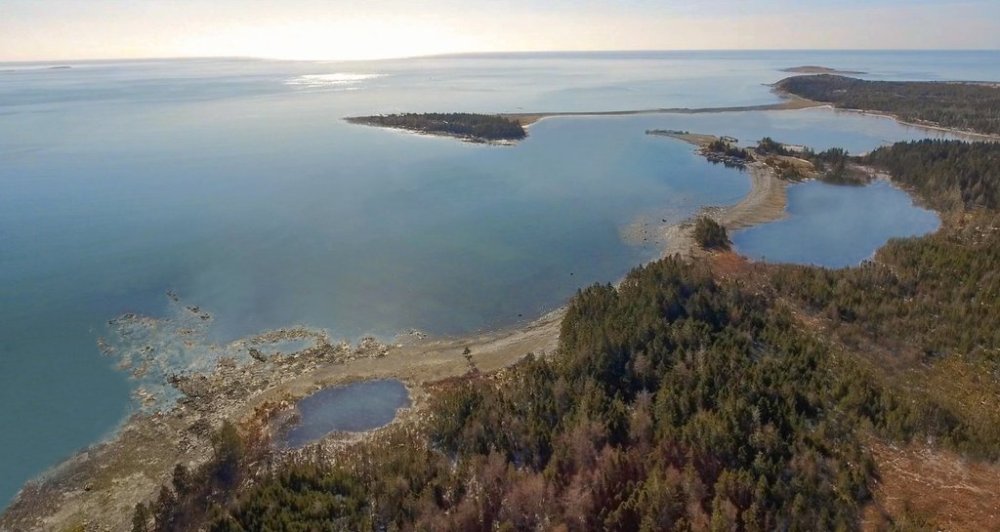
The project attracted international attention this month when owners of the shuttered Marineland theme park in Ontario said they could no longer afford to feed their 30 belugas after the park was denied a federal permit to sell the whales to buyers in China.
That prompted speculation that some of the whales could be moved to the proposed Nova Scotia refuge, but construction there has yet to begin and the project, announced five years ago, still requires several permits and plenty of fundraising to cover the $20-million cost.
In Wine Harbour, a seaside community about 150 kilometres east of Halifax, some of those opposed to the project have come forward to argue Premier Tim Houston and his cabinet ignored a provincial policy that says cabinet can’t grant a Crown lease unless there is unanimous consent from affected landowners.
Tracy Burns-Gagnon and her sister Maureen Fraser, whose families and other relatives own such properties, sent a protest letter to Houston on Thursday, saying they were outraged.
“You have lost the trust of Nova Scotians by putting the interests of a U.S. (organization) ahead of property owners in this province,” the letter says. “The reversal from ‘unanimous consent’ is unreasonable and procedurally unfair.”
The sisters say if the sanctuary becomes a reality, their families will lose their access to the ocean, limiting their opportunities for fishing and boating.
“Please tell me how many Nova Scotian landowners would freely give up their water rights for 20 years?” their letter states. The two women say they have consulted a lawyer.
On Wednesday, Houston issued a statement saying that achieving a consensus is often difficult.
“We needed to get to a realistic place,” Houston said. “There’s an incredible amount of support for the project in the area and across the province, and we thought there was enough to move forward with the lease.”
When a government spokesperson was asked Friday to respond to the sisters’ allegations, she pointed to Houston’s previous statement.
Burns-Gagnon and Fraser argue it would be wrong to assume there is widespread support for the project in Wine Harbour.
“Other than a select few, the largest landowners and longest living residents of the community are opposed,” their letter says. “Our family owns the largest plot of land that will be directly affected by this project, and (we) have been here for many generations.”
The sisters are members of the Burns family, which is well known in the Wine Harbour area. Their mother lives there for most of the year, as does an aunt. Much of the extended family has cottages in the area.
The project has its share of supporters in the community and the surrounding Municipality of the District of St. Mary’s.
Local business owner Tammie Vautour, a Wine Harbour resident since 2013, said she is one of the community’s four permanent residents. She does not own one of the affected properties, but said she visits the site for the whale refuge almost every day.
Vautour, who owns Beanie’s Bistro in nearby Sherbrooke, N.S., said there is solid opposition to the project among those related to Burns-Gagnon and Fraser, but she argues there is broad support among the 2,200 residents of the wider municipality.
“We’ve fought for this project and will continue to fight to make sure of its success,” she said in an email. “We also need this project for our own success. Without it, we will continue to fade away.”
Vautour said life can be tough in a rural community with an aging population and few opportunities for employment. The area’s largest employer is Sherbrooke Village, a “living museum” where dozens of costumed interpreters stroll through a site that depicts village life in the late 19th century.
“We see more of our children leave because there are no opportunities to stay,” she said. “We need something that aligns with the future of ecotourism, which is a sustainable industry.”
For too many years, Wine Harbour has been little more than a spot for motorists to pause during a long, though picturesque, drive between Halifax and Cape Breton, Vautour said.
“No one stays. No one spends. No one really engages in what is really one of the most magical areas around. (This project) will allow us to start to grow.”
When the Whale Sanctuary Project was first announced, the municipality pledged its support, saying it could draw visitors and would be consistent with its goals of sustainable development and conservation.

The project also won support from the Assembly of Nova Scotia Mi’kmaw Chiefs in April 2024. As well, its board and advisers include a long list of whale and dolphin experts from around the world, including some high-profile professors at Dalhousie University in Halifax.
Jake Chisholm, a Wine Harbour property owner and local real-estate agent, said he supports the project because it will help protect the area from mining and major development.
Like Vautour, he believes the sanctuary could spur an economic turnaround, and he stressed that the project represents an historic opportunity.
“What an honor and privilege it would be to be near that and to learn from that,” he said in an interview Saturday. “That’s just phenomenal … It would be the first one.”
This report by The Canadian Press was first published Oct. 26, 2025.