Takeaways from AP’s story on the links between eviction and school
Advertisement
Read this article for free:
or
Already have an account? Log in here »
To continue reading, please subscribe:
Digital Subscription
One year of digital access for only $1.44 a week*
- Enjoy unlimited reading on winnipegfreepress.com
- Read the E-Edition, our digital replica newspaper
- Access News Break, our award-winning app
- Play interactive puzzles
*Billed as $5.77 plus GST every four weeks. After 52 weeks, price increases to the regular rate of $19.95 plus GST every four weeks. Offer available to new and qualified returning subscribers only. Cancel any time.
To continue reading, please subscribe:
Add Free Press access to your Brandon Sun subscription for only an additional
$1 for the first 4 weeks*
- Enjoy unlimited reading on winnipegfreepress.com
- Read the E-Edition, our digital replica newspaper
- Access News Break, our award-winning app
- Play interactive puzzles
*Your next Brandon Sun subscription payment will increase by $1.00 and you will be charged $17.95 plus GST for four weeks. After four weeks, your payment will increase to $24.95 plus GST every four weeks.
Read unlimited articles for free today:
or
Already have an account? Log in here »
Hey there, time traveller!
This article was published 14/11/2025 (346 days ago), so information in it may no longer be current.
ATLANTA (AP) — When families are evicted, it can lead to major disruptions to their children’s schooling.
Federal law includes provisions to help homeless and evicted kids stay at their schools, but families don’t always know about them — and schools don’t always share the information. Beyond the instability that comes with losing their home, relocating also can deprive kids of networks they rely on for support.
AP followed the year-long quest of one Atlanta mother, Sechita McNair, to find new housing after an eviction. The out-of-work film industry veteran drove extra hours for Uber and borrowed money, eventually securing a lease in the right neighborhood so her eldest son could stay at his high school. At $2,200 a month, it was the only “semi-affordable” apartment in the rapidly gentrifying Old Fourth Ward that would rent to a single mom with a fresh eviction on her record.
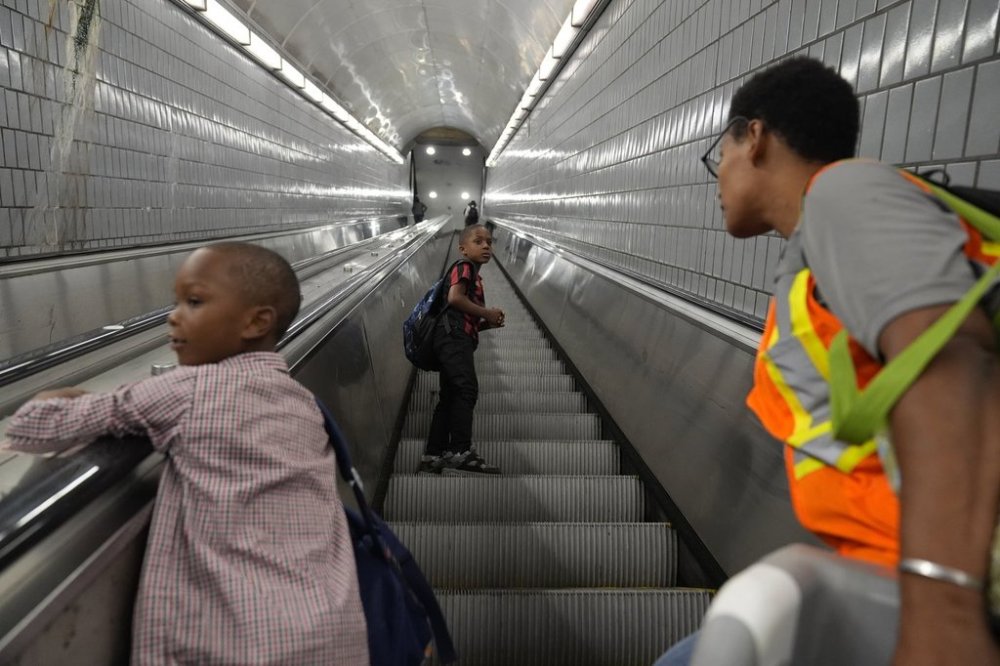
Even so, her son was not thriving. McNair considered a homeschooling program before re-enrolling him at the coveted high school. Despite continuing challenges, McNair is determined to provide her three children with better educational opportunities.
Here are some key takeaways from AP’s year following McNair’s journey.
Evictions often lead families to schools with fewer resources
Like many evicted families, McNair and her kids went from living in a school district that spends more money on students to one that spends less.
Atlanta spends nearly $20,000 per student a year, $7,000 more than the suburban district the family moved to after they were evicted from their apartment last year. More money in schools means smaller classrooms and more psychologists, guidance counselors and other support.
Thanks to federal laws protecting homeless and evicted students, McNair’s kids were able to keep attending their Atlanta schools, even though the only housing available to them was in another county 40 minutes away. They also had the right to free transportation to those schools, but McNair says the district didn’t tell her about that until the school year ended. Once they found new housing, their eligibility to remain in those schools expired at the end of last school year.
Support systems matter, too
The suburban neighborhood where the family landed after the eviction is filled with brick colonials and manicured lawns. McNair knows it’s the dream for some families, but not hers. “It’s a support desert,” she said.
McNair, who grew up in New Jersey near New York City, sees opportunities in the wider city of Atlanta. She wants to use its libraries, e-scooters, bike paths, hospitals, rental assistance agencies, Buy Nothing groups and food pantries.
“These are all resources that make it possible to raise a family when you don’t have support,” she said. “Wouldn’t anyone want that?”
It’s tough to find safe, affordable housing after an eviction
It took months for McNair to scrape together funds and find a landlord in her gentrifying neighborhood who would rent to her in spite of her recent eviction.
On Zillow, the second-floor apartment, built in 2005, looked like a middle-class dream with its granite countertops, crown molding and polished wood floors. But up close, the apartment looked abused. Her tour of the apartment was rushed, and the lease was full of errors. She signed anyway.
Shortly after — while she was still waiting for the landlord to install more smoke detectors and fix the oven and fridge — McNair’s keys stopped working. The apartment had been sold in a short sale.
The new owners wanted McNair to leave, but she consulted with attorneys, who reassured her she could stay. Eventually, she even moved some of the family’s belongings to the apartment.
But a new apartment in their preferred neighborhood doesn’t solve everything. At night, McNair’s 15-year-old son, Elias, has been responsible for his younger brothers while she heads out to drive for Uber. That’s what is necessary to pay $450 a week to rent the car and earn enough to pay her rent and bills.
While McNair is out, she can’t monitor Elias. And a few days after he started school, Elias’s all-night gaming habit had already drawn teachers’ attention. As she drove for Uber one night, she couldn’t stop thinking about emails from his teachers. “I should be home making sure Elias gets to bed on time,” she says, crying. “But I have to work. I’m the only one paying the bills.”
Consistency is important for a teen’s learning
McNair attributed some of Elias’s lack of motivation at school to personal trauma. His father died after a heart attack in 2023, on the sidelines of Elias’s basketball practice. Wounded by that loss and multiple housing displacements, Elias failed two classes last year, his freshman year. His mother feared switching schools would jeopardize any chance he had of recovering his academic life.
But after Elias started skipping school this fall, McNair filed papers declaring her intention to homeschool him.
It quickly proved challenging. Elias wouldn’t do any schoolwork when he was home alone. And when the homeschooling group met twice a week, McNair discovered, they required parents to pick up their children afterward instead of allowing them to take public transit or e-scooters. That was untenable.

McNair considered enrolling her son in the suburban school district, but an Atlanta schools official advised against transferring if possible. He needs to be in school — preferably the Atlanta school he has attended — studying for midterms, the official said.
Now, with Elias back in school every day, McNair can deliver food through Uber Eats without worrying about a police officer asking why her kid isn’t in school. If only she had pushed harder, sooner, for help with Elias, she thought.
But it was easy for her to explain why she hadn’t. “I was running around doing so many other things just so we have a place to live, or taking care of my uncle, that I didn’t put enough of my energy there.”
____
The Associated Press’ education coverage receives financial support from multiple private foundations. AP is solely responsible for all content. Find AP’s standards for working with philanthropies, a list of supporters and funded coverage areas at AP.org.