Japan’s first female leader faces a taboo over entering the male-only sumo ring
Advertisement
Read this article for free:
or
Already have an account? Log in here »
To continue reading, please subscribe:

Digital Subscription
One year of digital access for only $205*
- Enjoy unlimited reading on winnipegfreepress.com
- Read the E-Edition, our digital replica newspaper
- Access News Break, our award-winning app
- Play interactive puzzles
*First annual payment billed as $205.00 + GST for one year. This annual subscription will automatically renew at $233.00 + GST every 52 weeks (10% off the regular annual price of $259.35). Offer available to new and qualified returning subscribers only. Cancel any time.
To continue reading, please subscribe:
Add Free Press access to your Brandon Sun subscription for only an additional
$1 for the first 4 weeks*
- Enjoy unlimited reading on winnipegfreepress.com
- Read the E-Edition, our digital replica newspaper
- Access News Break, our award-winning app
- Play interactive puzzles
*Your next Brandon Sun subscription payment will increase by $1.00 and you will be charged $17.95 plus GST for four weeks. After four weeks, your payment will increase to $24.95 plus GST every four weeks.
Read unlimited articles for free today:
or
Already have an account? Log in here »
Hey there, time traveller!
This article was published 21/11/2025 (315 days ago), so information in it may no longer be current.
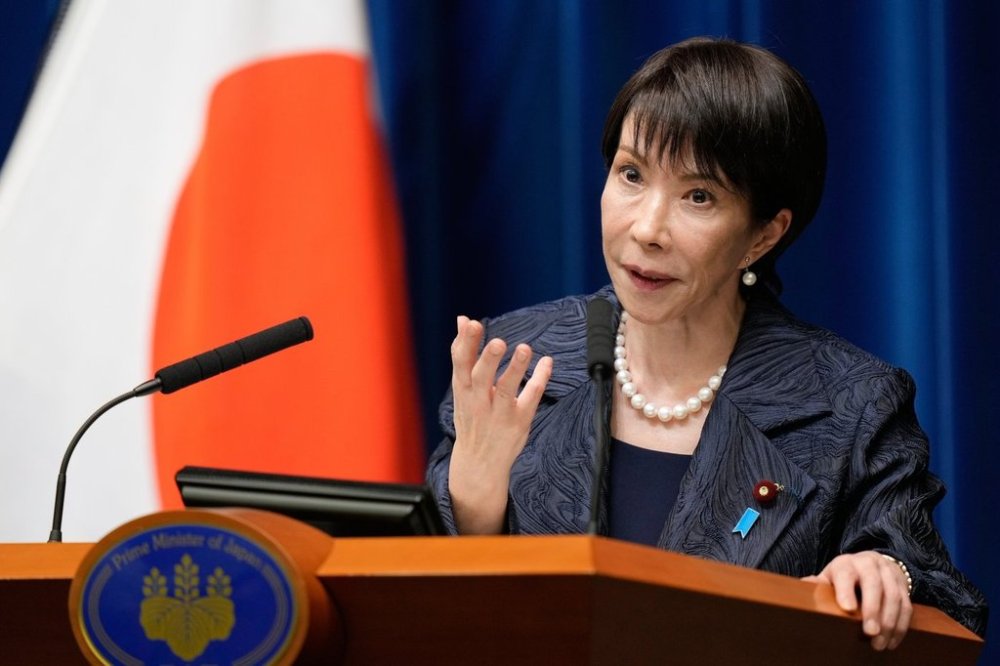
TOKYO (AP) — Sanae Takaichi made history by becoming Japan’s first female prime minister in October. She must now decide whether she’ll break another barrier: the taboo barring women from the sumo ring.
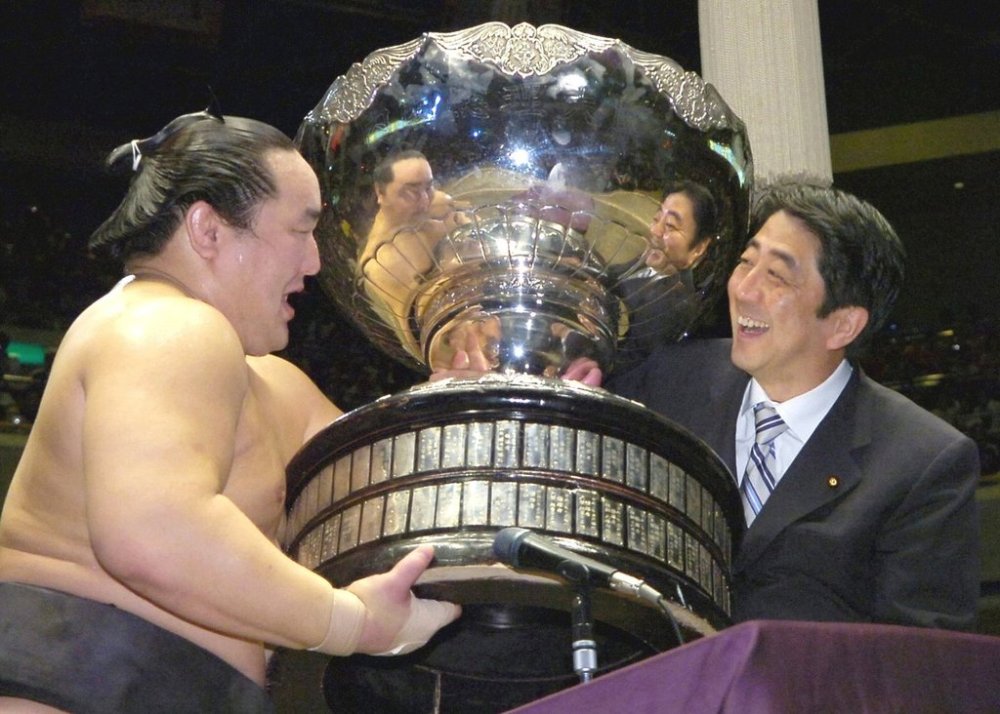
The winner of the Kyushu Grand Sumo Tournament that ends Sunday will be presented with the Prime Minister’s Cup. Some of her male predecessors, including former Prime Minister Junichiro Koizumi, have entered the ring to hand over the cup.
Takaichi, a staunch conservative who supports Japan’s traditional gender and paternalistic values, may not break the taboo. In any case, she won’t face a decision on whether to enter the sumo ring this time because she returns a day later from the Group of 20 summit in South Africa.
Her next chance to make a decision will come at the New Year’s tournament in Tokyo.
But a debate on the taboo against women likely will continue, in no small part, because a woman now leads Japan. There also is criticism that the ban in sumo and other religious places is out of touch with the changing place of women in Japanese society.
Women are still banned in some sacred places and festivals
The sumo ring is only part of the controversy.
In Japan, female worshippers have for centuries been banned from certain holy mountains, religious training sessions, temples, shrines and festivals.
Other places in the world have similar taboos, but the one in Japan stems from the belief in female “impurity” associated with menstruation and childbirth, as well as certain misogynic Buddhist views, says Naoko Kobayashi, an Aichi Gakuin University professor and expert on religion and gender.
The female ban at holy mountains, including Mount Fuji, and religious establishments has been largely eliminated over the years. But it lingers at certain shrines and festivals.
Many of these bans are from the 19th century Meiji era or later, Kobayashi said, and the taboo has been hard to break because women were also kept from political and religious decision-making over the years.
Sumo has a 1,500-year history, but the female ban is not ancient tradition
Sumo’s origins are linked to rituals for Japan’s indigenous religion of Shinto, which is largely rooted in animism and the belief that thousands of kami, or spirits, inhabit nature. The first sumo matches date back 1,500 years as a ritual dedicated to the kami, with prayers for bountiful harvests, dancing and other performances at shrines.
The dohyo where sumo takes place is an elevated ring made of special clay, with its edge marked by a circle of rice-straw separating the inner sanctuary and the outside world of impurity. It’s off-limits to women in professional sumo.
Some experts say sumo follows the Shinto belief in female impurity.
The Japan Sumo Association has denied the female ban is based on the Shinto belief of impurity.
“This interpretation is a misunderstanding,” said the association chief, Nobuyoshi Hakkaku, in 2018. He said sumo rituals are tied to folk beliefs like being thankful for a good harvest and are not about rigid religious principles.
“We have consistently denied sexist intentions,” Hakkaku said. “The rule that makes the dohyo a serious battleground for men is only natural for wrestlers, making the dohyo a male-only world and (leading to) passing down the practice of not having women go up there.”
Citing a seventh century document called “Ancient Chronicles of Japan,” historians say female court members were the first to perform sumo at the request of an emperor. There are documentary records of female sumo wrestlers in 16th century documents.
Sumo gained prestige when matches were attended in 1884 by the Emperor Meiji and later earned the status of a national sport with the completion of the original Ryogoku Arena in 1909.
Barring women from the ring has been criticized for decades
In 1978, a female labor ministry bureaucrat, Mayumi Moriyama, protested after the sumo association prevented a girl who had won a local children’s sumo qualifying match from advancing to the finals at a real sumo ring.
In 1990, Moriyama, as government spokesperson, expressed her desire to enter the ring for the presentation of the Prime Minister’s Cup but was rejected by the sumo association.
In 2018, the mayor of Maizuru in northern Kyoto collapsed during a speech in a sumo ring. Two female medical experts rushed in and started performing first aid as several male sumo officials watched. Two more women tried to join the first-aid effort before announcements demanded the women leave the ring. Sumo officials threw salt afterwards, a gesture of purification.
Days later, the association refused to allow Tomoko Nakagawa, then-mayor of Takarazuka city, to enter the dohyo to give a speech for an exhibition tournament. Nakagawa, forced to speak from the side of the ring, said she was mortified to be rejected just because she is female.
The sumo association chief apologized over the “failure to take appropriate action in a life-threatening situation” and for making Nakagawa uncomfortable, and formed a panel of outside experts to examine the female ban. Seven years later, a decision is still pending.
“Excluding women under the premise of male-centered traditions and customs can be no longer justified under the values of the times,” Kobayashi, the professor, said.
Takaichi backs Japan’s traditional views on gender
Takaichi is not considered a feminist. She has supported paternalistic family values and keeping the succession of Japan’s monarchy open only to men. She also opposes changing a 19th-century law that would allow married couples the option of keeping separate surnames.
Takaichi is trying to win back support from right-wing voters who have been drawn to emerging populist groups in recent elections. An attempt to present the trophy in the ring would be seen as defying sumo’s traditions and could harm her image with those voters.
She has not commented on how she’ll handle the trophy presentation, but her top government spokesperson has indicated Takaichi is not considering stepping into the ring.
“Prime Minister Takaichi intends to respect the tradition of sumo culture,” Chief Cabinet Secretary Minoru Kihara told reporters.