

P.E.I. researchers look at how cow poop can strengthen soil, reduce emissions
Advertisement
Read this article for free:
or
Already have an account? Log in here »
To continue reading, please subscribe:
Monthly Digital Subscription
$1 per week for 24 weeks*
- Enjoy unlimited reading on winnipegfreepress.com
- Read the E-Edition, our digital replica newspaper
- Access News Break, our award-winning app
- Play interactive puzzles
*Billed as $4.00 plus GST every four weeks. After 24 weeks, price increases to the regular rate of $19.95 plus GST every four weeks. Offer available to new and qualified returning subscribers only. Cancel any time.
Monthly Digital Subscription
$4.99/week*
- Enjoy unlimited reading on winnipegfreepress.com
- Read the E-Edition, our digital replica newspaper
- Access News Break, our award-winning app
- Play interactive puzzles
*Billed as $19.95 plus GST every four weeks. Cancel any time.
To continue reading, please subscribe:
Add Free Press access to your Brandon Sun subscription for only an additional
$1 for the first 4 weeks*
*Your next subscription payment will increase by $1.00 and you will be charged $16.99 plus GST for four weeks. After four weeks, your payment will increase to $23.99 plus GST every four weeks.
Read unlimited articles for free today:
or
Already have an account? Log in here »
HALIFAX – Like many farmers, Nick Green trades and barters as a way to ensure his cattle have enough land to graze.
Unlike many farmers, Green trades in manure.
“We essentially provide a service,” Green said. And that service is waste. Cow poop, to be exact.
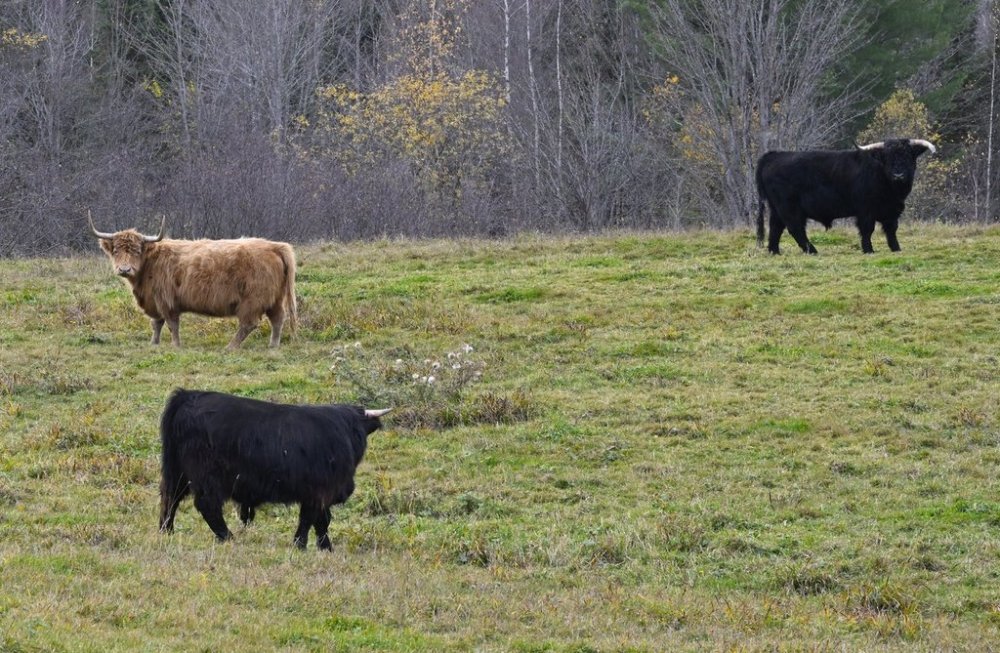
Green is part of a Living Labs P.E.I. project, where farmers partner with researchers working under Agriculture and Agri-Food Canada to test out theories in real-world conditions and on a large scale.
In this project, Green takes his cows to graze on over 200 hectares of land across Prince Edward Island. Some of the land is his. Some parcels are owned by other farmers, and Green trades with them. His cows can graze their land, and in exchange, their droppings stay on the field, fertilizing it and helping to stabilize the soil health.
In the not-so-distant past, most farmers had small, mixed operations, he said. They grew some potatoes, some row crops, they had a cow or some chickens or both. Now, things have changed.
“We’re more individualized. This person just grows potatoes. This person grows carrots and turnips. This person grows barley and wheat,” Green said.
Chemical fertilizers have gone up in price dramatically over the past few years, and it’s been hard for farmers to adjust to those costs.
“One year (our costs) literally went up 100 per cent,” Green said. “It’s tens of thousands of dollars for us.”
But directly applying manure to fields is a much more cost-effective plan. So the farmers provide the land, and Green provides the fertilizer – fresh from the cow.
The research is overseen by Dr. Judith Nyiraneza, who is aiming to find out the best way to improve soil health and retain carbon, cutting down on Canada’s overall carbon emissions.
Nyiraneza said P.E.I.’s soil is great for food production, but it’s fragile. The hills and topography of the island, combined with strong tides, means the soil is prone to erosion. Growing the organic matter and nutrients in the soil make it stronger, she said.
It’s also improving crop production for farmers. Though results are in their early stages, Nyiraneza said using rotational grazing, like the process Green is undertaking by moving his cattle around the island at specifics times, boosted potato yield by 28 per cent.
Nyiraneza said rotational grazing has been around for centuries. But as farms have grown larger, the practice has fallen off in popularity, leading to soil troubles.
Once farmers moved to chemical fertilizers, Nyiraneza said “we saw our soil degrading. It’s almost like we’re going backwards.”
For farmers who can’t – or perhaps don’t want to – get up close and personal with the sights and smells of cow manure, Nyiraneza and Dr. Erin Smith, another research scientist with Agriculture and Agri-Food Canada, are looking at other ways to bring manure to the soil quickly.
Rather than spreading manure widely across a field – a practice known as broadcasting – Smith is looking at a more specific injection method, where a large arm attached to a tractor runs over the field, slicing the soil and injecting liquid manure inside, then covering it up quickly, keeping the nutrients in the manure from evaporating.
“So far, we’ve seen a 35 per cent reduction (in nitrogen loss) with the injection method,” said Smith.
“This means that less nitrogen is being lost and more is available for plants to utilize.”
Using the Living Lab and working directly with farmers is also the best way to test if these methods are the most cost effective for farmers, Smith said.
“Is this technology a technology that farmers should be investing in? And is it worth the investment?”
The project is in the early stages and will continue for roughly three more years. It’s important to see the results over time and under different weather conditions, Smith said. And since many dairy and cattle producers on P.E.I. manage liquid manure already, the supply is there for further testing.
For Green, he’s happy to see his cattle contributing to a positive conversation about climate change. Over the past several years, Green said, cattle have been seen as the biggest driver of methane emissions in agriculture, but he’s “a firm believer they’re part of the solution, they’re not part of the problem.”
This report by The Canadian Press was first published Dec. 28, 2025.