

Mobility exercises are an important part of fitness as we age. Here are some tips
Advertisement
Read this article for free:
or
Already have an account? Log in here »
To continue reading, please subscribe:
Monthly Digital Subscription
$1 per week for 24 weeks*
- Enjoy unlimited reading on winnipegfreepress.com
- Read the E-Edition, our digital replica newspaper
- Access News Break, our award-winning app
- Play interactive puzzles
*Billed as $4.00 plus GST every four weeks. After 24 weeks, price increases to the regular rate of $19.95 plus GST every four weeks. Offer available to new and qualified returning subscribers only. Cancel any time.
Monthly Digital Subscription
$4.99/week*
- Enjoy unlimited reading on winnipegfreepress.com
- Read the E-Edition, our digital replica newspaper
- Access News Break, our award-winning app
- Play interactive puzzles
*Billed as $19.95 plus GST every four weeks. Cancel any time.
To continue reading, please subscribe:
Add Free Press access to your Brandon Sun subscription for only an additional
$1 for the first 4 weeks*
*Your next subscription payment will increase by $1.00 and you will be charged $16.99 plus GST for four weeks. After four weeks, your payment will increase to $23.99 plus GST every four weeks.
Read unlimited articles for free today:
or
Already have an account? Log in here »
As they age, it’s not uncommon for many people to let out a muted groan when getting out of bed in the morning.
But if you “oof” every time you get in a car or “aargh” while bending over to pick up something, it may be time to prioritize exercises that target your mobility.
Dr. Miho Tanaka, a sports medicine surgeon at Massachusetts General Hospital and Harvard Medical School, said good mobility is increasingly recognized as an important part of overall health. She pointed to research showing that high mobility has long-term effects in reducing rates of cancer, cardiovascular disease, dementia and depression.
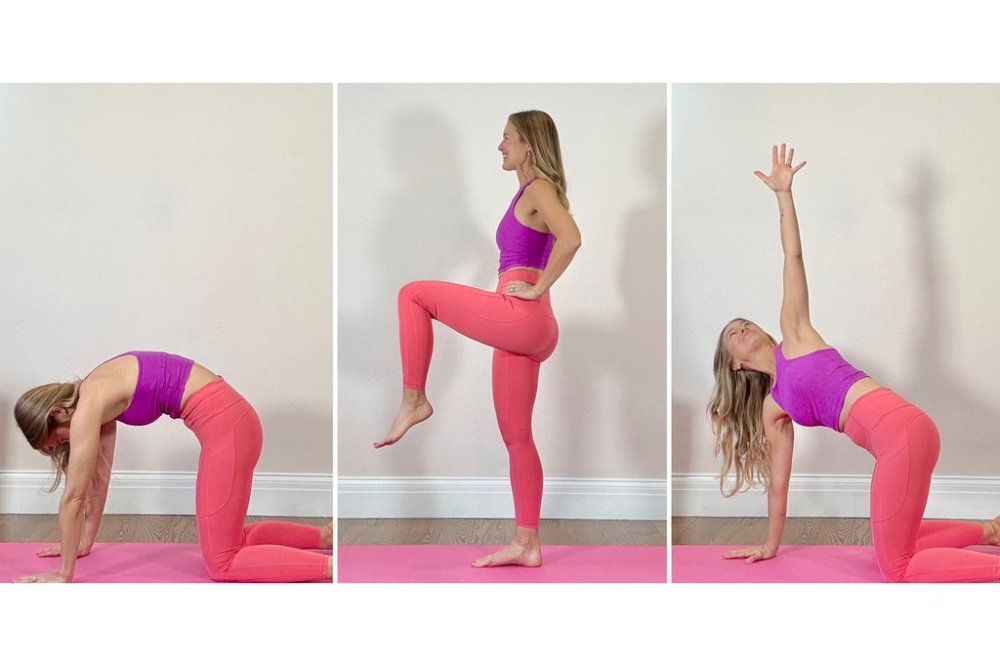
“It’s not just about how you look and how your level of fitness is at any given point,” Tanaka said. “For anyone who wants to stay active later in life, there has to be a deliberate process of maintaining that level of activity by doing mobility exercises.”
Mobility equals strength plus flexibility
Mobility and flexibility are often confused, said Jessica Valant, a physical therapist and Pilates instructor near Denver.
Flexibility is simply the extent to which a muscle can lengthen, whereas mobility involves using muscle strength to interact with a network of joints, tendons, ligaments and synovial fluid, which is the lubricant inside the joint.
That network around the shoulders, spine, hips, pelvis and knees needs to work well together. Otherwise, it becomes difficult to reach things in high cabinets, squat down to tie your shoes or lift your grandchildren, let alone participate in outdoor activities or sports.
Mobility exercises strengthen your muscles while increasing your range of motion, which allows you to be more functional with age, Valant said.
“Motion is lotion, which is a saying we use in physical therapy all the time,” she said.
Two early warning signs
Starting from about 30 years old, muscles and tendons start to lose collagen, Tanaka said. That’s the same substance that in hair and skin relates to going gray and getting wrinkles.
Without regular exercise, weaker muscles put extra pressure on joints, she said. Even active people lose muscle in areas that are overlooked at the gym, such as the rotator cuff around the shoulder and postural muscles that support the spine and neck.
Tanaka said two early warning signs likely point to the need for mobility training.
The first is aching joints and muscle stiffness without first exerting a lot of effort. Back soreness after a long day of sitting at a desk could signal limited hip or pelvic mobility, she said. Achy knees after being on your feet all day may be a sign of weak quadriceps.
The second sign is more acute pain, such as when you don’t get injured but you still experience swollen or painful joints for several days after participating in a sport like basketball or skiing for the first time a while.
She cautioned against following a recent social media challenge to test mobility by standing up from a seated position on the floor without using your hands.
“I’ve seen some injuries from that, so I definitely don’t recommend that,” she said.
Instead, try sitting in a chair and standing up without putting your hands on the chair arms. Next, try to stand on one foot. If you can do both, that’s a good sign.
Tai Chi and yoga are also both great for mobility training, she said.
Other recommended exercises
Dr. Corey Simon, associate professor of orthopedic surgery at Duke University School of Medicine, urged people to prioritize mobility before they experience pain in their joints or difficulty moving around.
“You don’t have to have a gym to do this,” Simon said.
He suggested working body-weight exercises into your day. That could include setting an hourly timer to get up and walk around the house. When you return to your desk, add chair sits to work the quads, hamstrings, calves and glutes. Assuming your balance is OK, doing pushups against a wall or a countertop helps to mobilize the shoulders.
Once those exercises become easy, add exercise bands to build strength.
Valant said that people who are sedentary should simply start walking every day.
“It’s the lowest barrier to entry,” she said.
Beyond that, she suggests adding 10 minutes of mobility training to whatever exercise you’re doing. She offers short mobility routines on her YouTube channel targeting the hips, spine and full body.
Some basic hip movements include lying on your side and lifting your top leg, lying on your back and squeezing your knees to your chest and sitting up with your feet together, lowering your knees toward the floor.
For the spine, try the cat-cow stretch, arching and curving your back with hands and knees on the floor. Or sit in a chair with feet on the floor, twisting your shoulders to both sides.
“This isn’t something that changes in five days, but I tell people, give it four weeks,” she said. “You will see results over time.”
___
Albert Stumm writes about wellness, food and travel. Find his work at https://www.albertstumm.com