At-home STD tests offer new options for screening and treatment
Advertisement
Read this article for free:
or
Already have an account? Log in here »
To continue reading, please subscribe:
Digital Subscription
One year of digital access for only $1.44 a week*
- Enjoy unlimited reading on winnipegfreepress.com
- Read the E-Edition, our digital replica newspaper
- Access News Break, our award-winning app
- Play interactive puzzles
*Billed as $5.77 plus GST every four weeks. After 52 weeks, price increases to the regular rate of $19.95 plus GST every four weeks. Offer available to new and qualified returning subscribers only. Cancel any time.
To continue reading, please subscribe:
Add Free Press access to your Brandon Sun subscription for only an additional
$1 for the first 4 weeks*
- Enjoy unlimited reading on winnipegfreepress.com
- Read the E-Edition, our digital replica newspaper
- Access News Break, our award-winning app
- Play interactive puzzles
*Your next Brandon Sun subscription payment will increase by $1.00 and you will be charged $17.95 plus GST for four weeks. After four weeks, your payment will increase to $24.95 plus GST every four weeks.
Read unlimited articles for free today:
or
Already have an account? Log in here »
Hey there, time traveller!
This article was published 12/01/2026 (286 days ago), so information in it may no longer be current.
WASHINGTON (AP) — New options for testing and treating some of the most common sexually transmitted diseases are becoming available, a trend that experts hope will keep downward pressure on U.S. infection rates.
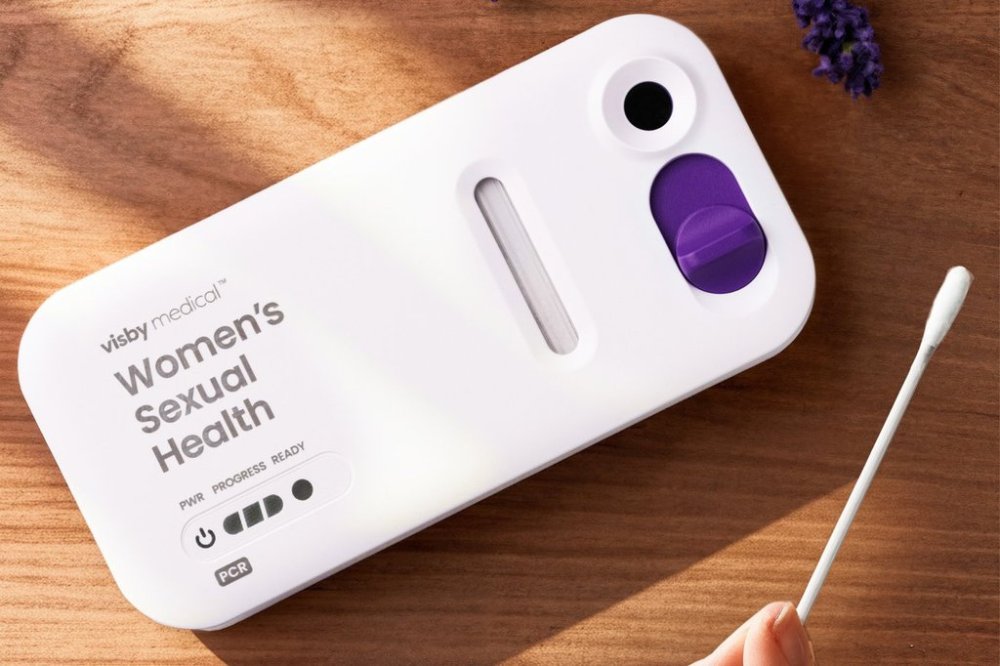
Last year, the Food and Drug Administration approved the first at-home test that can detect three common infections in women — gonorrhea, chlamydia and trichomoniasis — as well as the first home-based kit for the virus that causes cervical cancer.
The agency ended the year by approving two different drugs for gonorrhea, the first new options for the disease in decades.
It’s positive news after cases of sexually transmitted infections reached alarming highs before and during the COVID-19 pandemic, which disrupted screening, education and treatment for sexual health nationwide.
But the pandemic years also brought positive developments for testing. The same technology used for the first over-the-counter coronavirus tests is now being translated into home-based kits for syphilis and other sexually transmitted infections. Previously, the FDA had mostly limited the use of such tests to health professionals.
“Sexual health can be stigmatized and people can be hesitant about testing,” said Dr. Ina Park, a sexual health specialist at the University of California, San Francisco. “Now we have a lot of options for patients who may be wary of going into a provider’s office.”
New tests offer convenience and quicker turnaround times
Testing company Visby Medical launched its three-in-one test for women last year, following FDA approval in March. The test includes a vaginal testing swab and a small testing device. After uploading a photo of the device, users can review the results on a mobile app.
The test, which costs $150, also includes a telehealth consultation with a medical provider who can discuss the results and prescribe antibiotics or other medication, if needed.
The entire process — from buying the test to getting a prescription — can take as little as six hours, compared with several days under the traditional testing model, says Dr. Gary Schoolnik, Visby’s chief medical officer.
Previously, a nurse or doctor would have to collect a sample, send it out to a lab, get the results and then schedule a follow-up appointment to discuss the results.
“Many patients are very hard to track down and a lot of them, if they have a positive test result, are never treated and are lost to follow-up,” said Schoolnik, who is also a professor emeritus at Stanford Medical School.
The FDA approved Visby’s test based on study results showing that it correctly detected the three infections with accuracy rates around 98% or higher. That’s similar to tests performed at hospitals and health clinics.
Some home-based tests still require outside input to get the results.
For example, in May the FDA approved Teal Health’s testing kit for HPV, the virus that causes cervical cancer. The company’s Teal Wand allows women to collect their own vaginal sample, which is then placed in a tube and shipped to a laboratory for processing.
Updated federal guidelines for HPV screening released earlier this month endorsed self collection for the first time.
The FDA recently approved the first new gonorrhea drugs in decades
The bacteria that causes gonorrhea has constantly evolved, developing resistance to nearly every antibiotic used to treat it.
Both of the two new drugs can be taken by mouth, a major advantage over the current standard of care: an injection of the antibiotic ceftriaxone.
Nuzolvenc, developed through a public-private partnership, comes in granules that dissolve in water. Bluejepa, from GlaxoSmithKline, is a tablet that is also approved to treat urinary tract infections.
The Centers for Disease Control and Prevention previously recommended another drug, oral azithromycin, alongside injectable ceftriaxone, but dropped the pill from its guidance after signs that gonorrhea was growing resistant to it.
“We were down to one class of antibiotics recommended to treat gonorrhea and we had no other good options,” said Park. “So to have two new options in the same year is very exciting.”
The new tests and drugs come as STD rates are falling again
The CDC’s provisional data for 2024 showed a third consecutive year of fewer gonorrhea cases, and the second year in a row of fewer adult cases of chlamydia and the most infectious forms of syphilis.
Experts point to several factors behind the trend, including less sexual activity among young people, increased use of an antibiotic as a morning-after pill to prevent infections and more at-home screening.
The new tests could drive further reductions, although some experts urge caution.
As more people test at home it could become harder to track national infection rates, which previously have been reported by a handful of large testing laboratories.
Additionally, the new tests and drugs come with higher price tags that may limit access. For example, Visby’s $150 test is not covered by insurance.
Add to that recent Trump administration funding cuts to the CDC and other public health agencies and there could be more challenges on the horizon.

“I’m feeling very optimistic about the fact that people have more testing options and also that we now have access to new drugs.” Park said. “What I fear is these cuts to public health are going to decrease access to sexual health care for populations who can least afford to take advantage of these new options.”
___
The Associated Press Health and Science Department receives support from the Howard Hughes Medical Institute’s Department of Science Education and the Robert Wood Johnson Foundation. The AP is solely responsible for all content.
___
This story has been updated to correct an erroneous description of a test by Visby Medical. The test uses a vaginal swab, not urine. Also, users must upload a photo of the device to get the results, not send the test results to a mobile app.