

Mattel launches new autistic Barbie as part of inclusion mission
Advertisement
Read this article for free:
or
Already have an account? Log in here »
To continue reading, please subscribe:
Monthly Digital Subscription
$1 per week for 24 weeks*
- Enjoy unlimited reading on winnipegfreepress.com
- Read the E-Edition, our digital replica newspaper
- Access News Break, our award-winning app
- Play interactive puzzles
*Billed as $4.00 plus GST every four weeks. After 24 weeks, price increases to the regular rate of $19.95 plus GST every four weeks. Offer available to new and qualified returning subscribers only. Cancel any time.
Monthly Digital Subscription
$4.99/week*
- Enjoy unlimited reading on winnipegfreepress.com
- Read the E-Edition, our digital replica newspaper
- Access News Break, our award-winning app
- Play interactive puzzles
*Billed as $19.95 plus GST every four weeks. Cancel any time.
To continue reading, please subscribe:
Add Free Press access to your Brandon Sun subscription for only an additional
$1 for the first 4 weeks*
*Your next subscription payment will increase by $1.00 and you will be charged $16.99 plus GST for four weeks. After four weeks, your payment will increase to $23.99 plus GST every four weeks.
Read unlimited articles for free today:
or
Already have an account? Log in here »
If you look the newest Barbie in the eyes, you may notice she doesn’t look directly back at you.
A slight shift to the gaze is one of the changes Mattel made for the latest addition to its Fashionista line: autistic Barbie.
The doll is part of an initiative to represent more people, with other examples including Barbies with Down syndrome, blind Barbies who carry white canes and Barbies with prosthetic legs.
The newest doll was created in collaboration with the Autistic Self Advocacy Network, which contributed ideas for how the doll could represent a range of experiences some people on the autism spectrum have.
The doll includes articulated elbows and wrists so she can make hand motions some autistic people use to help regulate their senses, called stimming or hand-flapping.
She looks ever so slightly off to the side to mimic how some autistic people avoid direct eye contact, and she carries a detachable fidget spinner because some people find it a helpful sensory distraction.
She also wears “noise-cancelling” headphones to help reduce sensory overload and carries a tablet showing symbol-based Augmentative and Alternative Communication apps on its screen to provide an alternative form of communication.
“Autism has all different sizes and shapes, and so this really isn’t to represent the only way that someone can experience autism. It’s really just to have various cues that may be representative so different people can see themselves in this doll,” said Jamie Cygielman, global head of dolls at Mattel.
Figuring out what that might look like was a challenge, because autism encompasses a broad range of behaviours and difficulties that vary widely in degree, and many of the traits associated with the disorder are not immediately visible, said Noor Pervez, ASAN’s community engagement manager, who worked closely with Mattel on the Barbie prototype.
The development team debated whether to dress the doll in a tight or a loose-fitting outfit, Pervez said. Some autistic people wear loose clothes because they are sensitive to the feel of fabric seams, while others wear figure-hugging garments to give them a sense of where their bodies are, he said.

The team ended up choosing an A-line dress with short sleeves and a flowy skirt that provides less fabric-to-skin contact. The doll also wears flat shoes to promote stability and ease of movement, according to Mattel.
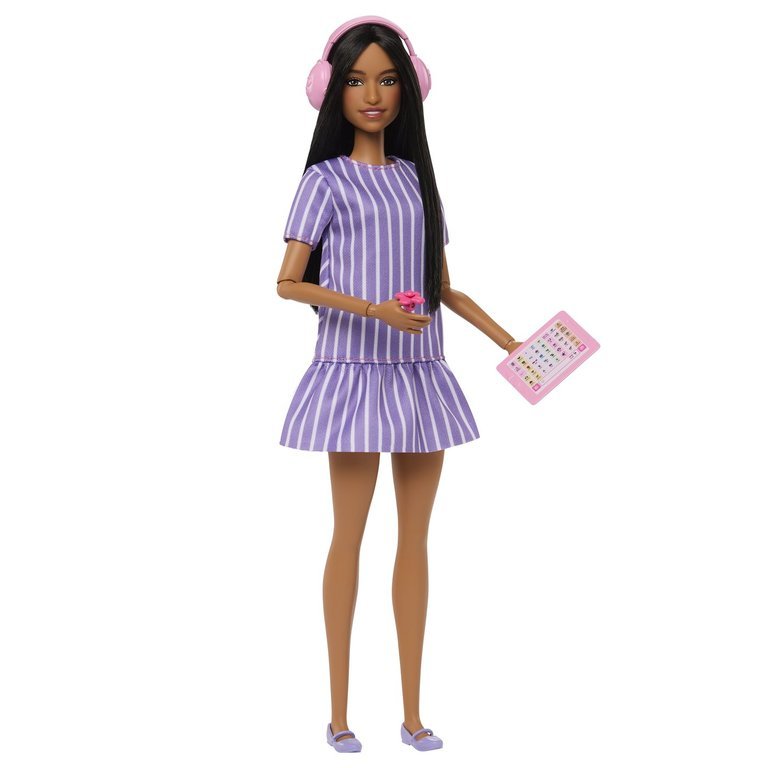
The addition of the autistic doll to the Barbie Fashionistas line also became an occasion for Mattel to create a doll with facial features inspired by the company’s employees in India and mood boards reflecting a range of women with Indian backgrounds.
Pervez said it was important to have the doll represent a segment of the autistic community that is generally under-represented.
This report by The Canadian Press was first published Jan. 12, 2026.
With files from The Associated Press.
Related Articles
Mattel introduces its first Barbie with Type 1 diabetes

Advertisement Advertise With Us
Advertisement Advertise With Us