Where are those darn keys? Tricks for remembering where you put things

Advertisement

Advertise with us

With a scarf dangling from your coat pocket and those gloves left behind at the coffee shop, there are simply more things to lose in winter. That’s not counting your misplaced keys at home or those exasperated moments looking for your phone when you say, “I just had it!”

Read this article for free:


or

Already have an account? Log in here »

To continue reading, please subscribe:

Subscribe and receive a limited-edition Free Press branded hat or tote.

Digital Subscription

One year of digital access for only $205*

  • Enjoy unlimited reading on winnipegfreepress.com
  • Read the E-Edition, our digital replica newspaper
  • Access News Break, our award-winning app
  • Play interactive puzzles

*First annual payment billed as $205.00 + GST for one year. This annual subscription will automatically renew at $233.00 + GST every 52 weeks (10% off the regular annual price of $259.35). Offer available to new and qualified returning subscribers only. Cancel any time.

To continue reading, please subscribe:

Add Free Press access to your Brandon Sun subscription for only an additional

$1 for the first 4 weeks*

  • Enjoy unlimited reading on winnipegfreepress.com
  • Read the E-Edition, our digital replica newspaper
  • Access News Break, our award-winning app
  • Play interactive puzzles
Start now

*Your next Brandon Sun subscription payment will increase by $1.00 and you will be charged $17.95 plus GST for four weeks. After four weeks, your payment will increase to $24.95 plus GST every four weeks.

Hey there, time traveller!
This article was published 29/01/2026 (224 days ago), so information in it may no longer be current.

With a scarf dangling from your coat pocket and those gloves left behind at the coffee shop, there are simply more things to lose in winter. That’s not counting your misplaced keys at home or those exasperated moments looking for your phone when you say, “I just had it!”

Try not to beat yourself up. Even Mark McDaniel, who has been studying human memory and learning for almost 50 years, left a hat under his chair recently at a restaurant. He doesn’t usually wear hats, so he forgot it.

“I should know how to remember to remember, but at the moment, you don’t think you’re going to forget,” said McDaniel, professor emeritus of psychological and brain sciences at Washington University in St. Louis.
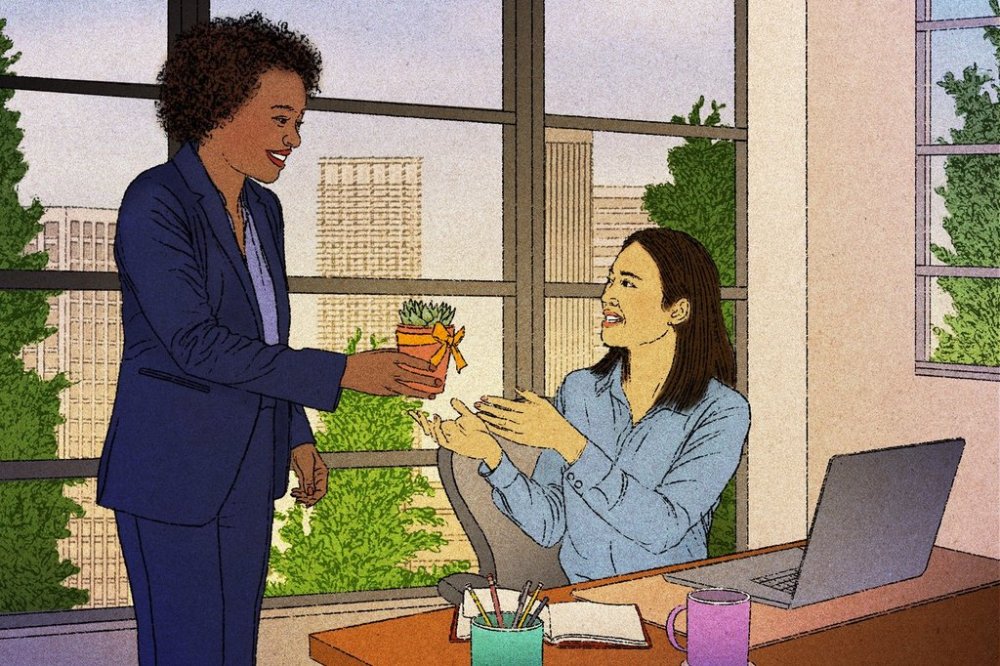
(AP Illustration / Peter Hamlin)

Luckily, there are strategies. If you can remember to implement them, here’s how to stop losing things.

A breakdown in the brain

Daniel L. Schacter, a Harvard University psychology professor and author of “The Seven Sins of Memory,” said losing things is something everyone is prone to, to varying degrees. It depends on life circumstances that pull the mind away from the present.

Rather than having a bad memory, it might be “a breakdown at the interface of memory and attention,” Schacter said. “That’s what’s responsible, based on research, based on personal experience, for a lot of the memory failures that would result in losing things.”

Memory occurs in three phases in the brain: encoding, storage and retrieval. Schacter likened losing your keys to drivers who arrive at their destination safely without remembering how they got there.

In both cases, the memory of the action is not encoded because people were thinking of something else, which makes it harder to retrieve the memory later.

“You have to do a little bit of cognitive work,” Schacter said. “At the time of encoding, you have to focus your attention.”

For things you use regularly

It helps to not have to remember where some things are.

Schacter suggested identifying problem items such as your phone, wallet or keys and creating a structure that becomes automatic with practice. He always leaves his reading glasses in a specific spot in the kitchen. When he goes golfing, his phone always goes into the same pocket in his golf bag.

“Maybe not always, but, you know, a very high percentage of the time,” he said.

If there is a noticeable increase in losing things compared to the recent past, accompanied by other memory problems that interfere with your normal function, it might be time to see a doctor, Schacter said.

For things you don’t use regularly

McDaniel said that the brain does a better job at remembering things when it receives several bits of information that can later be connected. Among memory researchers, it’s known as elaboration.

One way to stop losing objects you don’t habitually use — but often lose, like a hat — is to say out loud where you put it when you put it down. Verbalizing does two things that help with retrieval.

“Saying it out loud creates a better encoding because it makes you pay attention, and the verbalization creates a richer memory,” McDaniel said.

The more detailed the elaboration, the more connections in the brain there will be to help you remember.

An extreme version of elaboration is the “memory palace” that memory competitors use during championships. To remember a series of numbers and other challenges, they visualize a familiar, structured environment like a house or route, imagining the numbers in particular places.

For something like your hat, imagine it in the location and connect it to a reason and a consequence: “I put my hat under the chair because I didn’t want to get it dirty on the table, but I left it behind last time.”

You might not remember to grab it when you leave, but you’ll probably remember where you left it.

___

EDITOR’S NOTE: Albert Stumm writes about wellness, food and travel. Find his work at https://www.albertstumm.com

___ For more AP wellness stories, go to https://apnews.com/hub/be-well.

Report Error Submit a Tip

More Stories

Grieving families, local leaders want review of Interlake intersection after teens die in crash

Chris Kitching 8 minute read Preview

Grieving families, local leaders want review of Interlake intersection after teens die in crash

Chris Kitching 8 minute read Tuesday, Sep. 8, 2026

A two-vehicle crash that killed four teenage friends in the Interlake Sunday night prompted outpourings of grief in several communities and calls for safety improvements at the intersection, which was also the site of a death in July.

Recent high school graduates Maya Borsa and Chloe Vermette, both 18, were identified by their families as victims of the collision at Highway 8 and Provincial Road 229, just west of Winnipeg Beach.

“(Chloe) was a very bubbly, loving personality. Always giving, always caring. Her friends meant the world to her,” said her mother, Veronique Vermette, who struggled to comprehend the tragedy when she went to the scene Monday. “We sat in the rain for hours, and it blew my mind that four lives were taken.”

The teens’ parents are waiting for RCMP to provide more information about the cause of the crash. Chloe, who graduated from Windsor Park Collegiate in Winnipeg in July, was driving one of the vehicles, her mother said.

Read
Tuesday, Sep. 8, 2026

DNA on beer can helps solve killing

Dean Pritchard 4 minute read Preview

DNA on beer can helps solve killing

Dean Pritchard 4 minute read Yesterday at 2:00 AM CDT

Two years after 74-year-old James Monaghan was stabbed in his Sherburn Street home, DNA found on a beer can led police to his killer.

Shara Harper, 29, pleaded guilty to manslaughter and on Tuesday was sentenced to six years in prison.

A neighbour found Monaghan dead in his home on July 29, 2022. He had been stabbed twice in the chest and back.

The investigation into Monaghan’s killing had stalled until June 2024, when DNA found on an empty beer can in Monaghan’s home was confirmed to be a match for Harper.

Read
Yesterday at 2:00 AM CDT

Vote for your local trustees

John R. Wiens 4 minute read Preview

Vote for your local trustees

John R. Wiens 4 minute read Updated: 8:43 AM CDT

It’s the start of a new school year, but not just any school year. It’s also school board election year. Nominations are public knowledge and close on Sept. 22 and, on Oct. 28, new or continuing trustees will be elected, re-elected or acclaimed.

Read
Updated: 8:43 AM CDT

Premier tells grieving parents site of fatal collision under review

Chris Kitching 4 minute read Preview

Premier tells grieving parents site of fatal collision under review

Chris Kitching 4 minute read Yesterday at 5:48 PM CDT

Premier Wab Kinew promised to pursue safety improvements at an Interlake intersection when he spoke to parents of some of the four teens who died in a crash at the site on the Labour Day weekend.

The collision at Highway 8 and Provincial Road 229, just west of Winnipeg Beach, prompted a review by Manitoba Transportation and Infrastructure, which is standard after a fatal crash, while some of the victims’ families and community leaders publicly called for changes.

“When you see the loss of these beautiful young lives, any parent, any Manitoban feels a sense of loss. On behalf of the whole province, I send my condolences to these families,” Kinew said in Winnipeg Wednesday.

“I did so directly earlier today, and I heard some of the parents’ suggestions for how we could make this safer for everybody. I committed to them that we’re going to take those actions — both stuff we can do relatively quickly and some longer-term fixes, as well.”

Read
Yesterday at 5:48 PM CDT

Where are those darn keys? Tricks for remembering where you put things

Albert Stumm, The Associated Press 4 minute read Preview

Where are those darn keys? Tricks for remembering where you put things

Albert Stumm, The Associated Press 4 minute read Thursday, Jan. 29, 2026

With a scarf dangling from your coat pocket and those gloves left behind at the coffee shop, there are simply more things to lose in winter. That’s not counting your misplaced keys at home or those exasperated moments looking for your phone when you say, “I just had it!”

Try not to beat yourself up. Even Mark McDaniel, who has been studying human memory and learning for almost 50 years, left a hat under his chair recently at a restaurant. He doesn’t usually wear hats, so he forgot it.

“I should know how to remember to remember, but at the moment, you don’t think you’re going to forget,” said McDaniel, professor emeritus of psychological and brain sciences at Washington University in St. Louis.

Luckily, there are strategies. If you can remember to implement them, here’s how to stop losing things.

Read
Thursday, Jan. 29, 2026

Bumps in the road as students collect free bus passes

Maggie Macintosh 5 minute read Preview

Bumps in the road as students collect free bus passes

Maggie Macintosh 5 minute read Tuesday, Sep. 8, 2026

Alexis Enns left her guidance counsellor’s office empty-handed, but no less excited about starting Grade 12 — even though she still didn’t know how she would get there or her timetable — on Tuesday.

Read
Tuesday, Sep. 8, 2026