‘Looksmaxxing’ hammers home a new standard of attractiveness

Advertisement
Read this article for free:
or
Already have an account? Log in here »
To continue reading, please subscribe:

Digital Subscription
One year of digital access for only $205*
- Enjoy unlimited reading on winnipegfreepress.com
- Read the E-Edition, our digital replica newspaper
- Access News Break, our award-winning app
- Play interactive puzzles
*First annual payment billed as $205.00 + GST for one year. This annual subscription will automatically renew at $233.00 + GST every 52 weeks (10% off the regular annual price of $259.35). Offer available to new and qualified returning subscribers only. Cancel any time.
To continue reading, please subscribe:
Add Free Press access to your Brandon Sun subscription for only an additional
$1 for the first 4 weeks*
- Enjoy unlimited reading on winnipegfreepress.com
- Read the E-Edition, our digital replica newspaper
- Access News Break, our award-winning app
- Play interactive puzzles
*Your next Brandon Sun subscription payment will increase by $1.00 and you will be charged $17.95 plus GST for four weeks. After four weeks, your payment will increase to $24.95 plus GST every four weeks.
Read unlimited articles for free today:
or
Already have an account? Log in here »
Hey there, time traveller!
This article was published 14/02/2026 (236 days ago), so information in it may no longer be current.
‘Pain is beauty” is not a new concept. Guys hitting themselves in the face with hammers? That’s new.
Welcome to the warped world of “looksmaxxing,” an online community of young men trying to become as attractive as possible, at any cost.
The term originated among incels (the slang term for men who think of themselves as “involuntarily celibate”) online, frustrated about the perceived advantages enjoyed by “Chads,” so-called alpha males who are tall, muscular and sexually successful.
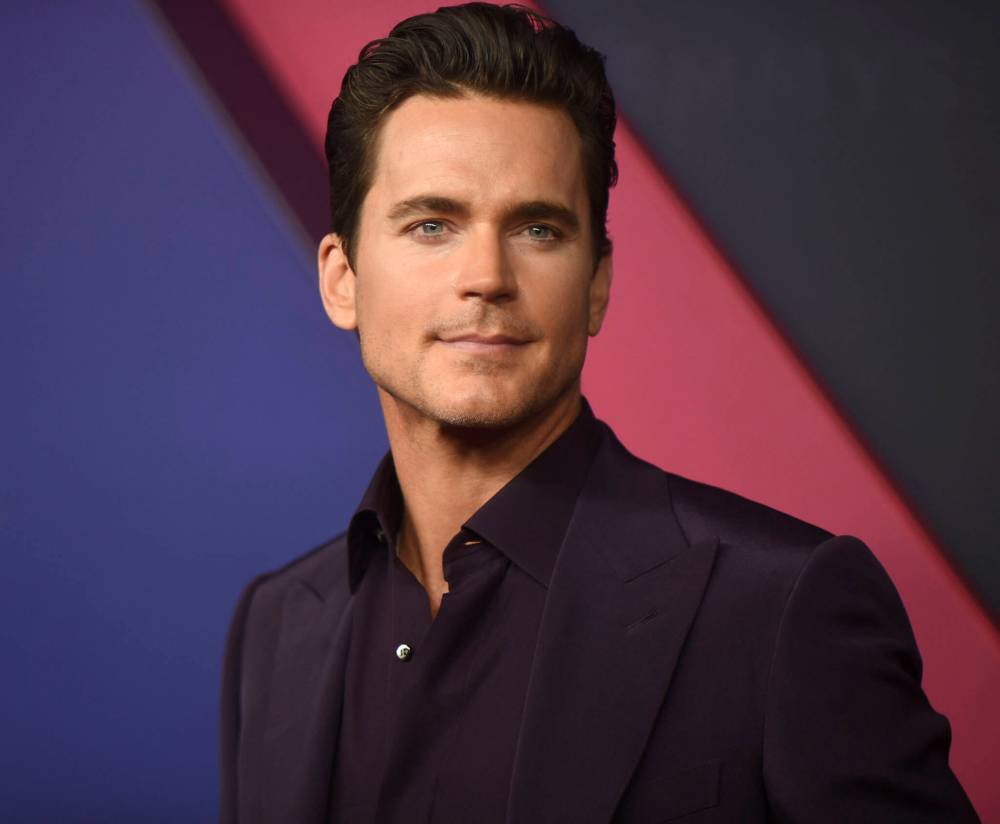
Richard Shotwell / Invision Files
Actor Matt Bomer is cited by looksmaxxers as an ideal esthetic to attain.
Looksmaxxing goes beyond basic grooming and gym-going — that’s “softmaxxing” — in pursuit of Chaddom. Looksmaxxing is defined by extremes. It often involves injectables and surgeries and debunked pseudoscience, such as breaking the bones in your face via blunt-force trauma in order to “restructure them,” which is how we’ve come to young men smashing themselves in the face with hammers.
Like all impossible beauty standards, there is a hypermasculine ideal. Their faces must be lantern jawed, like Superman, with “hunter eyes” (which are deep set, with a low brow — the opposite of “doe eyes,” basically) and very specific ratios for facial symmetry. This esthetic skews white, which could explain looksmaxxing’s associations with the online far right.
Looksmaxxers do not call their makeovers “glow ups.” No, they are “ascending.” (Are you exhausted yet? I am.)
The “star” of this movement is Braden Peters, a 20-year-old American streamer/influencer who, I am not kidding, calls himself Clavicular. He is no longer a manosphere fringe figure: he was, just yesterday, profiled by the New York Times.
Clavicular has been injecting himself with testosterone since he was 14. He says he has used meth to “leanmaxx” and achieve hollow cheeks. He uses steroids, which he claims has made him infertile.
When I first fell down this rabbit hole, it was hard to parse whether this is a widespread societal problem or, you know, just the one guy.
But it’s not just the one guy. It’s a growing number of guys. And it would be easy to mock and dismiss if it wasn’t so disturbing, especially since Clavicular and guys like him seem to have at least some influence on boys and young men.
He has hundreds of thousands of followers. He sells his looksmaxxing program, the “Clavicular System,” for US$49.
Subjecting oneself to pain and possibly long-term physical harm and disfigurement in pursuit of an impossible ideal will sound incredibly familiar to women — the same women incels blame for the insecurities driving them to looksmaxxing.
It is a bit fascinating how, in order to achieve this ideal of hypermasculinity, they are engaging in behaviours that, previously, were associated with femininity (plastic surgery, injectibles, grooming, supplements, teeth whitening, even the act of caring about appearance at the expense of all other interests).
But the boggling thing about this is that “attractiveness” is highly subjective. The physical qualities I might find attractive may differ widely from those you find attractive. A rose is beautiful, but so is a daffodil. They look nothing alike. You might prefer roses to daffodils, but that doesn’t mean daffodils are ugly.
That’s why toxic beauty standards are so damaging to everyone. They will trick you into thinking there’s only one way to be “attractive,” that there’s only one kind of face or one kind of body that is desirable, when that is demonstrably false.

They will trick you into wasting all your time, money and energy trying to attain that which is unattainable, and make you feel like there’s something wrong with you if you can’t. Which you can’t. No one can.
Additionally, physical attractiveness is but one measure of attractiveness. It’s deeply worrying and sad to me that these young men are not spending time cultivating the thing that actually makes someone attractive, which is a personality.
Maybe instead of hitting themselves in the face with a hammer, these dudes could, I don’t know, read a book?
Because I’m gonna go ahead and guess the reason they’re chronically dissatisfied in life — and in the dating scene — is not because they lack a symmetrical face.
winnipegfreepress.com/jenzoratti
Jen Zoratti is a columnist and feature writer working in the Arts & Life department, as well as the author of the weekly newsletter NEXT. A National Newspaper Award finalist for arts and entertainment writing, Jen is a graduate of the Creative Communications program at RRC Polytech and was a music writer before joining the Free Press in 2013. Read more about Jen.
Every piece of reporting Jen produces is reviewed by an editing team before it is posted online or published in print – part of the Free Press‘s tradition, since 1872, of producing reliable independent journalism. Read more about Free Press’s history and mandate, and learn how our newsroom operates.
Our newsroom depends on a growing audience of readers to power our journalism. If you are not a paid reader, please consider becoming a subscriber.
Our newsroom depends on its audience of readers to power our journalism. Thank you for your support.
Jen Zoratti is a columnist and feature writer working in the Arts & Life department, as well as the author of the weekly newsletter NEXT. A National Newspaper Award finalist for arts and entertainment writing, Jen is a graduate of the Creative Communications program at RRC Polytech and was a music writer before joining the Free Press in 2013. Read more about Jen.
Every piece of reporting Jen produces is reviewed by an editing team before it is posted online or published in print – part of the Free Press‘s tradition, since 1872, of producing reliable independent journalism. Read more about Free Press’s history and mandate, and learn how our newsroom operates.
Our newsroom depends on a growing audience of readers to power our journalism. If you are not a paid reader, please consider becoming a subscriber.
Our newsroom depends on its audience of readers to power our journalism. Thank you for your support.
Advertisement Advertise With Us
Advertisement Advertise With Us