New bill would increase fines, enforcement powers for illegal cannabis in Nova Scotia
Advertisement
Read this article for free:
or
Already have an account? Log in here »
To continue reading, please subscribe:

Digital Subscription
One year of digital access for only $205*
- Enjoy unlimited reading on winnipegfreepress.com
- Read the E-Edition, our digital replica newspaper
- Access News Break, our award-winning app
- Play interactive puzzles
*First annual payment billed as $205.00 + GST for one year. This annual subscription will automatically renew at $233.00 + GST every 52 weeks (10% off the regular annual price of $259.35). Offer available to new and qualified returning subscribers only. Cancel any time.
To continue reading, please subscribe:
Add Free Press access to your Brandon Sun subscription for only an additional
$1 for the first 4 weeks*
- Enjoy unlimited reading on winnipegfreepress.com
- Read the E-Edition, our digital replica newspaper
- Access News Break, our award-winning app
- Play interactive puzzles
*Your next Brandon Sun subscription payment will increase by $1.00 and you will be charged $17.95 plus GST for four weeks. After four weeks, your payment will increase to $24.95 plus GST every four weeks.
Read unlimited articles for free today:
or
Already have an account? Log in here »
Hey there, time traveller!
This article was published 25/02/2026 (189 days ago), so information in it may no longer be current.
HALIFAX – Nova Scotia’s former justice minister and a legal expert are raising concerns about legislation tabled Wednesday to strengthen enforcement of cannabis rules amid a crackdown on illegal dispensaries.
The bill increases fines and allows peace officers including constables and conservation officers to enforce rules alongside police, which Justice Minister Scott Armstrong said is needed to further deter illegal operations.
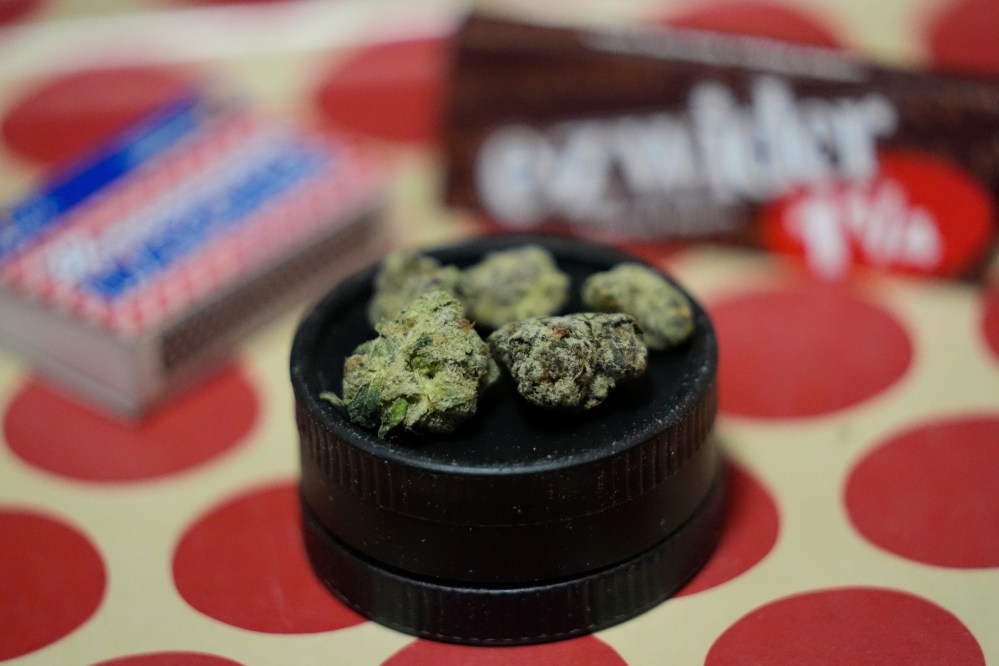
“Illegal cannabis is a risk to public health and safety, and illegal dispensaries are a threat to consumers, youth and the integrity of the regulated system,” Armstrong said Wednesday before tabling the proposed law.
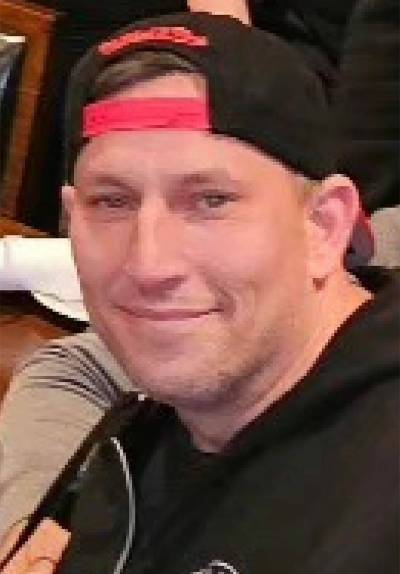
However, Wayne MacKay, professor emeritus of law at Dalhousie University, and former justice minister Becky Druhan, who sits as an Independent in the legislature, worried about the lack of detail surrounding how these additional enforcement officers would be prepped for enforcement.
MacKay also feared Indigenous communities could be disproportionately affected by ramped-up enforcement and minimum fines.
It comes after the provincial government issued a directive Dec. 4 that police prioritize efforts to stop illegal cannabis, with Armstrong sending a letter to 13 Mi’kmaq chiefs asking for their co-operation.
That move raised the ire of critics including the Assembly of Nova Scotia Mi’kmaw Chiefs, several First Nations members, two legal experts and opposition leaders, some of whom have accused the province of encouraging law enforcement to target Indigenous communities.
Premier Tim Houston and Armstrong have repeatedly said the measures were not meant to target Mi’kmaq cannabis operations and that all unlicensed cannabis is illegal.
Provincial law controls cannabis sales through 51 Nova Scotia Liquor Corp. outlets across the province but many Mi’kmaq cannabis sellers assert they have a treaty right to do so.
MacKay said the enforcement ramp-up comes “at a time when there’s both public and judicial question” around Indigenous rights to sell cannabis on First Nation land.
“There are significant arguments being made (in court) that this is a matter of Aboriginal rights that people are dealing with … or even treaty rights in some cases,” he said.
“To double down by upping the fines and upping enforcement, I certainly don’t think that will be in any way helpful to the efforts of the province to promote reconciliation with Indigenous people,” MacKay said.
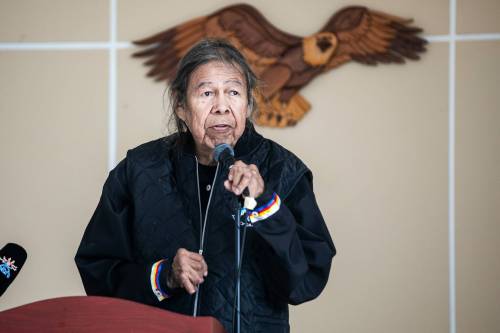
Sipekne’katik First Nation Chief Michelle Glasgow has said the premier, justice minister and minister of L’nu affairs are banned from band lands over the dispute, accusing the Houston government of continuing “to radicalize colonial practices to suppress our community and fellow Mi’kmaw by forming laws that direct harm against us.”
MacKay said expanded enforcement could disproportionately affect Indigenous Peoples.
“Whether or not you intend in any way to target Indigenous people, if the effect of your legislation is to have a more negative effect on Indigenous people than other parts of the population, that is problematic.”
In April, the province changed regulations so that Mi’kmaq communities could partner with the liquor corporation in opening cannabis retail stores on reserve. Armstrong said his department was not aware of any agreements having been signed as of Wednesday.
MacKay said it’s concerning that the bill’s fines are “strikingly harsher” than what’s in place and come with minimum and maximum set amounts, he said.
Under the existing act, the lowest cannabis offence could be fined $150 and under, while the most serious case can be fined up to $25,000.
The bill proposes the introduction of minimum fines for offences – ranging from $250 to $500 for lower offences and as much as $15,000 to $50,000 for more serious ones.
MacKay said that would take away the discretion of the sentencing judge to decide an appropriate fine.
“This should bother the larger society … these kind of things tend to be very circumstantial and context-specific. So there’s a lot of value in giving a fair bit of discretion to the sentencing judge who has heard all the evidence and is the one most informed of the full situation,” he said.

The bill also seeks to fine landlords who knowingly allow unregulated cannabis dispensaries to operate on their property. The new fine would be between $5,000 and $25,000.
Druhan said her biggest concern is that the province is ramping up enforcement while failing to open up paths to legal cannabis sales beyond the strict NSLC model.
“It continues to be a restricted market that doesn’t allow opportunity for expansion into rural areas. That’s problematic. There’s no provision for public education … while we absolutely need to see enforcement around risky distribution of illicit cannabis, this blanket enforcement is not what Nova Scotia needs right now,” she said.
Druhan said the province ought to open up the regulated cannabis market and allow for the drug to be legally accessible in more rural communities.
This report by The Canadian Press was first published Feb. 25, 2026.