Treated like a king, then smacked into the heavens: Considering the American baseball
Advertisement
Read this article for free:
or
Already have an account? Log in here »
To continue reading, please subscribe:

Digital Subscription
One year of digital access for only $205*
- Enjoy unlimited reading on winnipegfreepress.com
- Read the E-Edition, our digital replica newspaper
- Access News Break, our award-winning app
- Play interactive puzzles
*First annual payment billed as $205.00 + GST for one year. This annual subscription will automatically renew at $233.00 + GST every 52 weeks (10% off the regular annual price of $259.35). Offer available to new and qualified returning subscribers only. Cancel any time.
To continue reading, please subscribe:
Add Free Press access to your Brandon Sun subscription for only an additional
$1 for the first 4 weeks*
- Enjoy unlimited reading on winnipegfreepress.com
- Read the E-Edition, our digital replica newspaper
- Access News Break, our award-winning app
- Play interactive puzzles
*Your next Brandon Sun subscription payment will increase by $1.00 and you will be charged $17.95 plus GST for four weeks. After four weeks, your payment will increase to $24.95 plus GST every four weeks.
Read unlimited articles for free today:
or
Already have an account? Log in here »
Hey there, time traveller!
This article was published 07/04/2026 (186 days ago), so information in it may no longer be current.
PITTSBURGH (AP) — I’m no pitcher. But the first time I made my father flinch with my fastball, I felt as if I had grown up that day. My hand was finally big enough to affect the ball’s trajectory and make his sting.
It was 1978. I was 10. “I don’t know how much longer I can catch these,” said my already aging parent, who would deny two decades later that he ever said anything of the sort until I was at LEAST 14.
How many children have held an American baseball since it sort of coalesced into being in the latter half of the 19th century? How many have felt those nubby stitches underneath their fingers while their palms cupped the smooth white leather? How many have swung a tiny bat — wooden, then aluminum, now graphite — and connected with a softer, younger kids’ baseball, a “T-ball,” and felt that unique thrill of kinetic energy and possibility?
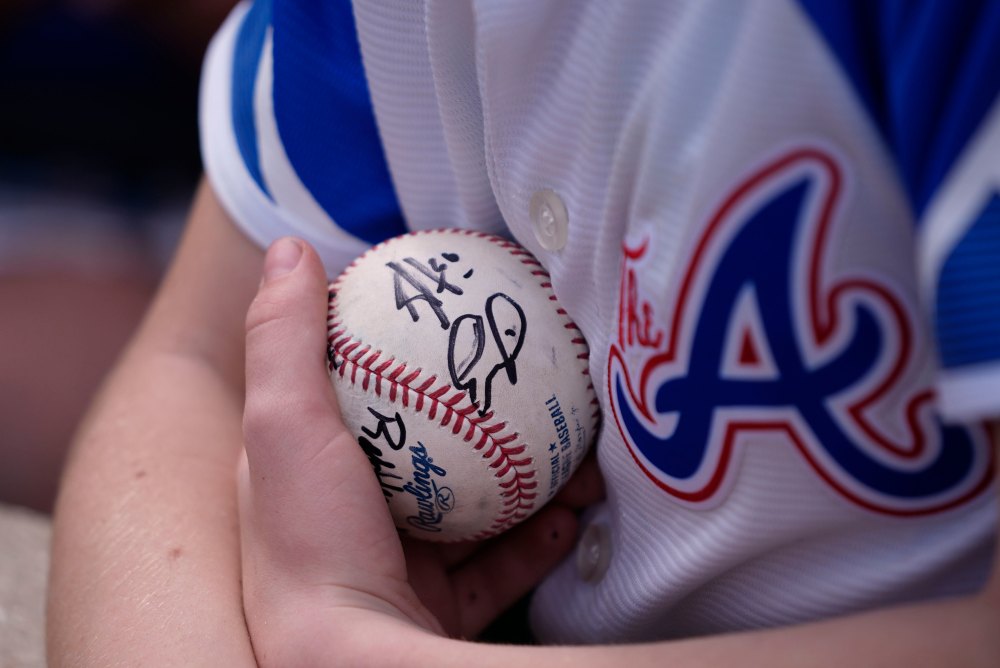
Baseball is, in the end, all about the ball. In the pantheon of the national pastime, bat and glove — as crucial as they are — are but the supporting cast. The ball remains forever at the center. Spinning, bobbing, weaving. Pulverized, soaring, gone.
The baseball itself is a curious object. One killed a man once, Ray Chapman, in 1920. These days dozens are used in a single big-league game.
There, it emerges pristine onto a field from an umpire’s waist pouch. From there, it is held meticulously and lovingly and gingerly by one player, who arranges fingers just so and treats the leather sphere like a firstborn for a few seconds. Then it is delivered to another player, an opponent with a large stick who tries mightily to smack the bejeezus out of it. You gotta feel for that little ball.
When I moved overseas in 1979, I met an elderly man who had once interviewed Ted Williams, one of the game’s greatest hitters. He — the man, not Williams — knew I was feeling homesick for baseball in particular. When I produced my ball and glove, he said something to the effect of: “As long as you have a baseball, you’re home.”
I still pack one most everywhere I go. For me, it is America encapsulated — burning a hole in my glove or my jacket pocket, biding its time, ready for the next big game … of catch.
___
Ted Anthony has written about American culture for The Associated Press since 1992. This story is part of a recurring series, “American Objects,” marking the 250 anniversary of the United States.