Plastic garden gear can add microplastics to the soil. Here are some alternatives

Advertisement

Advertise with us

It’s seed-starting and planting season, and that means it’s likely buying season. This year, consider not only the gardening gear and plants you bring home, but also whether they’re made of, contained in or wrapped in plastic.

Read this article for free:


or

Already have an account? Log in here »

To continue reading, please subscribe:

Subscribe and receive a limited-edition Free Press branded hat or tote.

Digital Subscription

One year of digital access for only $205*

  • Enjoy unlimited reading on winnipegfreepress.com
  • Read the E-Edition, our digital replica newspaper
  • Access News Break, our award-winning app
  • Play interactive puzzles

*First annual payment billed as $205.00 + GST for one year. This annual subscription will automatically renew at $233.00 + GST every 52 weeks (10% off the regular annual price of $259.35). Offer available to new and qualified returning subscribers only. Cancel any time.

To continue reading, please subscribe:

Add Free Press access to your Brandon Sun subscription for only an additional

$1 for the first 4 weeks*

  • Enjoy unlimited reading on winnipegfreepress.com
  • Read the E-Edition, our digital replica newspaper
  • Access News Break, our award-winning app
  • Play interactive puzzles
Start now

*Your next Brandon Sun subscription payment will increase by $1.00 and you will be charged $17.95 plus GST for four weeks. After four weeks, your payment will increase to $24.95 plus GST every four weeks.

It’s seed-starting and planting season, and that means it’s likely buying season. This year, consider not only the gardening gear and plants you bring home, but also whether they’re made of, contained in or wrapped in plastic.

Those plastic products eventually break down into minuscule particles called microplastics, which can leach into and contaminate our food and the earth in landfills. Common household sources of microplastics include food-storage containers, kitchen utensils, detergent bottles and even some clothing, and the particles have been detected in everything from drinking water and food to human bodies.

But have you considered what could be lurking in your garden?
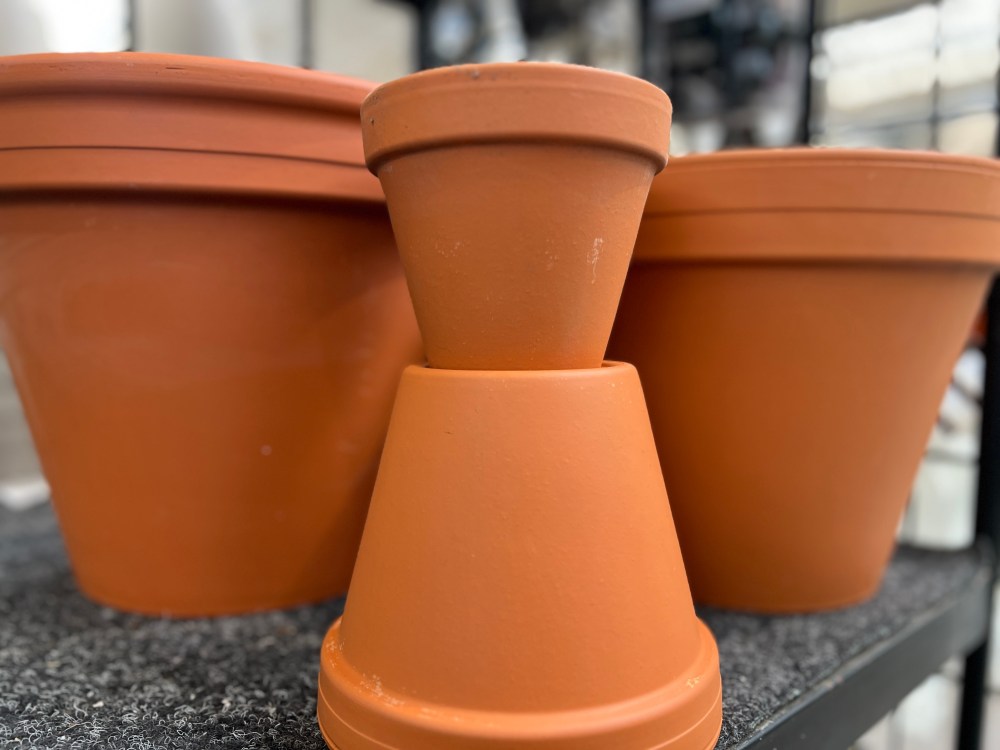
An assortment of plastic-free terracotta planting pots are displayed on Long Island, N. Y., on April 8, 2026. (Jessica Damiano via AP)

Soil contains millions of beneficial microorganisms, like bacteria and fungi, but it can also harbor microplastics. So, what’s a health- and environment-conscious gardener to do?

First, don’t add to the problem

We might not be able to reverse the damage, but there are steps we can take to minimize our contributions to the plastics problem and move toward a cleaner future. You might even save a few bucks in the process.

Instead of buying plastic seed-starting trays, consider using a soil-blocking kit to make your own vessels. The kit’s metal molds compress a moist mixture of compost, peat moss, perlite and nutrients into solid cubes that stand on their own.

The cubes benefit fledgling plants by air-pruning their roots. That means that instead of circling and strangling themselves when they hit the sides of a pot, the roots will pause their outward reach and instead grow denser when exposed to air at the edges of the blocks. They’ll settle into the garden more easily, too.

If you’re not up for a DIY project, consider pots or trays made of biodegradable coir or composted manure (don’t worry, they’re odor-free and could pass for cardboard).

When buying containers for larger plants, look to natural materials, like wood or terracotta.

Root vegetables, herbs and tomatoes grow especially well in fabric grow bags, which come in a variety of sizes. Those made for potatoes include a roll-up “door” that makes harvesting easy. Check the labels to ensure they’re made of natural, not synthetic, fibers.

Whenever possible, buy bare-root plants over those sold in plastic pots.

Keep things basic with compost

Start your own compost pile so you won’t need to be as much soil or fertilizer. There will be no plastic bags to discard, and you’ll know exactly what went into the amendment. If that’s not possible, buy compost in bulk; it’s cheaper than bagged, anyway.

Choose canvas tarps over plastic ones and never use landscape fabric under beds or borders. Instead, stick with shredded bark, wood chips or dry leaves to discourage weeds, except in fire zones, where gravel is preferred as a matter of safety.

Use bamboo, wood or metal stakes to support tomatoes and vining plants. Secure them with a natural twine, like hemp or jute.

Wooden popsicle sticks make great plant markers.

And if you must buy plastic, avoid single-use items like flimsy seed trays. Using sturdy ones that will last for many years before discarding would be a step in the right direction. And a lot of little steps will add up.

___

Jessica Damiano writes regular gardening columns for The Associated Press. She publishes the award-winning Weekly Dirt Newsletter. Sign up here for weekly gardening tips and advice.

___

For more AP gardening stories, go to https://apnews.com/hub/gardening.

Report Error Submit a Tip

More Stories

Bombers bring A-game in avenging Labour Day loss

Taylor Allen 7 minute read Preview

Bombers bring A-game in avenging Labour Day loss

Taylor Allen 7 minute read Yesterday at 7:11 PM CDT

This season hasn’t been overly pretty at times for the Winnipeg Blue Bombers.

But if they’ve proven anything over their last four games, including Saturday’s 19-6 Banjo Bowl victory over the Saskatchewan Roughriders, it’s that they’re capable of beating the CFL’s best when they come to play.

“The sky’s the limit for this team. We can hang with anyone, and we know that,” said receiver Tommy Nield. “It’s just a matter of being consistent and playing team football.”

The Bombers, now 7-6, avenged their Labour Day Classic loss and won the season series with the Riders (8-5) thanks to point differential in their head-to-head meetings.

Read
Yesterday at 7:11 PM CDT

The port of Churchill — but done right

Editorial 4 minute read Preview

The port of Churchill — but done right

Editorial 4 minute read Saturday, Sep. 12, 2026

The seagoing grain carrier wasn’t christened with a champagne bottle. There was no confetti or streamers. Nevertheless, the Aug. 31 event marking the first shipment of grain to be loaded at the Port of Churchill since 2020 was celebrated like the launch of a brand new vessel.

The presence of the federal minister of northern and arctic affairs, provincial cabinet ministers and leaders and elders from several northern First Nations signalled that the fast-tracked process of refurbishing and buffing up Manitoba’s deep-water seaport gem is gaining momentum.

For OneNorth, the partnership of 29 First Nations and 12 northern communities which owns the Port of Churchill and the Hudson Bay Railway (both operated by the Arctic Gateway Group) the event heralded a new beginning. It’s been eight years since OneNorth purchased the port and railroad, and six years since grain was moved by rail through Manitoba and then by ship to European markets. Two more grain shipments, plus shipments of potash and critical minerals, will continue through the fall.

When Prime Minister Mark Carney solicited the premiers to suggest “nation-building” projects following his election in 2025, Premier Wab Kinew pitched a Manitoba trade corridor that would move wheat, critical minerals, potash and energy (oil or liquid natural gas) through the Port of Churchill.

Read
Saturday, Sep. 12, 2026

Citizen reports help highlight connectivity issues across southwest Manitoba

Nicole Buffie 5 minute read Preview

Citizen reports help highlight connectivity issues across southwest Manitoba

Nicole Buffie 5 minute read Saturday, Sep. 12, 2026

A southwestern Manitoba man has created a map to document cell service blackout spots in an effort to push for better access in rural areas.

Mark Custance compiled more than 300 citizen reports over the last few months to document where service in southwest Manitoba is strong, spotty or doesn’t exist at all.

“I’ve heard people complain and say, ‘cell service sucks’ or ‘this is not working.’ But what does the data actually say?” Custance said from his office in Melita, where he has installed a cell-service booster to maintain connectivity with the rest of the world.

Analyzing where service is good and poor, he cross-references it with the location of cellphone towers across the region.

Read
Saturday, Sep. 12, 2026

Port of Churchill expansion could chase belugas away, U of M researcher says

Nicole Buffie 4 minute read Preview

Port of Churchill expansion could chase belugas away, U of M researcher says

Nicole Buffie 4 minute read Yesterday at 9:07 AM CDT

As plans to expand the Port of Churchill into a four-season trade corridor gathers momentum, a University of Manitoba researcher has published a report on what ship traffic could mean for the beluga whales that gather in the Churchill River estuary each summer.

Veronica Coppolaro said more vessels in the waterways bring a risk that belugas will stop using the estuary for migration, which would impact the ecological landscape, tourism and communities that rely on the animals for food and cultural purposes.

“There are studies showing that (noises) change the way they swim, they change the way (the whales) are vocalizing, they change their main activity, and so this (expansion) can have consequences at different levels,” she said.

The Churchill river estuary is a marine habitat where the Churchill River empties into Hudson Bay. During the summer months belugas gather in the area to feed and give birth.

Read
Yesterday at 9:07 AM CDT

Retired sportscaster Scott Oake determined as fundraising for women's addictions treatment facility enters home stretch

Melissa Martin 4 minute read Preview

Retired sportscaster Scott Oake determined as fundraising for women's addictions treatment facility enters home stretch

Melissa Martin 4 minute read Thursday, Sep. 10, 2026

For now, the patch of land just east of the Victoria Hospital doesn’t look like much: just a field of rocks, mounded dirt, and concrete piles driven into the earth. Yet when Scott Oake looks over the site, he can already imagine how it will look in just over a year’s time, when the new Anne Oake Family Recovery Centre is expected to open.

It’s easier to picture this time around. In 2020, when the recently-retired CBC sportscaster and his late wife, Anne, were building their first labour of intermingled grief and love, the Bruce Oake Recovery Centre for men, it was hard for him to wrap his mind around how a raw construction site could transform into a welcoming addictions treatment facility.

When that centre opened in 2021, Oake found it looked “almost identical” to the architect’s renderings. So it’s easy to hope the Anne Oake Centre will be the same. It will be the first facility of its kind, its founders believe, not only in Canada but in North America: a place where 50 to 70 women can pursue sobriety while staying with their children.

“At Bruce Oake there’s a culture of love, and most of all a culture of hope,” Oake said, speaking at the site Thursday after a media conference to announce the final push of the centre’s fundraising campaign. “I can feel it every time I walk into that building. And I know it will be the same here.”

Read
Thursday, Sep. 10, 2026

Mayoral candidate denounced for online comments

Morgan Modjeski 3 minute read Preview

Mayoral candidate denounced for online comments

Morgan Modjeski 3 minute read Updated: Yesterday at 2:34 PM CDT

A Winnipeg mayoral candidate is facing criticism after he posted derogatory comments about immigrants and used the word “gay” as an insult online.

Sydney Adams said the response she got from Zac Uminski, who is seeking the city’s top office alongside 12 other individuals, left her baffled. She recently criticized Uminski over his use of artificial intelligence to produce campaign material, to which he replied he can’t afford to hire people to make art or “do whatever gay s—- you think is better than AI.”

“What was going through my head was that this is just unacceptable,” she said.

Adams said Uminski also posted other disparaging remarks about newcomers.

Read
Updated: Yesterday at 2:34 PM CDT