

A raggedy toy to a treasured symbol of childhood: The teddy bear
Advertisement
Read this article for free:
or
Already have an account? Log in here »
To continue reading, please subscribe:
Digital Subscription
One year of digital access for only $1.44 a week*
- Enjoy unlimited reading on winnipegfreepress.com
- Read the E-Edition, our digital replica newspaper
- Access News Break, our award-winning app
- Play interactive puzzles
*Billed as $5.77 plus GST every four weeks. After 52 weeks, price increases to the regular rate of $19.95 plus GST every four weeks. Offer available to new and qualified returning subscribers only. Cancel any time.
To continue reading, please subscribe:
Add Free Press access to your Brandon Sun subscription for only an additional
$1 for the first 4 weeks*
- Enjoy unlimited reading on winnipegfreepress.com
- Read the E-Edition, our digital replica newspaper
- Access News Break, our award-winning app
- Play interactive puzzles
*Your next Brandon Sun subscription payment will increase by $1.00 and you will be charged $17.95 plus GST for four weeks. After four weeks, your payment will increase to $24.95 plus GST every four weeks.
Read unlimited articles for free today:
or
Already have an account? Log in here »
PHOENIX (AP) — The circular muzzle. The little nose tip. The button eyes and two round, fuzzy ears. What is it about the teddy bear that has kept children wrapped around its furry paws for over a century?
The quintessential American toy started in 1902 as just clothing scraps and sawdust stitched together by Morris and Rose Michtom, Jewish candy store owners in Brooklyn.
“Nothing says childhood better than a teddy bear,” says Michael Kimmel, author of “Playmakers: The Jewish Entrepreneurs Who Created the Toy Industry in America” and Morris Michtom’s great-great-nephew. “It’s an utterly genderless toy. It is embraced by both boys and girls.”
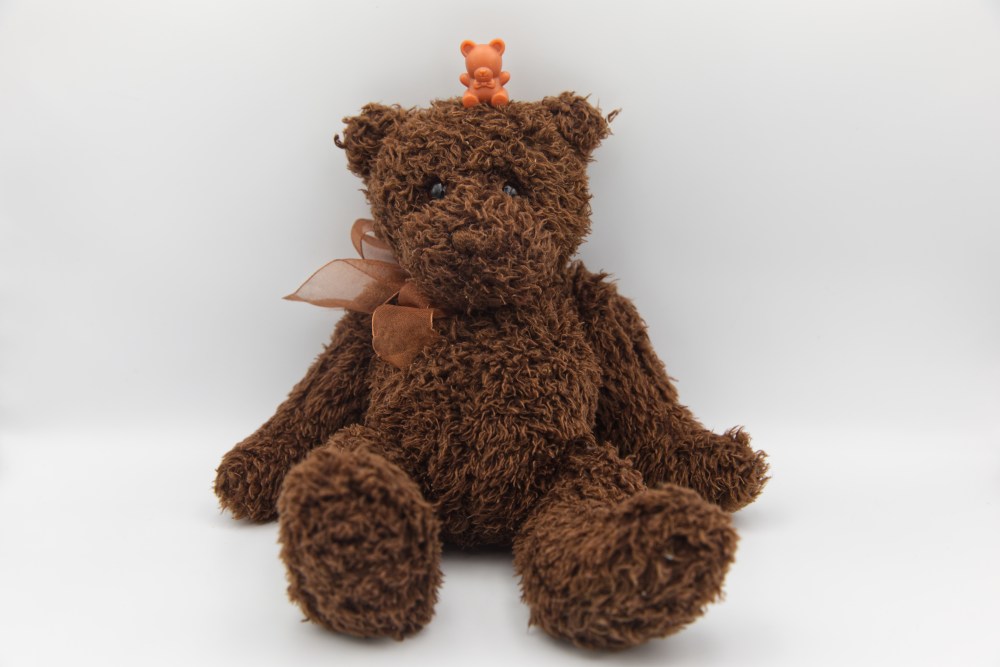
The teddy bear’s origin story actually starts earlier that year. President Theodore Roosevelt had refused to shoot a tied-up black bear during a hunting trip. Cartoonist Clifford Berryman published a political cartoon depicting Roosevelt’s decision that caught the Michtoms’ eyes. They were inspired to fashion a toy that went on to be called “Teddy’s Bear” as a nod to the president and his nickname.
And a fad was born.
After selling a few, the Michtoms received more orders. Copycats emerged. The teddy bear was widely considered the first stuffed toy that wasn’t a rag or porcelain doll, Kimmel said. It was affordable, comforting and kid-size. Some preachers actually worried the playful plushies would somehow corrupt young girls and extinguish their desire to be a mother.
Over the decades, the teddy bear became an icon. Elvis Presley crooned about being someone’s “lovin’ teddy bear.” An original Michtom-crafted teddy bear retains a place of honor in the Smithsonian National Museum of American History. And, of course, being a “teddy bear” has come to mean someone who is, in general, sweet and cuddly.
Says Kimmel: “There are people who, when they finally move out of the house and go to college or get married, that’s the one thing that they just can’t part with because it connects them to that innocent childhood.”
___
Part of a recurring series, “American Objects,” marking the 250th anniversary of the United States. For more stories on the anniversary, click here.