Toronto man’s HIV no longer detectable after bone marrow transplant
Advertisement
Read this article for free:
or
Already have an account? Log in here »
To continue reading, please subscribe:

Digital Subscription
One year of digital access for only $205*
- Enjoy unlimited reading on winnipegfreepress.com
- Read the E-Edition, our digital replica newspaper
- Access News Break, our award-winning app
- Play interactive puzzles
*First annual payment billed as $205.00 + GST for one year. This annual subscription will automatically renew at $233.00 + GST every 52 weeks (10% off the regular annual price of $259.35). Offer available to new and qualified returning subscribers only. Cancel any time.
To continue reading, please subscribe:
Add Free Press access to your Brandon Sun subscription for only an additional
$1 for the first 4 weeks*
- Enjoy unlimited reading on winnipegfreepress.com
- Read the E-Edition, our digital replica newspaper
- Access News Break, our award-winning app
- Play interactive puzzles
*Your next Brandon Sun subscription payment will increase by $1.00 and you will be charged $17.95 plus GST for four weeks. After four weeks, your payment will increase to $24.95 plus GST every four weeks.
Read unlimited articles for free today:
or
Already have an account? Log in here »
TORONTO –
A Toronto patient who has been living with HIV for 27 years is in remission – and potentially cured, according to his doctors – after a bone marrow transplant from a donor naturally resistant to the virus.
If he remains in remission for about two and a half years, the 62-year-old will join 10 people in the world currently considered cured of HIV.
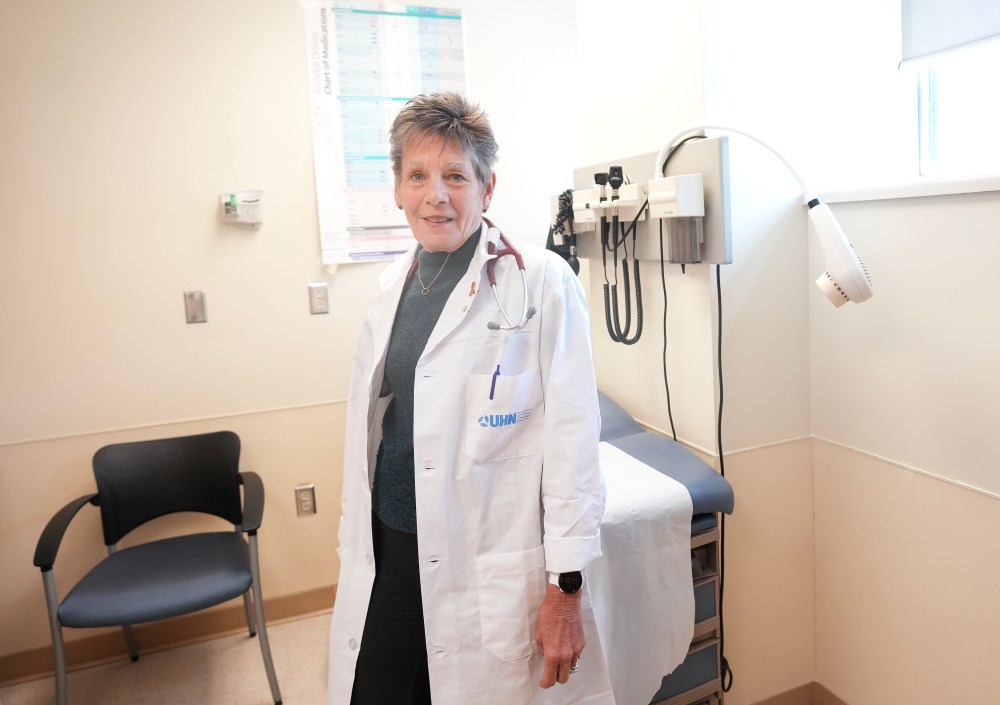
The patient was diagnosed with an aggressive form of leukemia in November 2021 and needed a bone marrow transplant. His medical team of clinicians at the University Health Network, Unity Health Toronto and the University of Toronto say they saw an opportunity to cure his HIV at the same time, a feat first accomplished in Berlin in 2007, by finding a donor match with a genetic mutation resistant to the virus.
“We feel pretty confident that it’s gone, but it’s hard for us to say for absolute sure right now that he is cured,” said Dr. Sharon Walmsley, director of the HIV Clinic at Toronto General Hospital.
Walmsley, who has been the Toronto patient’s doctor since he was diagnosed with HIV and an aggressive lymphoma in 1999, said it was a miracle he survived at the time.
To think that less than three decades later he’d be in “sustained remission” with HIV undetected for almost a year would have been inconceivable, she said.
“It’s really an incredible journey.”
THE TORONTO PATIENT
In July 2020, Walmsley noticed the patient’s blood counts were abnormal when he came in for a routine test.
“I knew that something wasn’t right,” she said, so she sent him to Princess Margaret Cancer Centre, where an oncologist diagnosed him with acute myelogenous leukemia and determined he needed a bone marrow transplant.
The search began to find the best bone marrow match. The ideal donor would also have a CCR5 gene mutation resistant to HIV.
CCR5 is a protein on the surface of an immune cell that acts as the door that HIV enters to infect the body, but about one per cent of the population, primarily of northern European descent, are deficient of this gene.
That means there is no door for the virus to enter, “and so the virus can’t get into the cells,” said Dr. Mario Ostrowski, a clinician-scientist at St. Michael’s Hospital who co-led the case with Walmsley. The new donor cells could also attack and eliminate the reservoir of virus-infected cells.
In March 2021, the transplant took place at Princess Margaret Cancer Centre. The patient had several complications afterward, such as pneumonia, which is not unusual after such a significant transformation of the immune system.
Ostrowski took samples of the patient’s cells to assess if the virus was disappearing. Once HIV was undetectable, the patient was clinically stable and his leukemia was in remission, the medical team took him off of anti-HIV therapy (ART) in July 2025 for the first time in almost three decades.
WHY DO WE NEED A CURE?
Many people living with HIV take ART once a day and have a near-normal life expectancy.
“And so people say, ‘Well, why do you need a cure then?’” Walmsley said.
“Well, because HIV can still cause comorbidity. People living with HIV, even when it’s well controlled, may have more heart disease or lung disease or kidney disease than the general population,” Walmsley said.
And the other big reason is stigma, which she said has not gone away.
When Ostrowski lectures students at the University of Toronto, he asks if they would rather have HIV, take a pill once a day for the rest of your life, and never get AIDS – or be diabetic and take insulin four times a day, monitor sugar levels, and face many risks of complications.
“One hundred per cent of people will always say they’d rather have diabetes. And that just shows you how potent the stigma of being HIV infected is. It affects people emotionally. It’s associated with a lot of violence and a lot of trauma that people are unaware of. And so there’s a lot of interest in HIV infected people to develop a cure,” he said.
Transplants are too medically risky, complicated and expensive to be used as a standard treatment for HIV, but Ostrowski said clinicians can learn clues about how to kill the virus from these patients.
There’s also steps that can be taken sooner, such as developing a standardized transplant program across Canada that identifies matches for HIV patients.
“Because this is going to happen again and again.”
This report by The Canadian Press was first published April 25, 2026.
Canadian Press health coverage receives support through a partnership with the Canadian Medical Association. CP is solely responsible for this content.
Note to readers:This is a corrected story. A previous version had an incorrect age for the patient.