What Canadian aid workers face in the Ebola outbreak ravaging the Congo
Advertisement
Read this article for free:
or
Already have an account? Log in here »
To continue reading, please subscribe:

Digital Subscription
One year of digital access for only $205*
- Enjoy unlimited reading on winnipegfreepress.com
- Read the E-Edition, our digital replica newspaper
- Access News Break, our award-winning app
- Play interactive puzzles
*First annual payment billed as $205.00 + GST for one year. This annual subscription will automatically renew at $233.00 + GST every 52 weeks (10% off the regular annual price of $259.35). Offer available to new and qualified returning subscribers only. Cancel any time.
To continue reading, please subscribe:
Add Free Press access to your Brandon Sun subscription for only an additional
$1 for the first 4 weeks*
- Enjoy unlimited reading on winnipegfreepress.com
- Read the E-Edition, our digital replica newspaper
- Access News Break, our award-winning app
- Play interactive puzzles
*Your next Brandon Sun subscription payment will increase by $1.00 and you will be charged $17.95 plus GST for four weeks. After four weeks, your payment will increase to $24.95 plus GST every four weeks.
Read unlimited articles for free today:
or
Already have an account? Log in here »
TORONTO –
People just keep coming. They know they have Ebola.
Some have converged at the gate of the Doctors Without Borders office in Bunia, the capital city of Ituri province in the Democratic Republic of Congo. Others travelled more than 1,000 kilometres to a health unit near the border with Uganda.
These are among the stories aid workers have recounted in recent days to Trish Newport, a Canadian emergency manager for the agency. She said no plan could have prepared them for this.
An outbreak of Ebola was declared in the DRC less than a week ago. It’s likely already spread to 600 people and led to almost 140 deaths, according to estimates cited by the World Health Organization, though officials believe the scale of the spread is much larger.
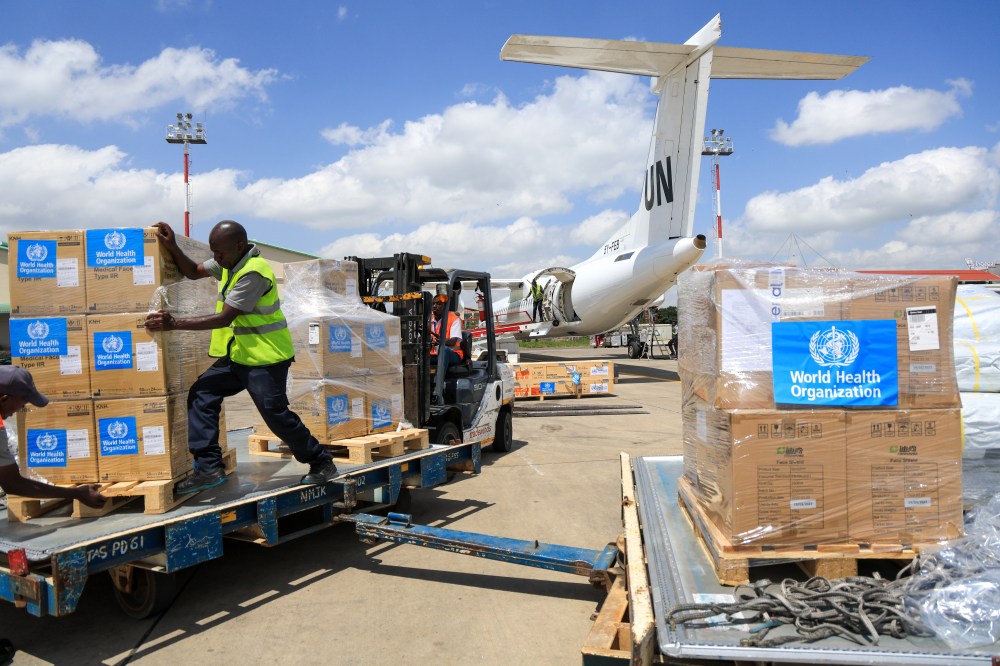
“You never have enough body bags to do safe and dignified burials. You don’t actually have enough PPE to be able to safely respond,” Newport said. Her staff were treating patients without touching them until a recent shipment of gear arrived. She’s sending 50 international staff to the outbreak zone.
Canadian aid workers who have been responding to Ebola outbreaks for decades, some who are on their way to the region or heading there in the coming days, say this epidemic is different.
There is no vaccine or treatment specifically for this species of Ebola, called Bundibugyo, which health officials believe was spreading for weeks before it was detected.
Ebola is a virus that affects the vascular system. The first symptoms are usually fever, fatigue and body aches, progressing to vomiting blood, bloody diarrhea or a bloody nose. It spreads through contact with the bodily fluids of an infected person, such as blood or vomit.
Typically, Newport said Ebola starts in one region and you can direct response efforts there, setting up a dozen or so beds at a designated treatment centre.
But in this case, outbreak responses are needed in Ituri province, where the outbreak was declared, as well as the neighbouring province of North Kivu, and Uganda.
Dr. Joanne Liu, who spearheaded Doctors Without Borders during an Ebola outbreak in 2014 to 2016 in West Africa, said she worries because contact tracing shows there are chains of transmission that are not connected to one to another, which means it has been circulating for a while.
Complicating matters further, she added, there’s a lot of movement in the population because it’s a mining zone, and chronic conflict has escalated over the last couple months, displacing more than 100,000 people.
“If we say that the population moves, it means that the virus moves,” said Liu, now director of the Pandemic and Emergency Readiness Lab at McGill University in Montreal.
“Knowing what we know, then we should really gear up and brace for the worst-case scenario, just to an extent. Because we know that we have all the mix for a big outbreak,” Liu said.
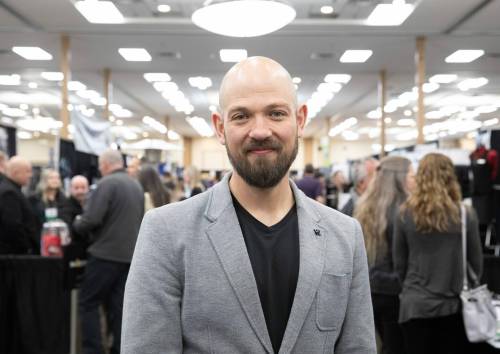
Halifax-based Chiran Livera, operations lead of the Canadian Red Cross, said he’s hoping to arrive in the Congo in the next few days, while a team of public health and logistics experts are already on their way.
Their work will involve contact tracing, psychological support and helping people get to treatment centres.
“The health-care system is quite strained even on the best of days. So it’s kind of the perfect storm that’s happening there,” he said.
Livera, who has been a part of aid relief in five of the Congo’s 17 Ebola outbreaks, said the first step is to contain the virus. The second is to stop the spread.
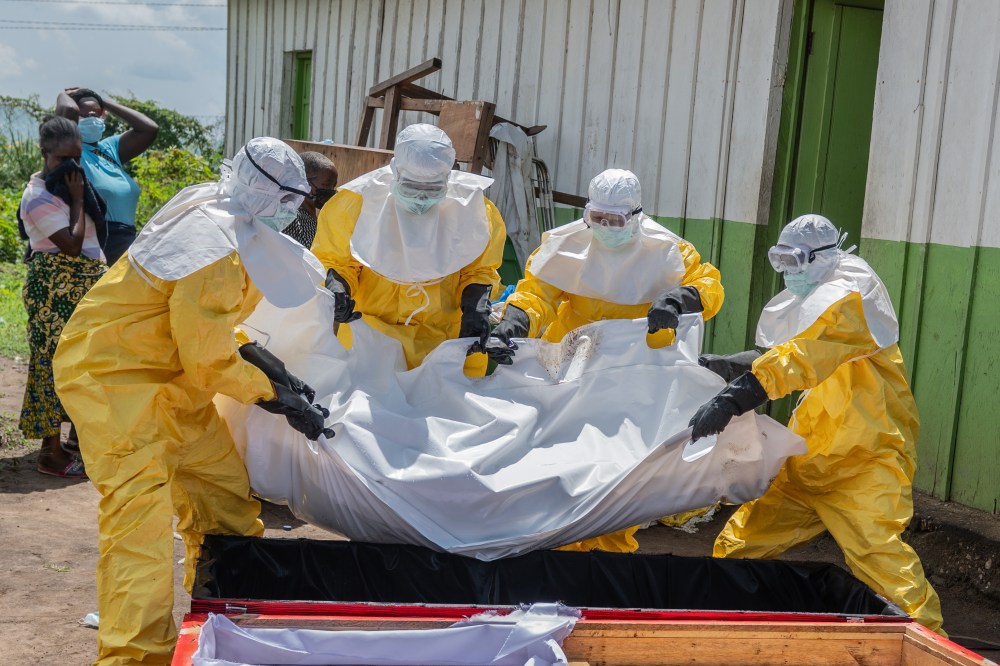
Ensuring a safe and dignified burial process is one way to do that. The Canadian Red Cross has specialists travelling to the region to train local staff and volunteers on how to safely clean and go forward with burial rituals without contracting Ebola.

As Livera prepares for his departure, he’s mindful of just how high-risk this virus is.
“I don’t want to become a liability when I’m there,” he said. That means interacting in a safe way, wearing protective equipment, and taking public health precautions when he returns to Canada.
“We have really stringent safety measures in place because we want to ensure that we’re there to support the people that are affected by the virus and we don’t get affected ourselves.”
This report by The Canadian Press was first published May 21, 2026.
Canadian Press health coverage receives support through a partnership with the Canadian Medical Association. CP is solely responsible for this content.
Advertisement Advertise With Us
Advertisement Advertise With Us