Cocktail of pills, caffeine and fire retardant put B.C. chinook salmon at risk: study
Advertisement
Read this article for free:
or
Already have an account? Log in here »
To continue reading, please subscribe:

Digital Subscription
One year of digital access for only $205*
- Enjoy unlimited reading on winnipegfreepress.com
- Read the E-Edition, our digital replica newspaper
- Access News Break, our award-winning app
- Play interactive puzzles
*First annual payment billed as $205.00 + GST for one year. This annual subscription will automatically renew at $233.00 + GST every 52 weeks (10% off the regular annual price of $259.35). Offer available to new and qualified returning subscribers only. Cancel any time.
To continue reading, please subscribe:
Add Free Press access to your Brandon Sun subscription for only an additional
$1 for the first 4 weeks*
- Enjoy unlimited reading on winnipegfreepress.com
- Read the E-Edition, our digital replica newspaper
- Access News Break, our award-winning app
- Play interactive puzzles
*Your next Brandon Sun subscription payment will increase by $1.00 and you will be charged $17.95 plus GST for four weeks. After four weeks, your payment will increase to $24.95 plus GST every four weeks.
Read unlimited articles for free today:
or
Already have an account? Log in here »
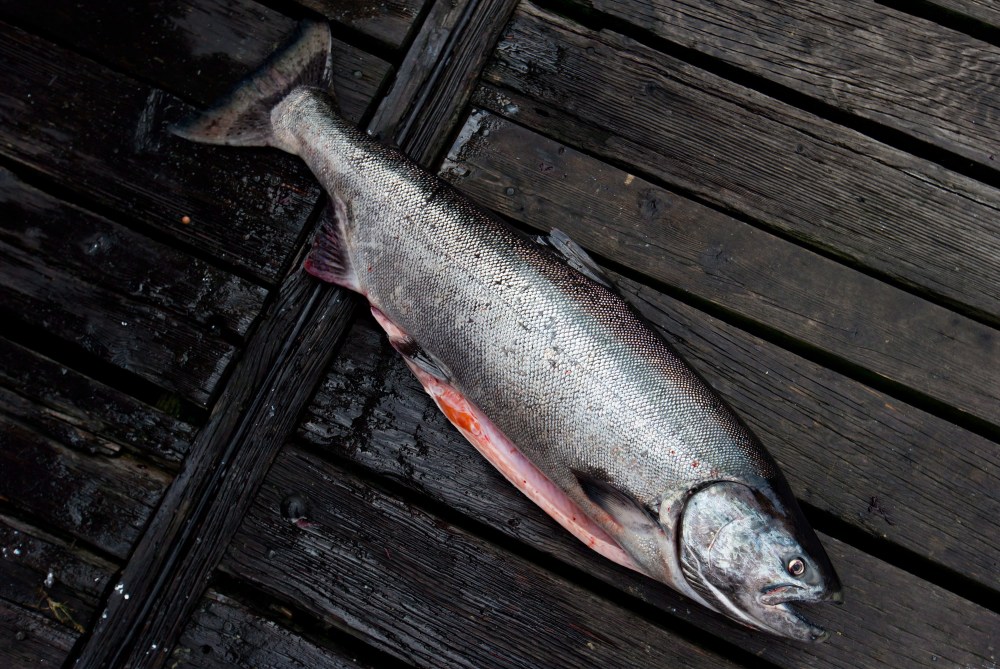
British Columbia researchers found more than 200 contaminants in water and chinook salmon tissue samples collected from five sites in the Lower Fraser River estuary including everything from cocaine and antidepressants to caffeine and flame retardants.
They say some of the “cocktail” that the juvenile fish are swimming in presents a possible risk to the young fish themselves and is concerning for the endangered whales that eat them.
The study, to be published in Environmental Toxicology and Chemistry, is believed to be the largest screening of its kind in the Lower Fraser River and was done by researchers from the Fisheries Department, Simon Fraser University, the Raincoast Conservation Foundation and Environment and Climate Change Canada.
Senior author Tanya Brown said of the contaminants found, 16 were deemed “priority contaminants,” meaning the amounts were high enough that they “had potential for adverse effects” on aquatic life.
Another 23 were labelled as being worth monitoring.
“Of those 16 priority contaminants, 15 were ones that were detected in water, and those are largely dominated by pharmaceuticals, like caffeine and antidepressants, blood pressure medication were detected, (as well as) metformin, which is used for diabetes,” she said.
Brown said the next step is to study what effect the contamination is having on the salmon’s health.
Decades of declines mean more than 85 per cent of chinook populations are now classified as either endangered or threatened.
She said the next studies will look at measurements such as tissue-level changes, cellular changes and metabolism changes in the fish.
Brown said the thresholds the study used to determine whether something could pose a risk to the fish come from research where chemicals were tested individually, not in the kind of “cocktail” that was found in the river.
“We really don’t have a grasp on the additive effects of this complex mixture that fish are essentially swimming in,” she said.
“I think there’s a potential for it to be much more concerning than what we can actually propose it may be.”

Brown said the Fraser River is fast-flowing and if contamination is found there, it’s possible it could be more concentrated in creeks and other bodies of water that don’t move as quickly.
She said along with being worried about the salmon, researchers were concerned about the implications for endangered whales that rely on them for food.
“We know that the Fraser River chinook populations account for up to 90 per cent of southern resident killer whales’ diet during summer months. So, they play a really significant role,” she said.
At last count, there were only 74 southern resident killer whales in existence.
This report by The Canadian Press was first published May 21, 2026.