From ribs to brisket and beyond, American barbecue is a delicious part of US tradition
Advertisement
Read this article for free:
or
Already have an account? Log in here »
To continue reading, please subscribe:

Digital Subscription
One year of digital access for only $205*
- Enjoy unlimited reading on winnipegfreepress.com
- Read the E-Edition, our digital replica newspaper
- Access News Break, our award-winning app
- Play interactive puzzles
*First annual payment billed as $205.00 + GST for one year. This annual subscription will automatically renew at $233.00 + GST every 52 weeks (10% off the regular annual price of $259.35). Offer available to new and qualified returning subscribers only. Cancel any time.
To continue reading, please subscribe:
Add Free Press access to your Brandon Sun subscription for only an additional
$1 for the first 4 weeks*
- Enjoy unlimited reading on winnipegfreepress.com
- Read the E-Edition, our digital replica newspaper
- Access News Break, our award-winning app
- Play interactive puzzles
*Your next Brandon Sun subscription payment will increase by $1.00 and you will be charged $17.95 plus GST for four weeks. After four weeks, your payment will increase to $24.95 plus GST every four weeks.
Read unlimited articles for free today:
or
Already have an account? Log in here »
Warning: Reading this could make you hungry.
That’s because we’re talking about barbecue — the “low and slow” cooking method that’s a hallmark of American culture.
Obviously, meat cooked over heat can be found in great-tasting forms all over the world – roasted, baked, grilled, all the ways. Many of them are regulars on the American plate. But there’s something about the way barbecue developed in the U.S., cuts of meat made falling-off-the-bone tender through hours of cooking over indirect heat or smoke at lower temperatures, often with a sauce used as a marinade or for basting or perhaps a mix of dry spices. See: Ribs. Brisket. Pork shoulder. (You’re hungry, aren’t you. Told you.)
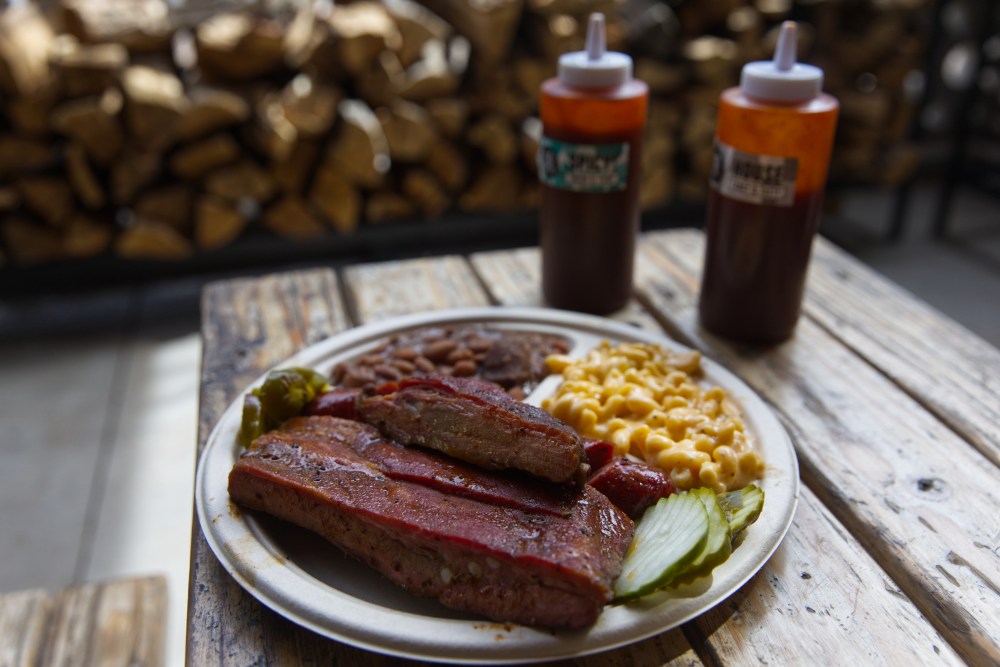
The roots of what’s become American barbecue go back before the U.S. officially even became a country, says Robert F. Moss, contributing barbecue editor for “Southern Living” magazine and author of “Barbecue, The History of American Institution.”
It’s a mix of influences, he says, starting between the indigenous peoples already here with their own cooking methods, the colonists who came from Europe with livestock new to the Americas and the enslaved Africans with their own cultures and traditions forcibly brought over and put to work.
“A lot of visitors to the United States … called out barbecue as being a particular American kind of thing,” Moss says. “From the very beginning, it was something distinctive to the Americas and something that Europeans recognized as being something different than the way they cooked meat.”

The development of what we think of as barbecue today had other influences over the centuries, like commercial refrigeration of the late 19th century and the subsequent popularity of the in-home version in the early decades of the 20th, which allowed people to buy and store cuts of meat in ways impossible in colonial times.
Another hallmark of American barbecue culture is how regional it is, with different sauces and cooking techniques in North Carolina vs Memphis vs Texas vs Georgia. Moss says that developed in the early part of the 20th century.
A local cook might start a restaurant and teach barbecue to his employees, who then went out on their own. “You can literally map out these barbecue mentors who sort of spun out all these other cooks, and you can see how their style sort of was handed down from one generation to the next,” Moss says. “And that’s where you start seeing all the things we think of as the iconic.”
___
Part of a recurring series, “American Objects,” marking the 250th anniversary of the United States. For more American objects, click here. For more stories on the anniversary, click here.