

Invasive mosquitoes and brain-swelling virus detected in B.C.’s Sea-to-Sky region
Advertisement
Read this article for free:
or
Already have an account? Log in here »
To continue reading, please subscribe:
Digital Subscription
One year of digital access for only $1.44 a week*
- Enjoy unlimited reading on winnipegfreepress.com
- Read the E-Edition, our digital replica newspaper
- Access News Break, our award-winning app
- Play interactive puzzles
*Billed as $5.77 plus GST every four weeks. After 52 weeks, price increases to the regular rate of $19.95 plus GST every four weeks. Offer available to new and qualified returning subscribers only. Cancel any time.
To continue reading, please subscribe:
Add Free Press access to your Brandon Sun subscription for only an additional
$1 for the first 4 weeks*
- Enjoy unlimited reading on winnipegfreepress.com
- Read the E-Edition, our digital replica newspaper
- Access News Break, our award-winning app
- Play interactive puzzles
*Your next Brandon Sun subscription payment will increase by $1.00 and you will be charged $17.95 plus GST for four weeks. After four weeks, your payment will increase to $24.95 plus GST every four weeks.
Read unlimited articles for free today:
or
Already have an account? Log in here »
VANCOUVER – Health officials in British Columbia say invasive mosquitoes and a virus that can cause brain swelling in humans have been detected in the Sea-to-Sky region north of Vancouver, after an investigation triggered by a cluster of childhood encephalitis cases.
Scientists began looking for the invasive mosquitoes between Squamish and Pemberton after three pediatric encephalitis infections in the region in August 2024.
Anya F. Smith, a senior scientist with the BC Centre for Disease Control, says in a news release that researchers found two mosquito species that tested positive for California serogroup virus, a group of mosquito-borne viruses that can cause encephalitis and meningitis in humans.
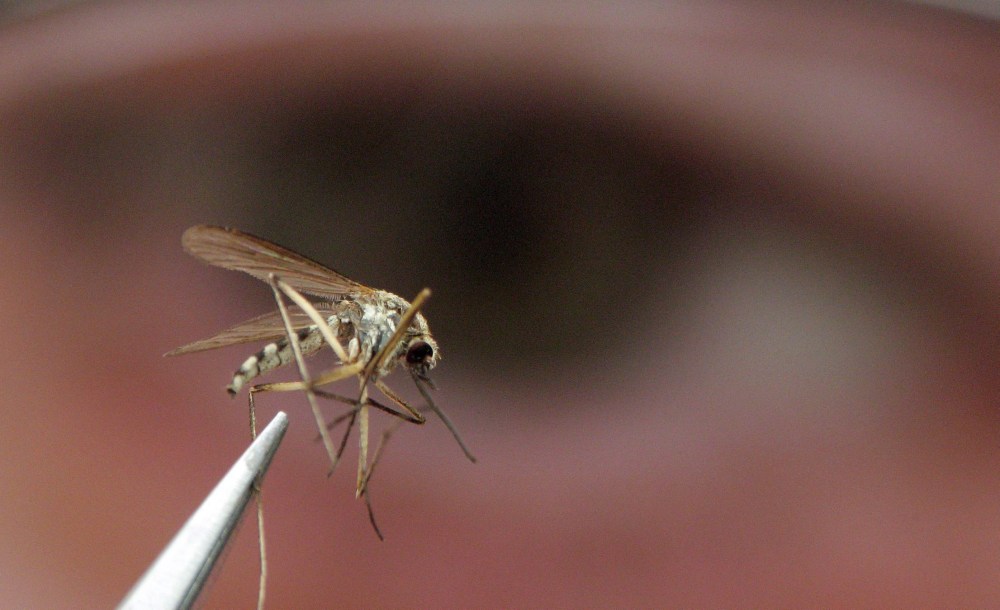
Among the mosquitoes detected with the virus were the northern house mosquito which is native to Africa, Asia and Europe.
A news release issued by the BCCDC, Vancouver Coastal Health, the University of B.C. and the Provincial Health Services Authority says that the detected virus levels were low, so the team was unable to confirm the specific strain of California serogroup virus that was found.
Stefan Iwasawa with the BCCDC says the study can help inform the response to future infections.

“With climate change causing temperatures to rise, we may see an increase in our exposure to mosquitoes,” said Iwasawa.
“Having a better understanding of the mosquito species that people living in B.C. are likely to encounter — and the viruses some of them can carry — will help inform preparedness, prevention and response efforts related to CSGv infections.”
The release says there were 15 known cases of the virus in B.C. between 2009 and 2024, and no known cases in the Sea-to-Sky corridor in 2025.
It says the risk of serious illness in B.C. from California serogroup virus is low.
This report by The Canadian Press was first published June 1, 2026.