Gold rings around 2,000 years old found during dig at Thailand archaeological site
Advertisement
Read this article for free:
or
Already have an account? Log in here »
To continue reading, please subscribe:

Digital Subscription
One year of digital access for only $205*
- Enjoy unlimited reading on winnipegfreepress.com
- Read the E-Edition, our digital replica newspaper
- Access News Break, our award-winning app
- Play interactive puzzles
*First annual payment billed as $205.00 + GST for one year. This annual subscription will automatically renew at $233.00 + GST every 52 weeks (10% off the regular annual price of $259.35). Offer available to new and qualified returning subscribers only. Cancel any time.
To continue reading, please subscribe:
Add Free Press access to your Brandon Sun subscription for only an additional
$1 for the first 4 weeks*
- Enjoy unlimited reading on winnipegfreepress.com
- Read the E-Edition, our digital replica newspaper
- Access News Break, our award-winning app
- Play interactive puzzles
*Your next Brandon Sun subscription payment will increase by $1.00 and you will be charged $17.95 plus GST for four weeks. After four weeks, your payment will increase to $24.95 plus GST every four weeks.
Read unlimited articles for free today:
or
Already have an account? Log in here »
BANGKOK (AP) — Two gold rings aged around 2,000 years old were discovered during an excavation at a new archaeological site in western Thailand, officials said.
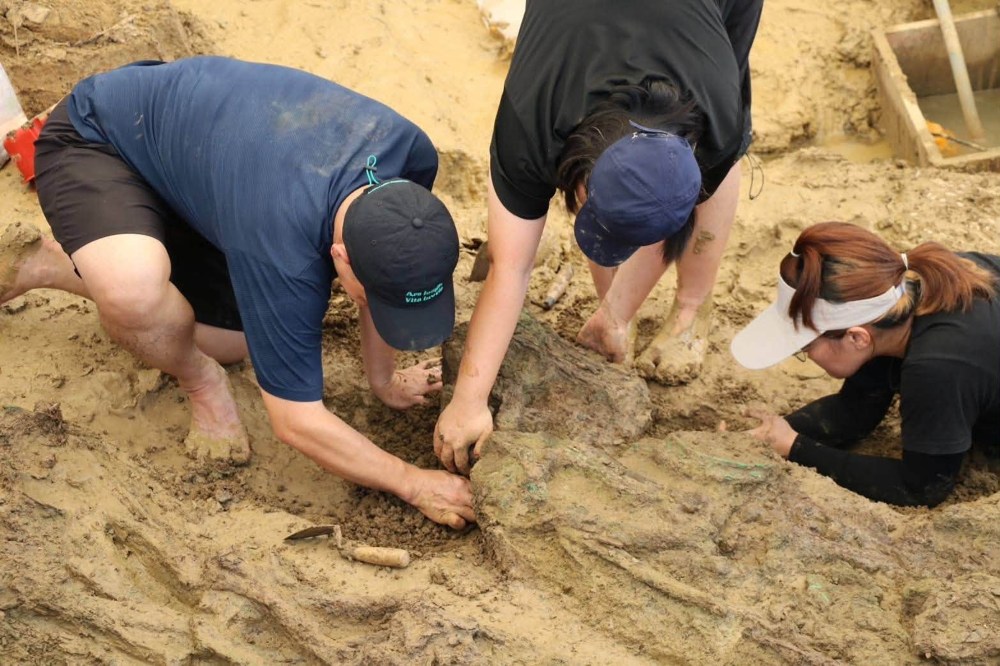
The rings were found with human bones during an ongoing dig at the Don Yai Thong archaeological site in Phetchaburi province last week, the Thai government’s Fine Arts Department said in a statement.
One ring found Thursday was engraved with characters believed to be Bhrami script, an ancient Indian writing system. An initial assessment by experts identified the script reading as “pusarakhitasa,” meaning “the one protected by Pushya,” said to be one of the most auspicious zodiac signs in Indian astronomy, the department said.
The other ring found with the same skeletal remains is a plain gold ring without any pattern. Experts believe the rings’ owner may have been a merchant of the Indian ancient caste system Vaishyas, the department said.
The Don Yai Thong archaeological site, about 130 kilometers (80 miles) southwest of the capital Bangkok, was discovered early this year after residents found pieces of ancient bronze drums in a rice field, leading to further excavation.
The site was dated to a late prehistoric era in Thailand, a period of human settlement also known as the Iron Age, established to be around 1,500 to 2,500 years ago.
Since February, archaeologists have discovered eight human skeletons, bronze and gold jewelry, pottery and other artifacts indicating a ceremonial burial of wealthy people or members of the society’s upper classes.
The excavation is expected to be complete in another month, with plans to showcase the archaeological finds to the public, the Fine Arts Department said.