CDC nominee says she won’t betray science – while declining to challenge Kennedy’s actions
Advertisement
Read this article for free:
or
Already have an account? Log in here »
To continue reading, please subscribe:

Digital Subscription
One year of digital access for only $205*
- Enjoy unlimited reading on winnipegfreepress.com
- Read the E-Edition, our digital replica newspaper
- Access News Break, our award-winning app
- Play interactive puzzles
*First annual payment billed as $205.00 + GST for one year. This annual subscription will automatically renew at $233.00 + GST every 52 weeks (10% off the regular annual price of $259.35). Offer available to new and qualified returning subscribers only. Cancel any time.
To continue reading, please subscribe:
Add Free Press access to your Brandon Sun subscription for only an additional
$1 for the first 4 weeks*
- Enjoy unlimited reading on winnipegfreepress.com
- Read the E-Edition, our digital replica newspaper
- Access News Break, our award-winning app
- Play interactive puzzles
*Your next Brandon Sun subscription payment will increase by $1.00 and you will be charged $17.95 plus GST for four weeks. After four weeks, your payment will increase to $24.95 plus GST every four weeks.
Read unlimited articles for free today:
or
Already have an account? Log in here »
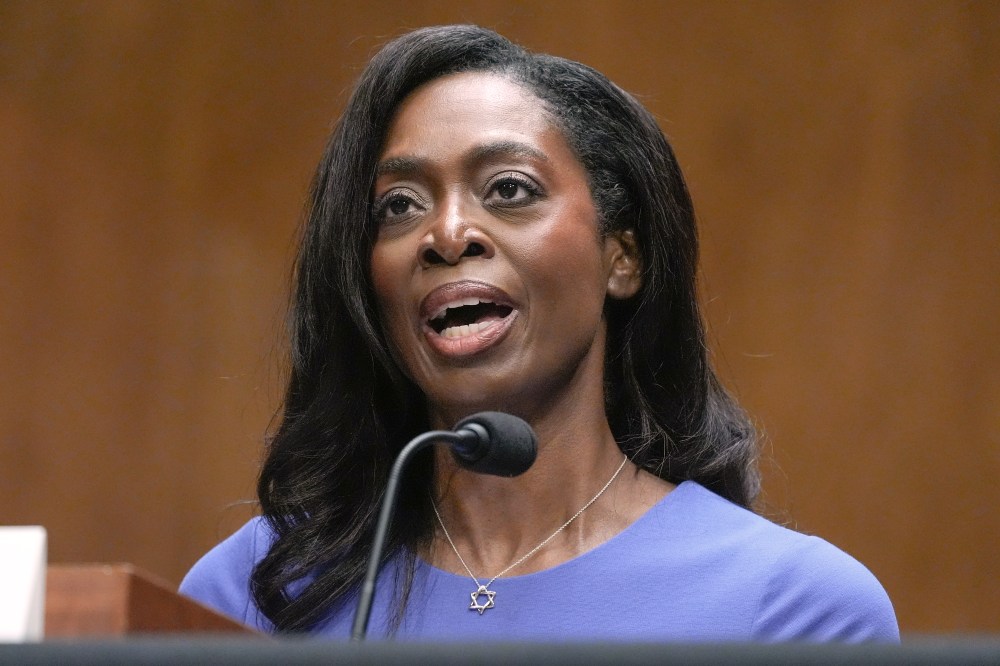
The Trump administration’s latest nominee to lead the nation’ top public health agency drew frustrated reactions from some U.S. senators on Wednesday when they pressed her on whether she would protect the Centers for Disease Control and Prevention from political meddling.
Dr. Erica Schwartz told the Senate health committee she “will never betray the science” and pledged to use “radical transparency” in a bid to rebuild public trust in the agency. But several senators questioned how she might handle pressure from Health Secretary Robert F. Kennedy Jr., who has repeatedly moved to alter U.S. vaccine and CDC policies. Schwartz repeatedly declined to dissent from some of those actions.
Schwartz, 54, is up for director of the Atlanta-based CDC, which is charged with protecting Americans from preventable health threats.
Her career has largely been spent in military uniform, including in a leadership position at the U.S. Coast Guard where she oversaw the organization’s system of 41 clinics and 150 sick bays — as well as policies promoting vaccinations of service members. She later served as deputy surgeon general, where she helped lead uniformed medical and health professionals posted at the CDC and government health agencies that serve the general public.
The CDC long enjoyed a sterling international reputation but has been in turmoil since Trump returned to office last year. Largely due to layoffs and resignations, the agency has lost more than 3,000 employees, or more than a quarter of its workforce. Morale has plummeted as a succession of mostly temporary leaders have come and gone — the front office filled with political appointees, many of them with little or no training in medicine or public health.
“There’s still really good people who work there (at the CDC). They are doing their best to navigate choppy waters,” said Dr. David Margolius, director of Cleveland’s health department and a leader in a U.S. coalition of big city health departments. But CDC no longer seems to the authoritative and communicative lead that it was on outbreaks and other public health emergencies.
“Basically everybody’s got to kind of choose their own adventure, as opposed to being led by a national public health department,” Margolius said.
CDC has had several leaders
The agency is overseen by Kennedy, who was a leading voice in the anti-vaccine movement before he was tapped to lead the CDC and other federal health agencies. Kennedy had promised not to change the nation’s vaccination schedule. But shortly after taking office, Kennedy said he was going to investigate the childhood vaccine schedule and went on to attempt a substantial rewrite of vaccine recommendations for kids. Some of those efforts were put on hold earlier this year by a federal judge.
The administration’s first pick to run the CDC was former Florida congressman Dr. David Weldon, but his March 2025 Senate confirmation hearing was canceled an hour before it was to begin. Weldon said at the time that he’d been told not enough senators were willing to vote for him.
The White House then moved on to Susan Monarez, who had been serving as the CDC’s acting director. Monarez was confirmed by the Senate, but she was ousted in less than a month. Trump administration officials said she wasn’t aligned with their agenda so they terminated her.
Several key CDC scientific leaders resigned in protest, saying Monarez’s dismissal dashed their hopes that a CDC director would be able to guard against political meddling in the agency’s scientific research and health recommendations.
Since then, there’s been a revolving door in agency leadership, with the short-term role of acting director being passed from one Washington-based HHS official to another. National Institutes of Health Director Jay Bhattacharya has been overseeing the CDC most recently.
Schwartz said she was unaware of actions that hurt the CDC
On Wednesday, some senators suggested Schwartz should follow Monarez’s example, and they asked her about actions Kennedy has taken that have affected CDC.
Schwartz said she was unaware that CDC programs that worked to prevent smoking and promote vaccinations had been curtailed. She declined to commit to taking down a CDC website that suggests there’s a link between childhood vaccines and autism (she said she had not seen it), though she agreed existing medical evidence has not found a link.
Sen. Maggie Hassan, a New Hampshire Democrat, asked if she would — if Kennedy ordered her — suspend promotion of a flu vaccination campaign during a deadly flu season.
“Senator, I don’t speak in hypotheticals,” Schwartz responded.
“It isn’t hypothetical. It happened,” said Hassan, referring to internal CDC emails, released by Sen. Bernie Sanders last month, that documented such a directive from Kennedy to CDC staff last year.
Schwartz said she agreed that CDC should prioritize responding to infectious diseases. “I think over time, the CDC has had some mission creep, and it’s trying to be all things to all people,” she said.
But she also agreed to requests from Republican senators to — if confirmed — look into whether AI data centers cause health problems and into the possibility of establishing a World Trade Center Health Program clinical center in Florida.
Senators also heard from nominee overseeing health emergency preparedness
In April, Trump nominated Schwartz, calling her “incredibly talented.” In a congressional hearing in April, Kennedy said he approved of the choice, but refused to commit to supporting whatever vaccine guidance she might issue.
Last month, Schwartz filed letters with the government that address her finances and potential conflicts of interest. She wrote that if confirmed, she will leave her current job with UnitedHealth Group, where she’s making about $850,000 in salary and bonus money and cash out her stock options. She also will resign from the board of directors of Butterfly Network Inc., a Massachusetts company that makes ultrasound devices; from the board of Atlanta-based Aveanna Healthcare, a medical home care provider; and from the board of the Florida-based Searching for Solutions Institute.
At Wednesday’s hearing, senators also considered the nomination of Sean Kaufman as the Assistant Secretary for Preparedness and Response, or ASPR. That job entails overseeing preparations and response to public health emergencies and disasters.
Last year, the Trump administration announced a plan to bring those responsibilities under CDC, but the dramatic HHS restructuring has not happened.
The assistant secretary’s office is involved in decisions about funding next-generation vaccines against pandemic flu or other infectious disease threats. In postings on LinkedIn, Kaufman has made comments cheered by vaccine skeptics, arguing against hepatitis B vaccinations for newborns and saying he served as an expert witness to advocate for people who refused the COVID-19 vaccine.
On Wednesday, Kaufman faced questions about past social media posts, including one in which he expressed hatred for the CDC. He also repeatedly was asked about his support of a Trump administration decision last year to cancel 22 projects, totaling $500 million, to develop vaccines using mRNA technology.
Infectious disease experts say the mRNA technology used in vaccines is safe, and they credit its development during the first Trump administration with slowing the 2020 coronavirus pandemic. Future pandemics, they warned, will be harder to stop without the help of mRNA.
Kaufman said he supported mRNA technology and believes COVID-19 vaccines are safe and effective, but said it made sense to study work that’s been done so far before, including learning more about any side effects.
Sen. John Hickenlooper, a Colorado Democrat, said such evaluations are the responsibility of other federal offices — not ASPR. He also said it may slow the nation’s ability to respond to emerging new infectious threats.
___
The Associated Press Health and Science Department receives support from the Howard Hughes Medical Institute’s Department of Science Education and the Robert Wood Johnson Foundation. The AP is solely responsible for all content.