UK unveils plans for social media curfew for older teens – but it’s voluntary
Advertisement
Read this article for free:
or
Already have an account? Log in here »
To continue reading, please subscribe:

Digital Subscription
One year of digital access for only $205*
- Enjoy unlimited reading on winnipegfreepress.com
- Read the E-Edition, our digital replica newspaper
- Access News Break, our award-winning app
- Play interactive puzzles
*First annual payment billed as $205.00 + GST for one year. This annual subscription will automatically renew at $233.00 + GST every 52 weeks (10% off the regular annual price of $259.35). Offer available to new and qualified returning subscribers only. Cancel any time.
To continue reading, please subscribe:
Add Free Press access to your Brandon Sun subscription for only an additional
$1 for the first 4 weeks*
- Enjoy unlimited reading on winnipegfreepress.com
- Read the E-Edition, our digital replica newspaper
- Access News Break, our award-winning app
- Play interactive puzzles
*Your next Brandon Sun subscription payment will increase by $1.00 and you will be charged $17.95 plus GST for four weeks. After four weeks, your payment will increase to $24.95 plus GST every four weeks.
Read unlimited articles for free today:
or
Already have an account? Log in here »
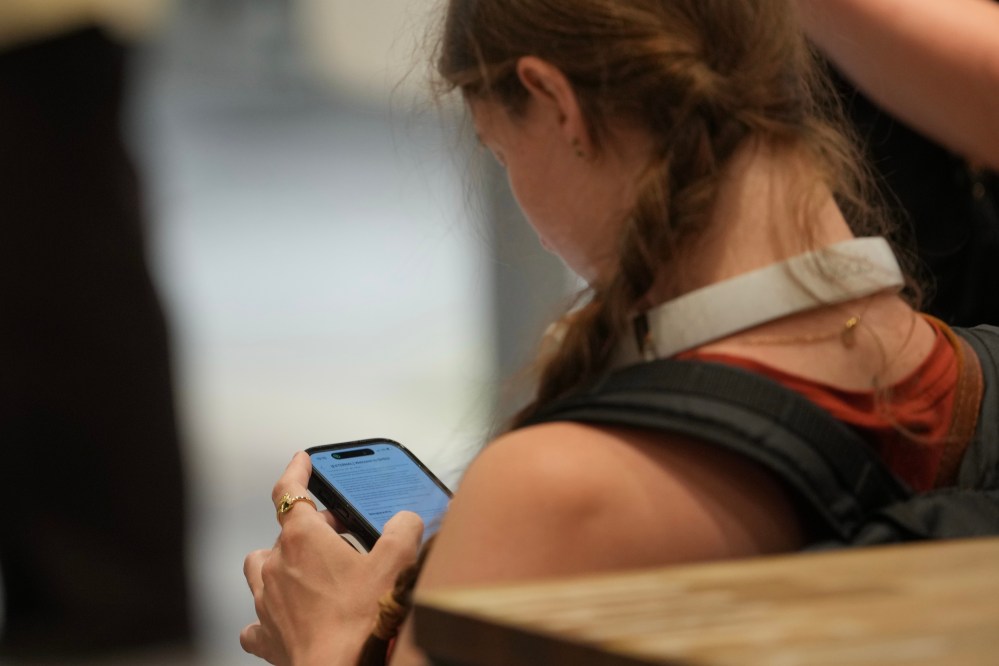
LONDON (AP) — The British government announced plans Wednesday to introduce a six-hour social media curfew from midnight for 16- and 17-year-olds — though they will be able to override the proposed default setting.
In its latest attempt to reduce the risks of online harm for children, Britain’s Labour government also said that features that can keep users scrolling for longer, such as videos that automatically play one after another, will also be switched off by default for older teenagers.
The planned restrictions come a month after the government unveiled a social media ban for under-16s, which is expected to cover platforms including Snapchat, TikTok, YouTube, Instagram, Facebook and X, but not messaging services like WhatsApp and Signal, from next spring.
The measures, which are one of the final acts of the government of Prime Minister Keir Starmer, will have to be legislated upon. It is widely believed that his expected successor Andy Burnham will follow through with the plans.
Online Safety Minister Kanishka Narayan downplayed talk that teenagers would just turn off optional social media curfews, saying it is a “disservice” to them to suggest they would.
He pointed to a recent pilot program involving more than 300 teenagers and parents across the U.K. that saw social media usage drop dramatically overnight as well as helping improve sleep and concentration.
“In October, for example, some platforms introduced these defaults of this sort – 90%-plus teenagers said to us that they’ve maintained those defaults as well,” he told Sky News. “And so the evidence base is clear, the motivation is very clear and I wouldn’t do the disservice to teenagers of saying they’re all going to switch it off.”
Laura Trott, the education spokesperson for the main opposition Conservative Party, said the proposals make “no sense.”

“Either they think 16- and 17-year-olds should be on social media or they don’t, but curfews they can simply switch off won’t achieve anything,” she said.
The NSPCC, the U.K.’s leading children’s charity, said the proposals will go some way to improving the experiences of young people on social media but won’t be enough on their own.
“Unless they’re followed up with further, stronger measures, they will be a sticking plaster that fails to address the addictive design features which are driving high screentime and undermining children’s wellbeing,” said NSPCC chief executive Chris Sherwood.
Rachel de Souza, the Children’s Commissioner for England, said the move was a “positive step” as young people want to try to cut down social media use but find it hard.
“I want to know more about how the policies, such as a curfew, will be delivered and will be watching closely to make sure they are effective,” she said.