Guns shaped America. Dirty Harry’s .44 Magnum is king
Advertisement
Read this article for free:
or
Already have an account? Log in here »
To continue reading, please subscribe:

Digital Subscription
One year of digital access for only $205*
- Enjoy unlimited reading on winnipegfreepress.com
- Read the E-Edition, our digital replica newspaper
- Access News Break, our award-winning app
- Play interactive puzzles
*First annual payment billed as $205.00 + GST for one year. This annual subscription will automatically renew at $233.00 + GST every 52 weeks (10% off the regular annual price of $259.35). Offer available to new and qualified returning subscribers only. Cancel any time.
To continue reading, please subscribe:
Add Free Press access to your Brandon Sun subscription for only an additional
$1 for the first 4 weeks*
- Enjoy unlimited reading on winnipegfreepress.com
- Read the E-Edition, our digital replica newspaper
- Access News Break, our award-winning app
- Play interactive puzzles
*Your next Brandon Sun subscription payment will increase by $1.00 and you will be charged $17.95 plus GST for four weeks. After four weeks, your payment will increase to $24.95 plus GST every four weeks.
Read unlimited articles for free today:
or
Already have an account? Log in here »
There are as many handguns in the U.S. as there are adults. Perhaps none is more iconic than the .44 Magnum revolver.
“The most powerful handgun in the world,” Clint Eastwood says with a mix of pleasure and malice as detective “Dirty Harry” takes aim at a bank robber. The 1971 movie made the hefty steel pistol an icon for generations of modern lawmen and outlaws alike.
Dirty Harry is a protector of everyday people, yet he’s shackled by powerful forces out of his control. This urge to stand up to perceived tyranny — by any means necessary — is so ingrained in our national identity that the right to bear arms was given the No. 2 spot in the Constitution’s Bill of Rights.
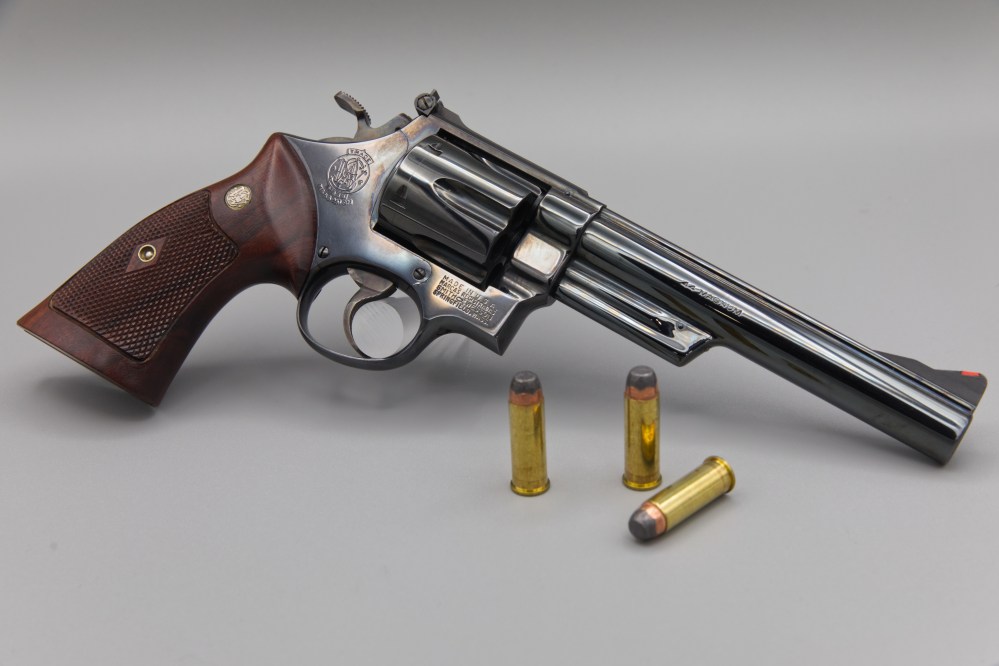
Eastwood’s co-star was the Smith & Wesson Model 29, the first revolver to use powerful .44 caliber Magnum ammunition, which debuted in the mid-1950s. The American gunmaker has been in the revolver business since 1852.
Yet the long-barreled revolver has come a long way since the Wild West. Owning a gun, and having strong opinions about guns, are now high-voltage political issues.
For some, the obvious reason to keep a handgun is self-defense, home invasion, the fear of becoming a victim. (Rather than under his pillow, my father slept soundly with our guns in a secret compartment in the basement, but to each their own.)
The U.S. is infamous worldwide for our unique scourge of mass shootings with assault-style rifles. Yet when someone pulls the trigger, it’s usually a handgun. According to a Pew Research Center analysis for 2024, 53% of gun homicides involved a handgun. Rifles accounted for 3%. The rest were other or unspecified types of guns.
That same year, more Americans killed themselves with guns than ever before. And if a woman’s abusive partner has access to a gun, she is five times more likely to be killed, according to the Giffords Law Center to Prevent Gun Violence.

America is fascinated with guns. The world is watching.
They’re soaking up the stories we tell about ourselves — in crime thrillers, police dramas, cowboy movies and blockbuster action flicks — and buying the guns, too. Nearly a quarter million handguns were “Made in the USA” and exported in 2023, according to the Bureau of Alcohol, Tobacco, Firearms and Explosives.
More than half a century ago, Dirty Harry used his .44 to blast away the line between protector and vigilante. As a nation, we haven’t looked back.
___
Part of a recurring series, “American Objects,” marking the 250th anniversary of the United States. For more American objects, click here. For more stories on the anniversary, click here.