As defaults on student loans surge, millions are trying to get their lives back on track
Advertisement
Read this article for free:
or
Already have an account? Log in here »
To continue reading, please subscribe:

Digital Subscription
One year of digital access for only $205*
- Enjoy unlimited reading on winnipegfreepress.com
- Read the E-Edition, our digital replica newspaper
- Access News Break, our award-winning app
- Play interactive puzzles
*First annual payment billed as $205.00 + GST for one year. This annual subscription will automatically renew at $233.00 + GST every 52 weeks (10% off the regular annual price of $259.35). Offer available to new and qualified returning subscribers only. Cancel any time.
To continue reading, please subscribe:
Add Free Press access to your Brandon Sun subscription for only an additional
$1 for the first 4 weeks*
- Enjoy unlimited reading on winnipegfreepress.com
- Read the E-Edition, our digital replica newspaper
- Access News Break, our award-winning app
- Play interactive puzzles
*Your next Brandon Sun subscription payment will increase by $1.00 and you will be charged $17.95 plus GST for four weeks. After four weeks, your payment will increase to $24.95 plus GST every four weeks.
Read unlimited articles for free today:
or
Already have an account? Log in here »
Life after college did not go as Ashley Dreahn planned.
After starting out as a teacher, she went back to school — and took out more loans — in hopes of landing a higher-paying job in the chemical processing industry. It never materialized, and then came Hurricane Harvey, a job loss and a car breakdown. By 2022, she was so broke she filed for bankruptcy.
She found work at a Texas prison and was rebuilding her life, saving up for weight-loss surgery, when this spring she heard from a credit-monitoring service. The student loans she thought had been discharged in bankruptcy had ballooned to $94,298 with interest, and she had to start making payments. She was in default.
“I absolutely broke down,” said Dreahn, 40.
Across the country, the number of borrowers with defaulted student loans jumped by more than 4.2 million from April 2025 to March 2026, according to an Associated Press analysis. The surge includes many who went off track in 2024, when loan payments started coming due again after a pandemic-era freeze.
Hundreds of thousands more are months behind on payments, and another surge in defaults could be on the way. Millions of borrowers are facing higher monthly payments as the government dismantles its most affordable income-driven repayment option, the SAVE plan, one of several changes the Education Department says are intended to simplify a fragmented system.
Borrowers enter default after missing payments for nine months, and the consequences can upend lives. It hurts credit ratings and can lead to the debt being sent to collections.
“I am seeing despair and outrage and despondency and just a very wide mix of pretty extreme emotions, the likes of which I have not seen before,” said Alan Collinge, the founder of Student Loan Justice and the author of “The Student Loan Scam.”
The federal government can garnish wages and Social Security payments from borrowers in default, but the Trump administration in January walked back plans to begin collections on their loans. A Moody’s Analytics report this spring said garnishments are likely to begin within the next year, warning of “an additional headwind in an increasingly fragile economy.”
Taking out student loans was all too easy
Dreahn enrolled at Texas Woman’s University in 2004 as the first in her family to go to college. She cobbled together jobs, babysitting and working at a call center and an automotive shop. But she still needed to borrow heavily.
“There was one point where they were like, ‘If you don’t come up with the money, we’re dropping you from your classes,’” said Dreahn, who earned a degree in history with an emphasis on education and social studies. “And it was, ‘OK, what do I need to sign?’”
She said no one explained what taking out loans truly meant.
“You just kind of trust these advisers and trust these financial aid people that this is what you’re supposed to do,” Dreahn said.
While teaching, she took out more student loans to earn a pair of associate degrees from a public community college in Texas. She received a job offer at a chemical refinery, but it was rescinded because she was over the weight limit for the company’s safety equipment.
She filed for bankruptcy in 2022 in hopes that it would “erase everything.” She checked her online credit report afterward. For each student loan, the report read: “Nice! You’ve paid off 100% of this loan.” The message is sometimes shared with borrowers when student loans are consolidated or transferred to new companies — even when the person still owes money.
Student loans are rarely discharged in bankruptcy. Borrowers must prove the loans pose an “undue hardship.” The process is cumbersome, and few qualify, advocates say.
But Dreahn didn’t know any of that.
“I was so relieved, like, ‘OK, now I can start life over,’” she said. “’I can save some money.’”
She started working last year as a supervisor at a prison in Huntsville, about 70 miles (115 kilometers) north of Houston, and was living in an RV park to save money when she received the default notice.
“I just feel like, where is that light at the end of the tunnel now that I thought I had?” Dreahn said.
The wave of defaults started after the pandemic
As a pandemic relief measure, the federal government allowed borrowers to suspend student loan payments until 2023, and President Joe Biden’s administration then provided a one-year grace period. That ended in fall 2024, allowing loans to enter into default after nine months of missed payments.
A surge in defaults followed, and today around 9.5 million borrowers — over 1 in 5 — are in default, including those whose loans were well past due before the pandemic, according to the AP analysis. The previous record for borrowers in default had been 8 million in December 2019.
There are also 870,000 borrowers with loans between 181 and 270 days late, on the edge of default, according to federal data.
Meanwhile, 33% of borrowers at for-profit schools nationally were at least 90 days late on payments, more than twice the rate of borrowers at public schools, additional federal data shows.
Most private colleges that offer traditional degrees are nonprofit. For-profit colleges generally offer career-focused degrees and credentials and often serve students of color. Career Education Colleges and Universities, an association of private trade schools, has created a task force to reach out to students about the importance of loan repayment, said Jason Altmire, the group’s president and CEO.
“We take it seriously,” he said.
Borrowers struggle to make sense of changes
Some borrowers are so overwhelmed by their debt and changes to the federal student loan system that they’ve stopped paying.
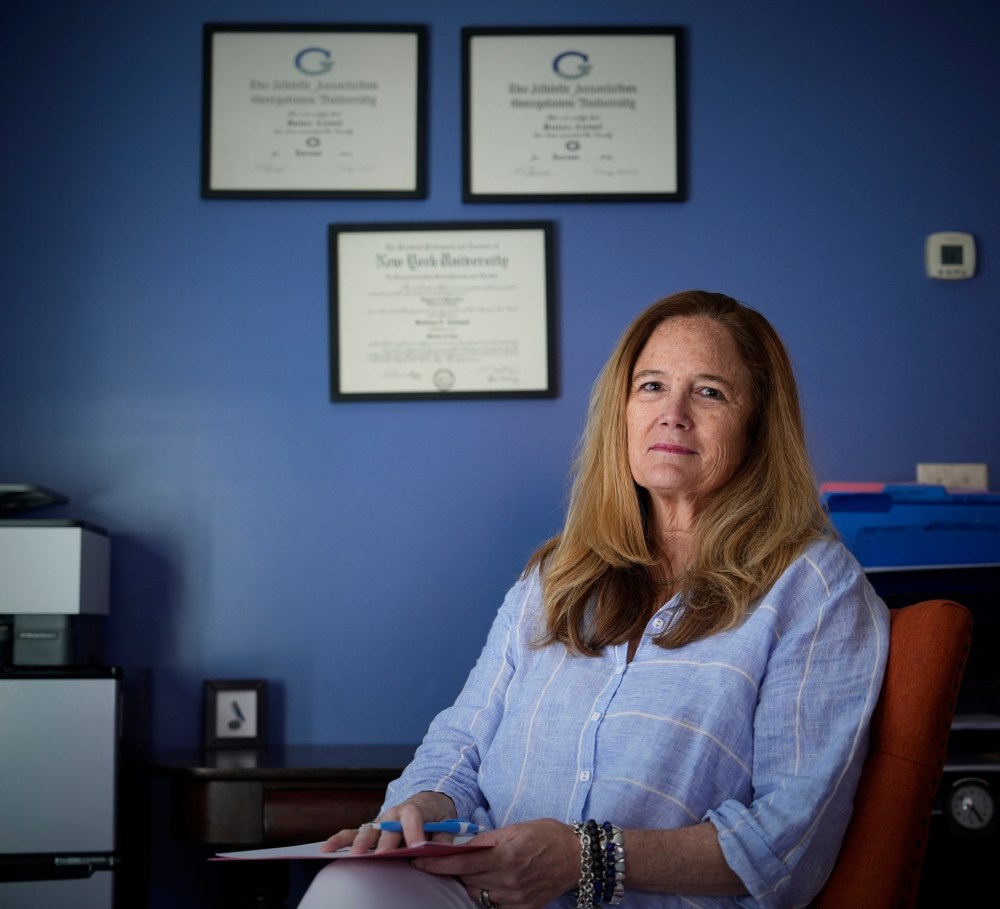
Barbara Howaniec, a 63-year-old psychiatric nurse practitioner from Auburn, Maine, already has defaulted. She borrowed around $62,000 for her master’s degree from New York University, graduating in 2001. But after two decades of payments, she still owes around $67,000 with interest. She had put her loans in deferment for short stints while her children were young, unaware that interest would continue to accumulate.
Howaniec had hoped to have her loan forgiven after 25 years under an income-based repayment plan. But then came a letter saying the repayment schedule had changed and she owed 355 more payments. By the time she finished paying, she would be 91.
She made call after call, but she said the advice varied by whoever picked up the phone. Last year, as she paid for her own children’s college, she quit paying her own loans.
“I had already paid what I had borrowed. I’m like, no, I’m not going to pay anymore,” Howaniec said. As a self-employed person, she said she doesn’t have to worry about the government garnishing her wages.
Shannon Khan, a 46-year-old mental health worker from Webster, Texas, hasn’t paid her student loan for two months as she investigates her options.
She did not have to pay anything while enrolled in SAVE, but she was moved last fall to another income-driven repayment plan, with a required monthly payment of $847. She thought she was close to having her remaining balance forgiven, but she recently learned her payment will jump to $1,683 a month — an amount her loan servicer said she will need to pay for nearly a decade.
She has spent hours on the phone trying to get answers.
“It’s just a bunch of chaos and confusion,” Khan said.
Some hunt pathways out of default
Dreahn had never been entirely clear how much she was borrowing when she was a student. As an adult, the process remained opaque. She had multiple loans transferred to different loan servicers. And then her loans were deferred when she went back to school.
“It’s a huge, huge mess,” Dreahn said. “It’s almost like it just gets sold off and you’re just lost in the system somewhere until you figure out that, ‘Oh, they want $700 this month. What?’”
Now in default, she hopes she might one day qualify for Public Service Loan Forgiveness. It requires borrowers to make 10 years of payments while working at a nonprofit or for the government.
“I’m trying to figure out: One, how I’m going to make it work. And two, what do I give up?” Dreahn said. “How do I manage buying groceries as well as making sure the bills are covered and this payment never gets missed?”
Lately, she thinks back on the chemical processing plant job she almost got.

“That was a six-figure career that I lost due to my weight,” she said, her voice breaking. “The money that I’m trying to save now that was going to be for surgery is going to be paid to student loans instead.”
___
Associated Press reporter Adriana Morga contributed to this report.
___
The Associated Press’ education coverage receives financial support from multiple private foundations. AP is solely responsible for all content. Find AP’s standards for working with philanthropies, a list of supporters and funded coverage areas at AP.org.