The ‘rockets and feathers’ effect: Inflation eases but grocery bills do not
Advertisement
Read this article for free:
or
Already have an account? Log in here »
To continue reading, please subscribe:

Digital Subscription
One year of digital access for only $205*
- Enjoy unlimited reading on winnipegfreepress.com
- Read the E-Edition, our digital replica newspaper
- Access News Break, our award-winning app
- Play interactive puzzles
*First annual payment billed as $205.00 + GST for one year. This annual subscription will automatically renew at $233.00 + GST every 52 weeks (10% off the regular annual price of $259.35). Offer available to new and qualified returning subscribers only. Cancel any time.
To continue reading, please subscribe:
Add Free Press access to your Brandon Sun subscription for only an additional
$1 for the first 4 weeks*
- Enjoy unlimited reading on winnipegfreepress.com
- Read the E-Edition, our digital replica newspaper
- Access News Break, our award-winning app
- Play interactive puzzles
*Your next Brandon Sun subscription payment will increase by $1.00 and you will be charged $17.95 plus GST for four weeks. After four weeks, your payment will increase to $24.95 plus GST every four weeks.
Read unlimited articles for free today:
or
Already have an account? Log in here »
Economics has a term for what U.S. grocery prices have done in recent years: rockets and feathers.
Rockets, because the cost of food eaten at home zoomed up in the aftermath of the pandemic. Feathers, because once prices rise, they’re slow to come down.
That’s been frustrating for Americans hit with the sharpest increase in grocery prices in 50 years. While food price inflation peaked in 2022, when prices jumped 11.4%, prices have not reversed course. An acceleration in flation after the U.S. and Israel attacked Iran has prolonged the aggravation.
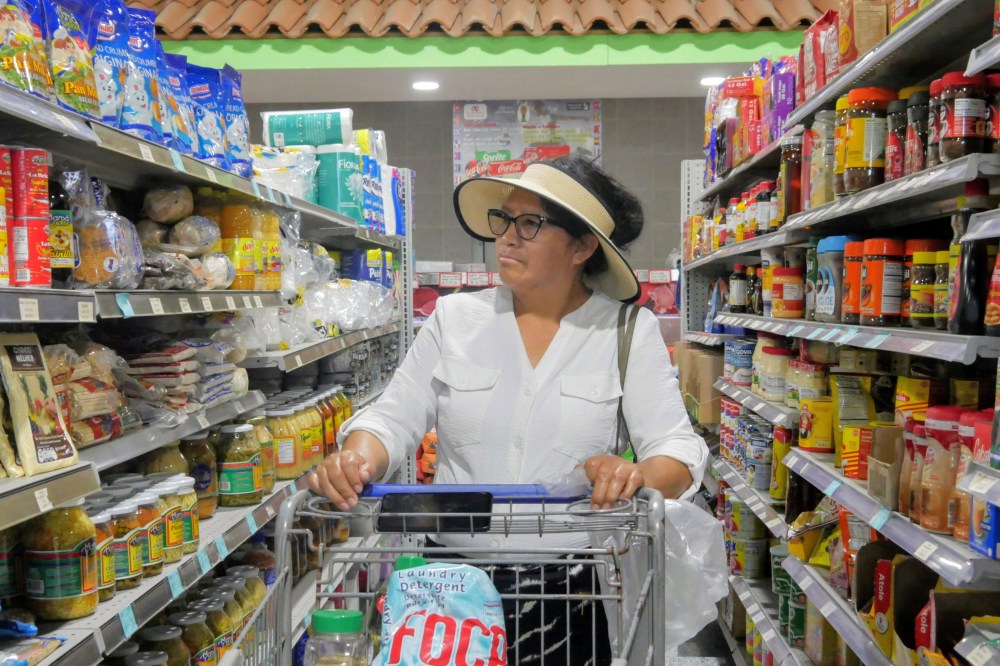
“I think the public is coming to grips with, ‘Well, I’m hearing inflation has slowed, but things aren’t getting any cheaper.’ It has to be deflation for prices to go down, and that’s very rare,” said Matt Hamory, who leads the global grocery practice at the consulting company AlixPartners.
Prices for food at home are expected to rise 2.7% across the country this year, the U.S. Department of Agriculture reported Friday. That’s higher than the grocery inflation shoppers saw in 2024 and 2025 but close to the historical average of 2.6%.
It’s the compounding effect of the post-pandemic price shocks that consumers are still feeling, and they’re reacting to them in ways that could have repercussions for the U.S. economy.
A recent study by the consulting firm Bain & Co. and the market research company NielsenIQ said the number of items purchased at U.S. grocery stores declined in the second half of last year and dropped more sharply starting in February of this year. The study said high gas prices, rising GLP-1 usage and cuts in the number of people receiving government food aid are all affecting grocery spending.
Consumers are also looking for deals and shopping around to find them. In the second quarter of this year, discounters like Costco, Walmart and Aldi took market share away from traditional grocers like Kroger and Albertsons, according to Numerator, a market research firm.
Many U.S. shoppers are also replacing name-brand products with store brands to save money. Total sales of store brands at supermarkets, drugstores and other retailers grew to a record $282.8 billion last year, the Private Label Manufacturers Association said.
“Now that this option becomes available, why would I go back? You have the convenience, it’s the same, but my cost is 40% less and it’s a brand that I know and trust,” said Sean Hooper, a senior solution principal at Relex Solutions, a retail and grocery consulting firm.
Prices rocketed up for lots of reasons in the wake of the pandemic, from the war in Ukraine to a highly contagious bird flu that pushed retail egg prices to record highs last year. And when prices rocket upward — whether for food, gas or other items — consumers can count on a slow, downy descent.
For one thing, retailers are reluctant to lower prices on inventory they ordered when wholesale prices were high, said Jared Bernstein, a senior policy fellow at the Stanford Institute for Economic Policy who served as chair of President Joe Biden’s Council of Economic Advisers.
Stores and food companies also want to maximize their profits and were reluctant to give up some of the sales gains they saw after the pandemic, Bernstein said. PepsiCo hiked its prices by double-digit percentages for eight straight quarters in 2022 and 2023, for example, citing higher ingredient and packaging costs. After customer demand faltered, the company began lowering prices on some snacks last year.
Customer behavior also can contribute to prices staying elevated. When prices spike, people shop around for lower ones. But consumers often stop deal hunting when they see prices coming down, giving retailers less incentive to lower prices even further.

“There’s less competitive force on the feather side of the mountain,” Bernstein said.
In some cases, grocery inflation is the result of long-term issues with no quick fix. Consider the average price of coffee, which has risen 54% in U.S. cities since 2019, according to government data. Climate issues — including drought in Vietnam, heavy rain in Indonesia and hot, dry weather in Brazil — are blamed for reducing coffee yields and driving up global prices.
In other cases, there are clearer causes and simpler fixes. For example, U.S. consumers paid 19.5% more for fresh tomatoes in June compared to a year earlier due to a 17% import tax the Trump administration placed on fresh tomatoes from Mexico. Coffee was subject to a tariff for most of 2025 as well, but the duty was eventually removed.
Hamory said the feather may be starting to fall as big retailers invest in price cuts. In early July, Walmart said it was rolling back prices on ground beef, corn, red cherries, ice cream, potato chips and Coca-Cola and Pepsi products. Target also cut prices on some foods in March.
“If the big guys are really investing, saying, ‘That’s what I need to do to get right with my customer,’ that will force others in the market to act,” Hamory said. “It’s just in the process of starting, but that’s a thing we could be seeing.”