In a German forest, 2 brothers keep the ancient tradition of charcoal burning alive

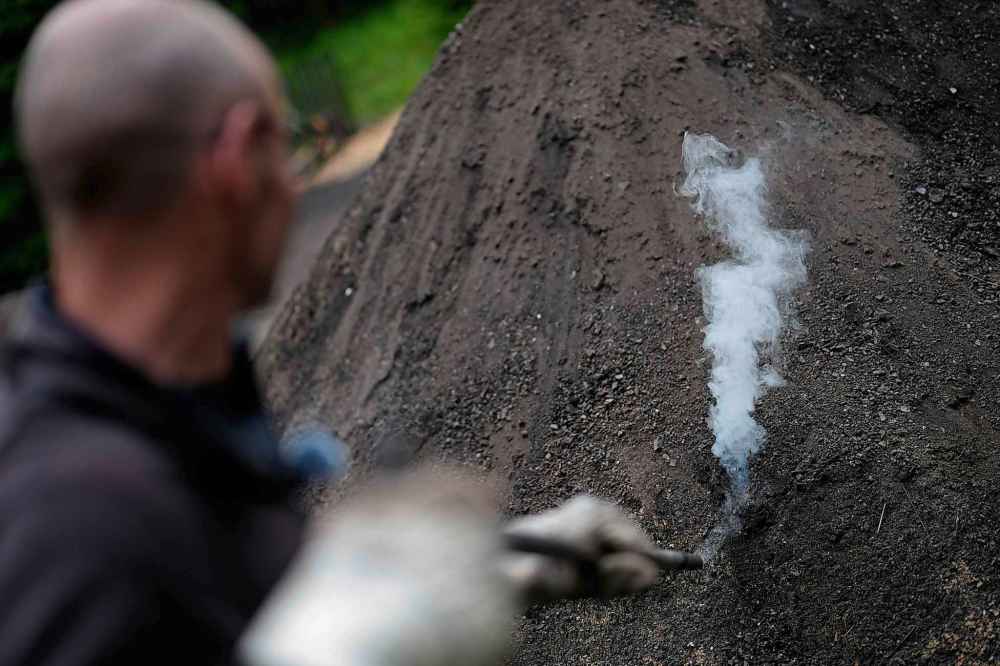
HASSELFELDE, Germany (AP) — Immo Feldmer carefully tipped smoldering charcoal into a tall mound of earth to kick off the ancient tradition of coal burning.

Read this article for free:


or

Already have an account? Log in here »

To continue reading, please subscribe:

Subscribe and receive a limited-edition Free Press branded hat or tote.

Digital Subscription

One year of digital access for only $205*

  • Enjoy unlimited reading on winnipegfreepress.com
  • Read the E-Edition, our digital replica newspaper
  • Access News Break, our award-winning app
  • Play interactive puzzles

*First annual payment billed as $205.00 + GST for one year. This annual subscription will automatically renew at $233.00 + GST every 52 weeks (10% off the regular annual price of $259.35). Offer available to new and qualified returning subscribers only. Cancel any time.

To continue reading, please subscribe:

Add Free Press access to your Brandon Sun subscription for only an additional

$1 for the first 4 weeks*

  • Enjoy unlimited reading on winnipegfreepress.com
  • Read the E-Edition, our digital replica newspaper
  • Access News Break, our award-winning app
  • Play interactive puzzles
Start now

*Your next Brandon Sun subscription payment will increase by $1.00 and you will be charged $17.95 plus GST for four weeks. After four weeks, your payment will increase to $24.95 plus GST every four weeks.

HASSELFELDE, Germany (AP) — Immo Feldmer carefully tipped smoldering charcoal into a tall mound of earth to kick off the ancient tradition of coal burning.

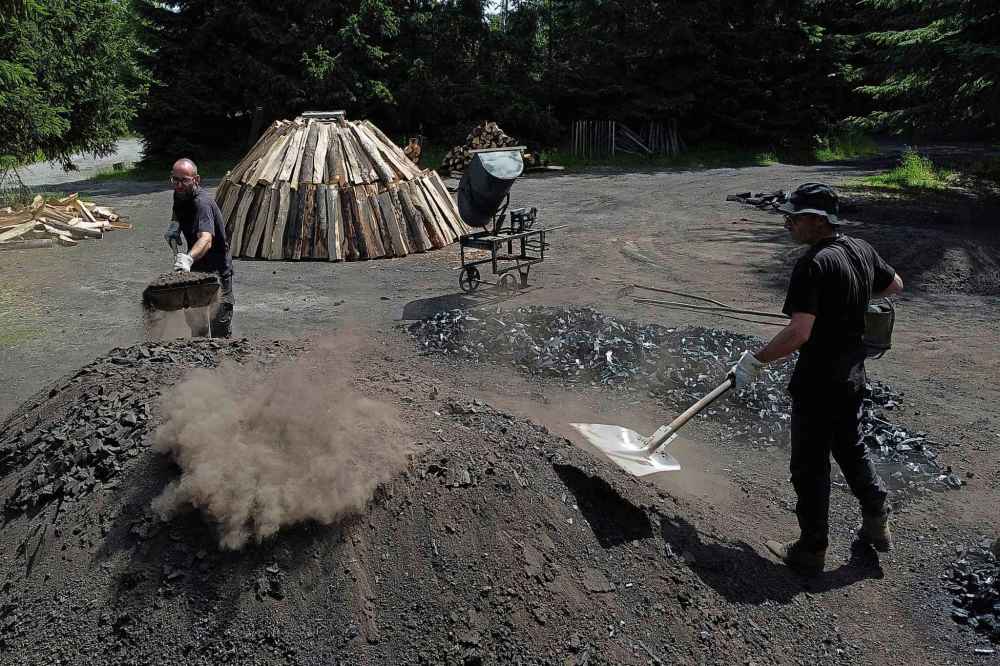
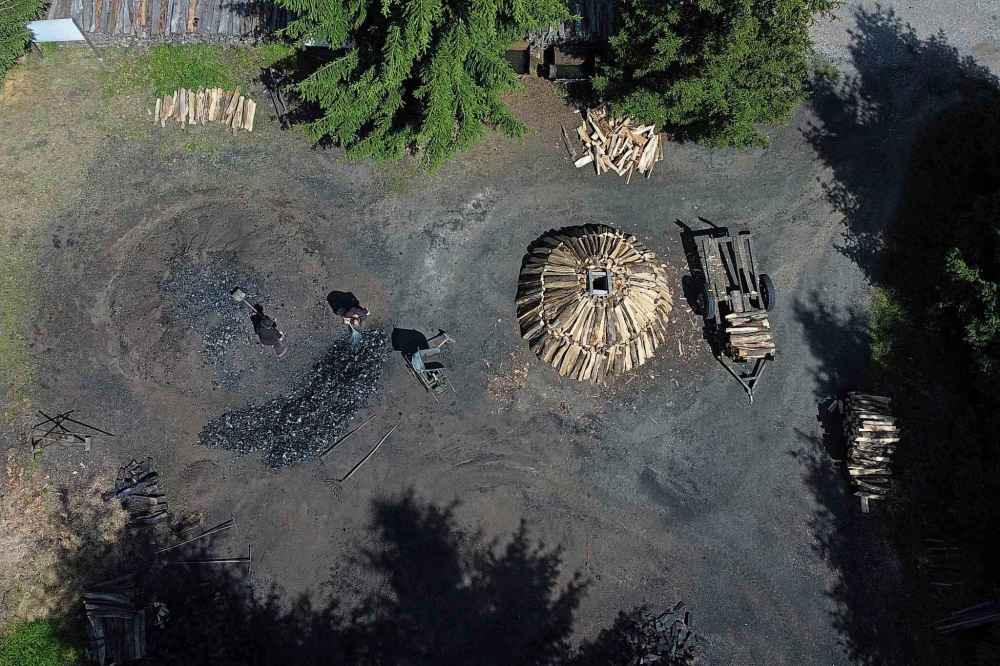
The inside of the mound was tightly stacked with beech wood which smolders for weeks until it’s been turned into charcoal — a craft that’s been practiced in the Harz mountain region in eastern Germany for hundreds of years.

“We are making charcoal in traditional earthen kilns, just as it was done here in the Harz Mountains over 1,000 years ago,” Feldmer told The Associated Press in a recent interview as he stood between the mounds in the middle of the Harz forest near the small town of Hasselfelde.

Feldmer and his brother Sascha took over the Harzköhlerei Stemberghaus business of producing charcoal from their father. They also have a handful of workers as the smoldering wood inside the mounds needs to be attended to and carefully watched day and night so it won’t start catching fire and burn down to useless ashes.

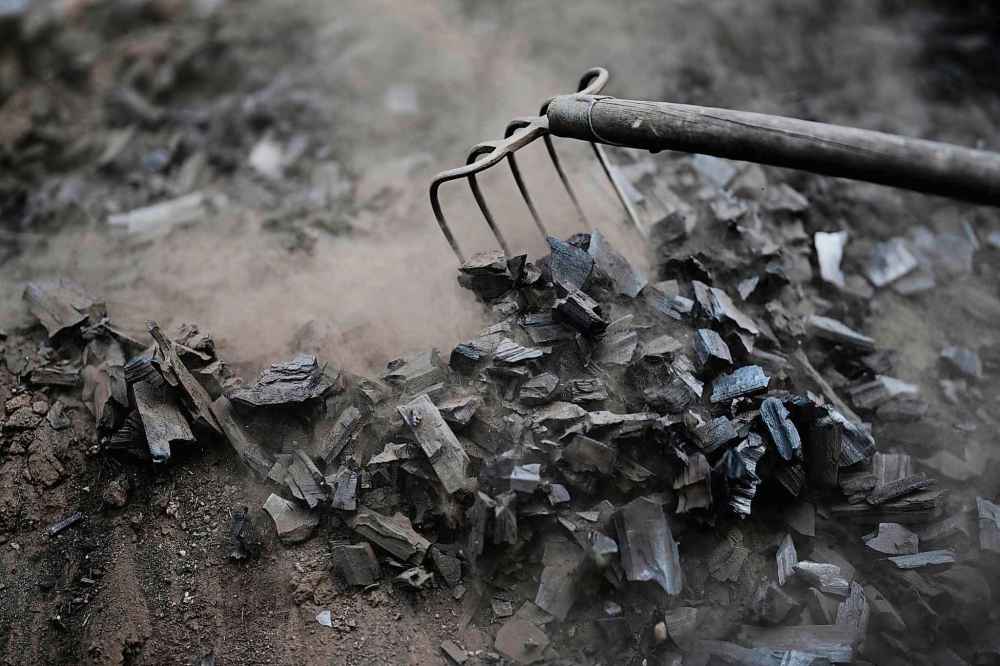
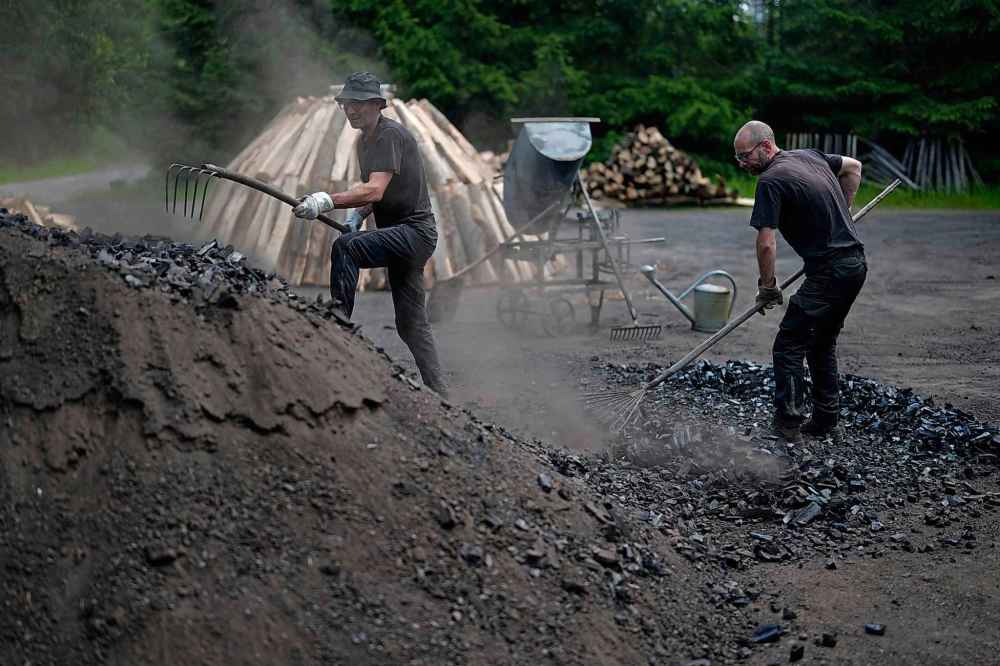
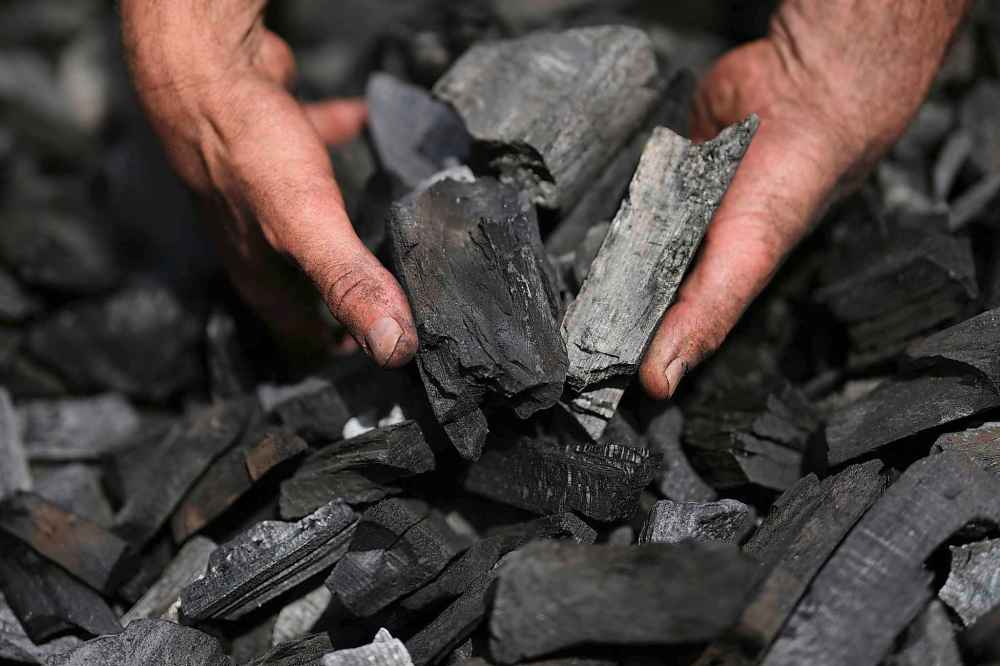
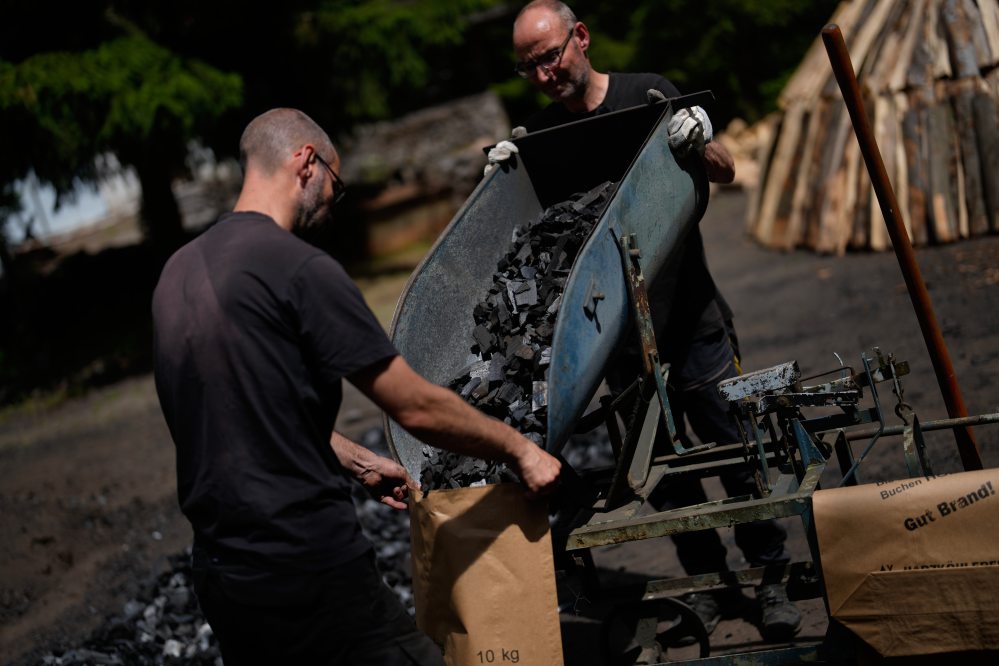
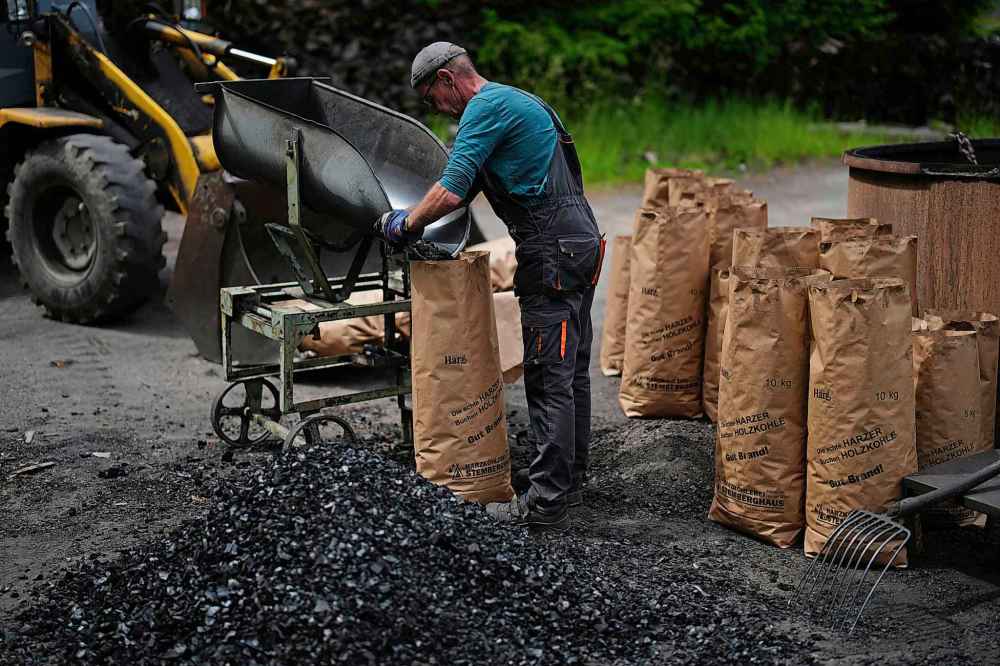
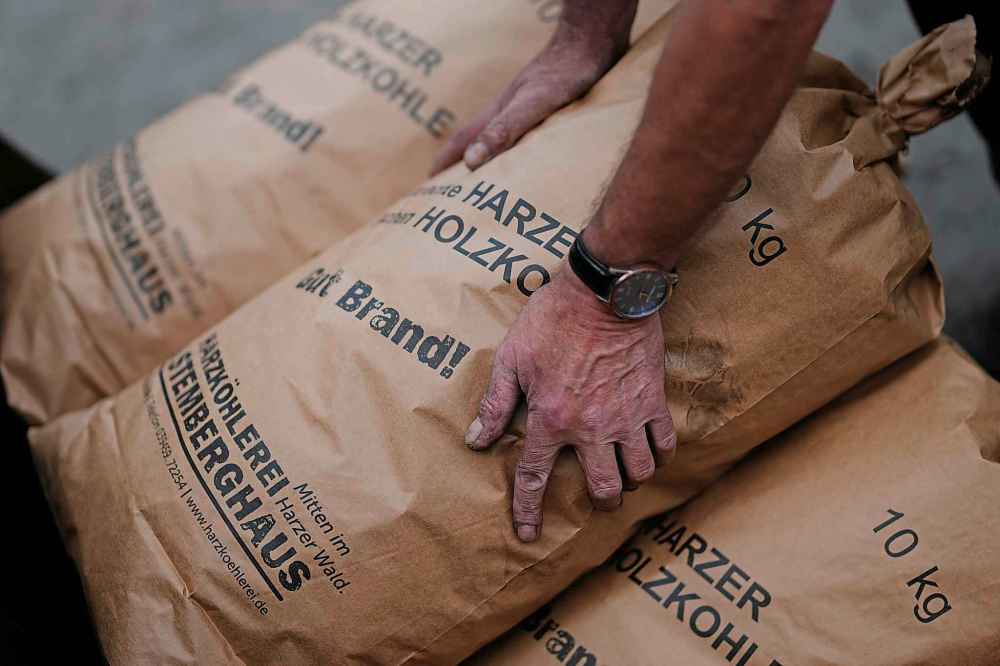
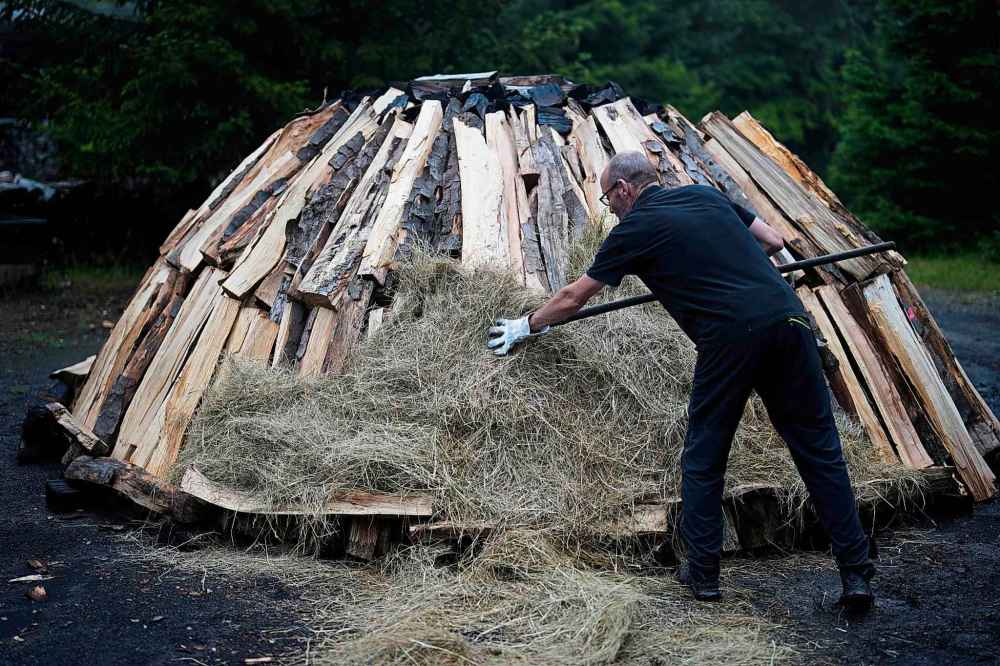
Once covered in earth, the beech wood — which is known for its high density and the high temperatures it creates once it’s been turned into charcoal — burns from top to bottom with the help of air holes. The charcoal is then swept clean of soil, and when it has cooled down, it’s packed into 10-kilogram (22-pound) bags for sale.

Charcoal production was essential for mining ore in the Harz Mountains. To extract valuable metals such as silver, lead, copper, and zinc from the hard rock, the ore was crushed and then smelted in a furnace using intense heat. The extremely high temperatures required could only be achieved using charcoal.

Over the centuries, hundreds of families in the Harz region earned their living as charcoal burners. These days ore is no longer mined there and only a few coal burners are left in Germany. The Feldmers mostly sell their charcoal to people using it for barbecues at home.

“Our charcoal is, first and foremost, made from pure beech wood,” Feldmer said, adding that most of the charcoal sold at hardware stores in the country is imported and made of “mixed woods, scrap wood, and waste wood so it can be produced cheaply.”
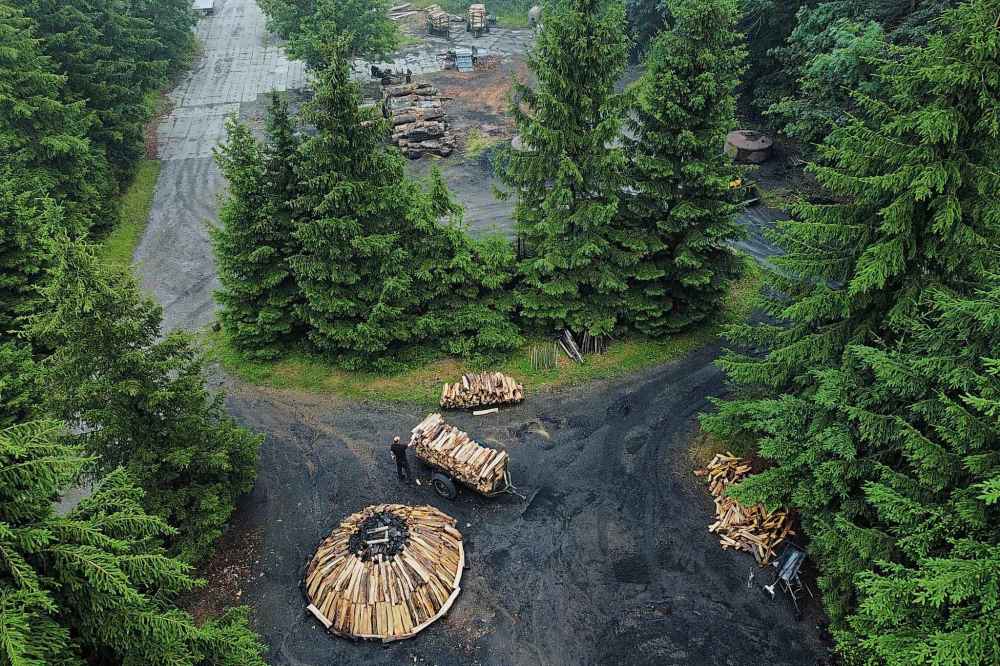
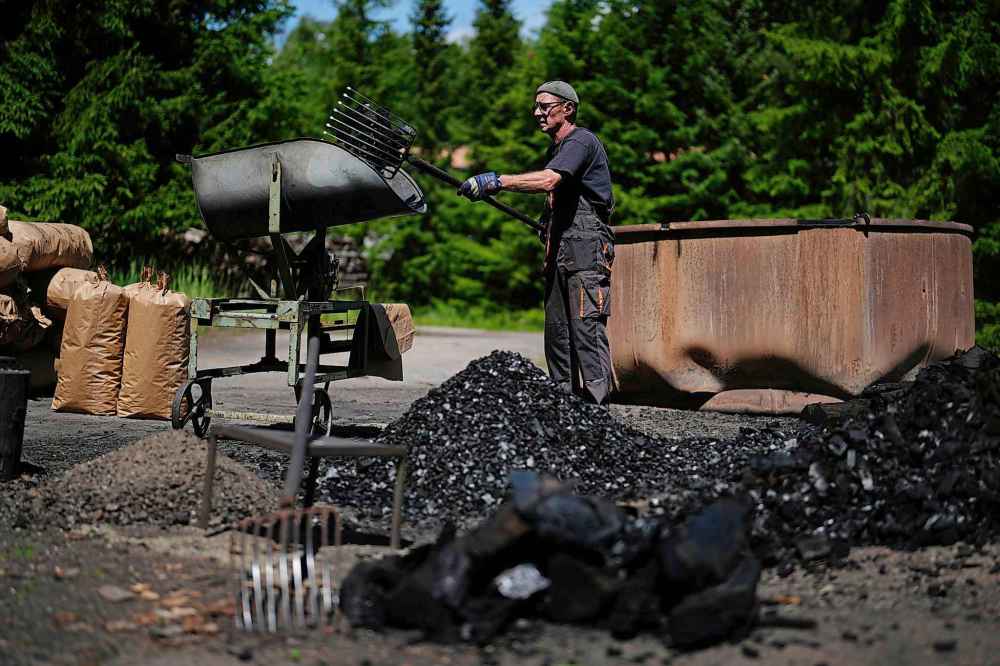
Immo Feldmer works at a wood pile at his family-run, traditional charcoal production site near Hasselfelde in Germany's Harz forest, Monday, June 29, 2026. (Photos by Matthias Schrader / The Associated Press)

As Feldmer and his brother would not be able to live from the coal burning business alone — they produce around 40 tons annually — they’ve also opened a museum about the history of coal burning, a small store and a restaurant where guests can get local specialties including steaks grilled over homemade birch charcoal.

Though the craft of char burning has essentially died out in Germany, Feldmer hopes that his family will keep the tradition alive.

“Of course, we hope … that our business here will be taken over by our children, that it will continue to operate, and that the traditional craft of charcoal burning will be preserved here,” he said.
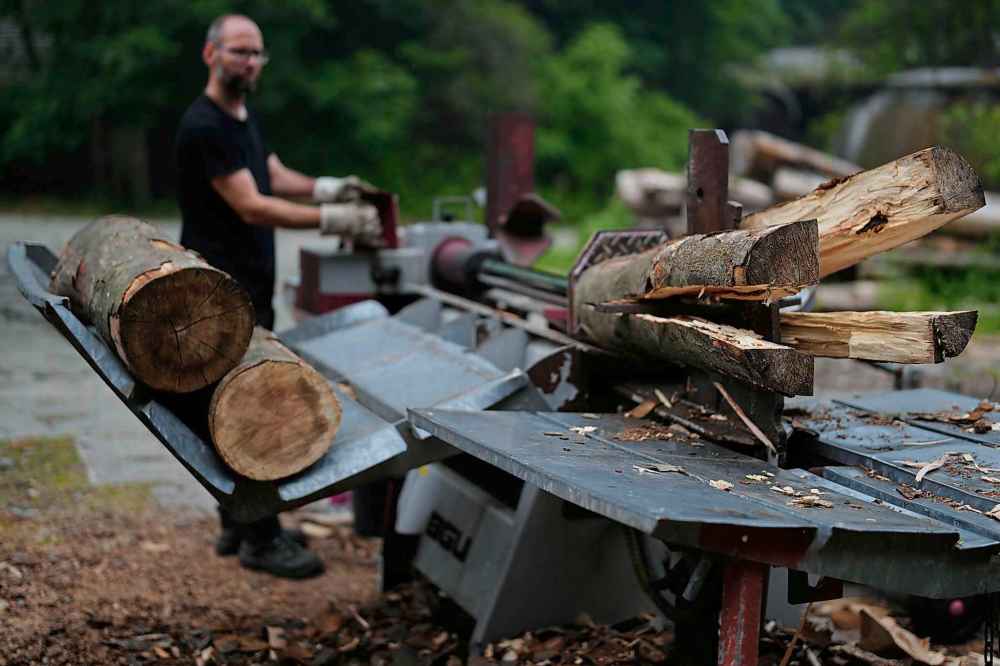
Sascha Feldmer splits beech wood for the traditional production of charcoal.
Immo Feldmer covers a pile of beech wood with hay and soil, before lighting it from the inside for it to smolder.
The beech wood burns from top to bottom with the help of air holes.
Immo Feldmer uses a pole to ventilate a mound of earth.
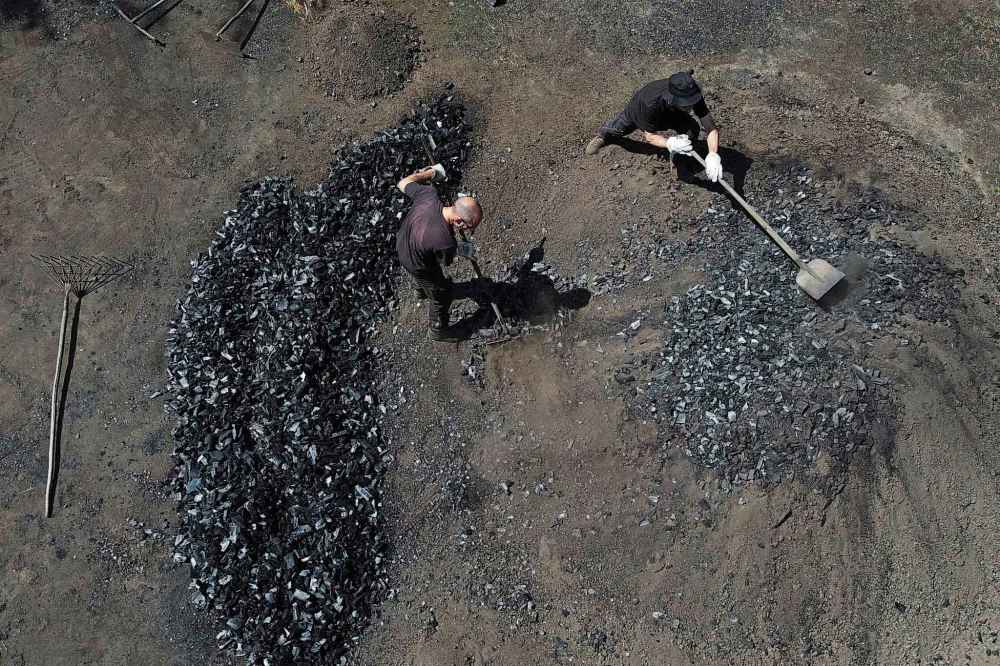
Sascha Feldmer harvests charcoal.
The mounds need to be attended to and carefully watched day and night so it won't start catching fire and burn down to useless ashes.
Sascha Feldmer holds fresh charcoal.
Over the centuries, hundreds of families in the Harz region earned their living as charcoal burners. These days ore is no longer mined there and only a few coal burners are left in Germany.
Charcoal is harvested from one mound, while another waits for ignition.
Detlef Krone places charcoal on a scale.
Immo and Sascha Feldmer put charcoal into paper bags after weighing it.
Detlef Krone packs charcoal into paper bags.
The charcoal is packed into 10-kilogram bags for sale. The Feldmers mostly sell their charcoal to people using it for barbecues at home.
Report Error Submit a Tip

More Stories

Mayoral hopefuls trade accusations

Maggie Macintosh 4 minute read Preview

Mayoral hopefuls trade accusations

Maggie Macintosh 4 minute read Yesterday at 7:51 PM CDT

Two mayoral hopefuls traded accusations about meddling in each other’s campaigns as the incumbent rallied supporters for his re-election bid on the eve of advanced polls opening across Winnipeg.

A social media post made by Mike Vogiatzakis, one of 12 nominees in the Oct. 28 race for the top job at city hall, caught the attention of rivals Sunday.

The funeral director took to Facebook midday to criticize Kevin Klein — a competitor he said he thought of “as a friend” until the former Tory cabinet minister made a U-turn after pledging to back the Vogiatzakis campaign.

“Good speaker? Yes. Good looking guy? Sure. Someone I trust now? Absolutely not,” he wrote in a lengthy post.

Read
Yesterday at 7:51 PM CDT

Shooting suspect arrested after nearly 4 years

1 minute read Yesterday at 4:45 PM CDT

A suspect has been arrested in a January 2022 shooting in Winnipeg.

Nejib Abdulrished Hassan, 27, has been wanted on an arrest warrant for aggravated assault since Feb. 11, 2022. He was arrested Oct. 3, 2026 in a back lane in the 600 block of Portage Avenue. The Winnipeg Police Service tactical unit and canine unit were involved in the arrest.

Hassan is accused of shooting a man he knew in the lobby of an apartment building in the 1100 block of Portage Avenue on Jan. 31, 2022. The 30-year-old victim was stepping off the elevator when a man in the lobby shot him with a handgun. The victim had life-altering injuries, the Winnipeg Police Service stated.

Hassan is also charged with possession of an unauthorized firearm, carrying a concealed weapon and other weapons charges. Police say officers seized a handgun from Hassan during his arrest.

’Disgusting’ posters being investigated by police

Morgan Modjeski 4 minute read Saturday, Oct. 3, 2026

The Winnipeg Police Service major crimes unit is investigating what some have labelled offensive and hateful posters on full-display at a Winnipeg home.

One of the people irked by the display is Gracie Garrett. She’s has lived on Ashburn Street in Winnipeg’s Minto neighbourhood for almost ten years. She’s never felt unsafe in the neighbourhood before, but now, a set of posters plastered on a nearby house are making her feel uneasy.

The five signs, posted facing the street prominently on a front window, contain a slur, refer to Nazis as “heroes” and call Muslims, Christians and other groups “evil.”

Learning of the signs Friday, Garrett said she’ll be reporting the posters to police, as she worries they incite and promote violence.

Broadening prediction-market gambling a bad idea

Editorial 4 minute read Preview

Broadening prediction-market gambling a bad idea

Editorial 4 minute read Saturday, Oct. 3, 2026

Let’s make a prediction: sooner or later, when Canadian governments find a way to take their own cut of the action, prediction-contract gambling on everything from sports to entertainment to political decisions is going to come to Canada.

And that’s a horrible, dangerous, pernicious idea.

Unless you have particular access to information — either inside information or strategic information based on skills or education — you’re not likely to make money at it. In fact, structurally, you’re likely to lose. In prediction markets, you basically pay an amount, plus fees from the company involved, to bet on whether something will or will not happen within a certain time frame. The amount you pay for your contract depends on how other people are also betting.

As Wealthsimple describes it, “You buy whichever side you think is right. Prices move with demand, so if the market leans towards one outcome, the more that side costs. If a lot of people are backing the TSX to finish above 38,000, yes gets more expensive and no gets cheaper.”

Read
Saturday, Oct. 3, 2026

Jets get first win of new NHL season

1 minute read Updated: Yesterday at 6:25 PM CDT

DETROIT - The Winnipeg Jets have their first victory of the new NHL season.

Stuart Skinner made 33 saves and the visitors struck three times on the power play to skate away with a 3-2 triumph over the Detroit Red Wings on Sunday afternoon.

Kyle Connor led the way with two goals and an assist, while Cole Perfetti had the other tally along with two helpers. Jets defenceman Josh Morrissey chipped in with two assists.

Tyrel Bauer also scored a decisive victory in a fight with Red Wings forward (and Winnipeg native) Keegan Kolesar.

Bombers get ‘whopped’ in Montreal

Taylor Allen 6 minute read Preview

Bombers get ‘whopped’ in Montreal

Taylor Allen 6 minute read Saturday, Oct. 3, 2026

MONTREAL — It’s hard to fathom that the Winnipeg Blue Bombers smacked these Montreal Alouettes five weeks ago.

The team that pulled off that 44-28 upset at Princess Auto Stadium was nowhere to be found in La Belle Province on Saturday night.

You can, however, now find them in the basement of the West Division at 7-8 after getting completely outmatched and outclassed by the Als in a 37-10 beatdown.

“This was bad,” left tackle Stanley Bryant told the Free Press postgame. “They basically had their way all around. They whopped our ass.”

Read
Saturday, Oct. 3, 2026