

Broadening prediction-market gambling a bad idea
Advertisement
Read this article for free:
or
Already have an account? Log in here »
To continue reading, please subscribe:

Digital Subscription
One year of digital access for only $205*
- Enjoy unlimited reading on winnipegfreepress.com
- Read the E-Edition, our digital replica newspaper
- Access News Break, our award-winning app
- Play interactive puzzles
*First annual payment billed as $205.00 + GST for one year. This annual subscription will automatically renew at $233.00 + GST every 52 weeks (10% off the regular annual price of $259.35). Offer available to new and qualified returning subscribers only. Cancel any time.
To continue reading, please subscribe:
Add Free Press access to your Brandon Sun subscription for only an additional
$1 for the first 4 weeks*
- Enjoy unlimited reading on winnipegfreepress.com
- Read the E-Edition, our digital replica newspaper
- Access News Break, our award-winning app
- Play interactive puzzles
*Your next Brandon Sun subscription payment will increase by $1.00 and you will be charged $17.95 plus GST for four weeks. After four weeks, your payment will increase to $24.95 plus GST every four weeks.
Read unlimited articles for free today:
or
Already have an account? Log in here »
Let’s make a prediction: sooner or later, when Canadian governments find a way to take their own cut of the action, prediction-contract gambling on everything from sports to entertainment to political decisions is going to come to Canada.
And that’s a horrible, dangerous, pernicious idea.
Unless you have particular access to information — either inside information or strategic information based on skills or education — you’re not likely to make money at it. In fact, structurally, you’re likely to lose. In prediction markets, you basically pay an amount, plus fees from the company involved, to bet on whether something will or will not happen within a certain time frame. The amount you pay for your contract depends on how other people are also betting.
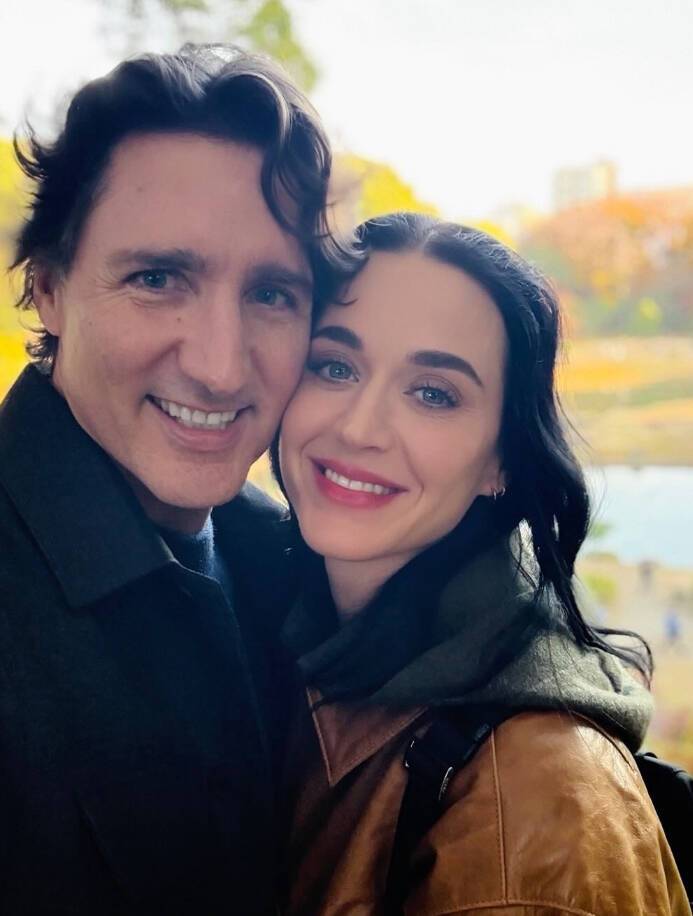
Prediction contracts let you ‘invest’ in whether Justin Trudeau and Katy Perry will get married.
As Wealthsimple describes it, “You buy whichever side you think is right. Prices move with demand, so if the market leans towards one outcome, the more that side costs. If a lot of people are backing the TSX to finish above 38,000, yes gets more expensive and no gets cheaper.”
If you’re right on a contract where 60 per cent of people are betting something will happen, you pick up 40 per cent more than you put in. If you’re wrong, you lose everything you put up.
But the house is always in a better position than you are. Because it’s not gambling — it’s just collecting their regular fees. It’s not a gamble for prediction market companies — it’s a steady revenue stream.
South of the border, prediction markets are a free for all. Will there be a touchdown in the first five minutes of a particular football game? Who will win the coin toss? What movie will win best picture at the Oscars? When will a particular temperature record be broken? Will Justin Trudeau and Katy Perry get married this year?
Right now, prediction markets are only allowed in limited areas in Canada — you can bid on contracts only on economic forecasts, environmental forecasts and financial indicators. And they’re regulated as investments, not gambling.
But there is pressure to allow the contracts to follow the American model into much broader fields, especially in sports and entertainment.
We should not go there. Full stop.
Canadians are already slipping into dangerous territory, participating in legalized sports betting and other kinds of gambling. Deluged with gaming advertising, people are lulled into believing their skills will lead to gold.
It doesn’t work out that way. Gambling, whether on horses or VLTs or sports, is a hobby for some and an addiction for many.
Giving Canadians another way to lose is not going to improve anything.
There are winners in gambling — primarily the companies and governments that offer gambling services and make their cut whether you win or lose. The margins can be extremely lucrative, especially if there is no physical casino or large employee base to maintain.

Whether it’s called buying a contract or making a bet, the end result is the same.
Every one of those losses and every one of those margins comes from someone’s wallet and paycheque — or worse, money that someone’s borrowed to bet — and it’s hard enough to make a living without giving a block of your money away.
The federal and provincial governments should be wary of an expanding prediction market and should avoid the siren song of the promise of potential new revenues from yet another human frailty.
After all, gambling addiction comes with huge costs — in everything from addiction treatment to burdens on the criminal justice system — and the ability to gamble anonymously from the privacy of your own home and cellphone takes away many of the guardrails.
For once, for the social good, just say no.