The CDC has zombie programs. Congress funds them, but few people are left to do the work
Advertisement
Read this article for free:
or
Already have an account? Log in here »
To continue reading, please subscribe:

Digital Subscription
One year of digital access for only $205*
- Enjoy unlimited reading on winnipegfreepress.com
- Read the E-Edition, our digital replica newspaper
- Access News Break, our award-winning app
- Play interactive puzzles
*First annual payment billed as $205.00 + GST for one year. This annual subscription will automatically renew at $233.00 + GST every 52 weeks (10% off the regular annual price of $259.35). Offer available to new and qualified returning subscribers only. Cancel any time.
To continue reading, please subscribe:
Add Free Press access to your Brandon Sun subscription for only an additional
$1 for the first 4 weeks*
- Enjoy unlimited reading on winnipegfreepress.com
- Read the E-Edition, our digital replica newspaper
- Access News Break, our award-winning app
- Play interactive puzzles
*Your next Brandon Sun subscription payment will increase by $1.00 and you will be charged $17.95 plus GST for four weeks. After four weeks, your payment will increase to $24.95 plus GST every four weeks.
Read unlimited articles for free today:
or
Already have an account? Log in here »
NEW YORK (AP) — The Centers for Disease Control and Prevention still has an Alzheimer’s disease program. Congress appropriated $41 million to it this year. There’s just no one staffing it.
Then there’s the agency’s Office on Smoking and Health. Congress allocated $246 million for that. Its staffers were cut, too.
Same for the epilepsy program. Its sickle cell disease data collection operation. Its rape prevention unit.
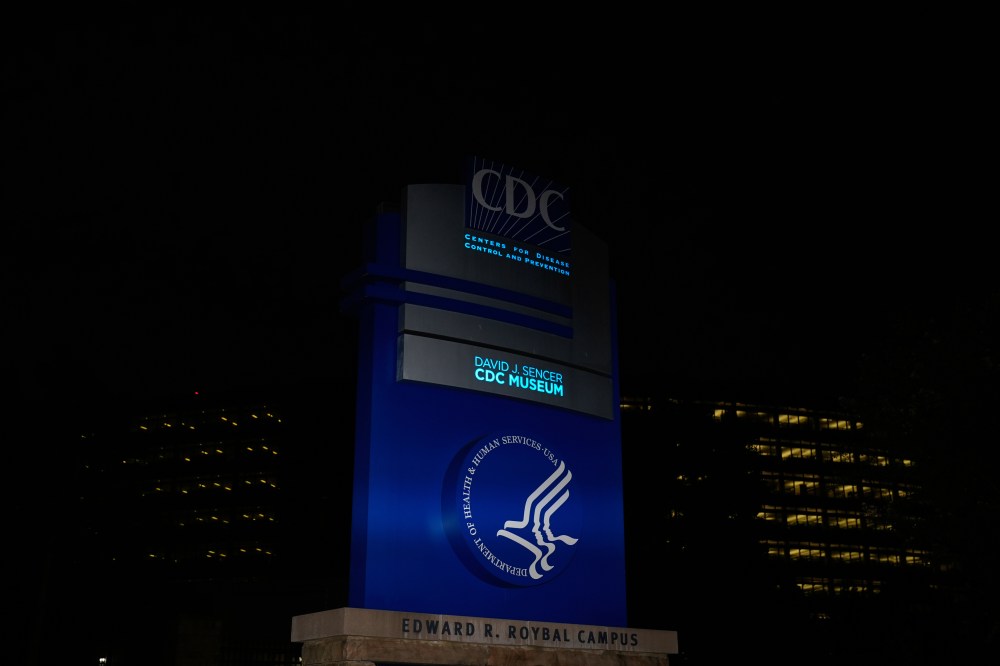
Think of them as the CDC’s zombie programs — they appear to be alive, at least according to legislation and congressional appropriations. But functionally they are dead or nearly dead, because the CDC experts who did the work were laid off by President Donald Trump’s administration or remain on leave — paid but not allowed to do their jobs.
The Atlanta-based CDC is charged with protecting Americans from preventable health threats. When Dr. Erica Schwartz became the agency’s latest director last week, she inherited these zombie programs and congressional pressure to bring some of them back to life.
In Schwartz’s confirmation hearing, U.S. Sen. Tim Kaine pressed her to restart the smoking office’s dormant activities.
“This is an office that is in statute, and it’s an office that receives congressional appropriations,” said Kaine, a Virginia Democrat. “Will you follow the law if we appropriate money for this mission and the CDC?”
“I will always follow the law,” Schwartz replied.
Trump officials turned some CDC programs into the living dead
The decision to freeze the programs came from Schwartz’s political bosses.
In April 2025, Trump’s Republican administration sent layoff notices to thousands of employees at the CDC and other federal health agencies. It was part of a sweeping effort to remake the U.S. Department of Health and Human Services and consolidate some of its programs under a new subagency called the Administration for a Healthy America. That reorganization hasn’t happened, amid congressional pushback.
But the layoffs did. Led by then-adviser Elon Musk and the Department of Government Efficiency, the cuts affected researchers, scientists, doctors, support staffers and senior leaders, leaving the government without many of the key experts who long guided U.S. decisions on medical research, drug approvals and other issues.
The cuts were challenged in lawsuits and through pleas to legislators.
Some were reversed. Drastic cuts to the CDC’s National Institute for Occupational Safety and Health, for example, were rescinded. Other reinstatements included staffers at labs that test for sexually transmitted diseases and support lead poisoning control.
But many of the cuts endured. As a result of litigation, staffers who initially were laid off have been placed on administrative leave while the fight moves through the legal system, paid to not do their jobs.
Not all public health efforts associated with every impacted program stopped. Most of the CDC’s budget is passed on to state and local programs, and much of grant processing has continued.
Staffers at the CDC and other federal health agencies “deserve a lot of credit for getting money out the door,” said Eric Gascho, executive director of the Coalition for Health Funding.
But gone are seasoned experts doing research into the health threats, assessing which grant-funded programs work and which don’t and setting a national framework for best ways to save and prolong lives.
“Without the experts, the coordination is not there across the country” in tackling public health problems, said Erika Sward, chief advocacy officer for UsAgainstAlzheimer’s. “You’re often flying blind, and without a parachute, when you don’t have the CDC staff in place.”
A union is keeping track of the zombie programs
In January, Congress passed an appropriations bill, which became law, that specified funding for more than 200 projects and activities. The law requires that HHS maintain staff to carry out statutorily required program work, although it does not say how many staffers must be in each program to do it.
Since then, current and former CDC employees have compiled a list of dozens of funded-but-decimated CDC programs. They include:
— The Office on Smoking and Health, which tracked trends, supported quit lines and operated the “Tips from Former Smokers” ad campaign that researchers associate with billions of dollars in saved healthcare costs.
— A $41 million Alzheimer’s initiative for better surveillance, risk prevention and communications campaigns. Affected work includes development of a webpage that was to explain what’s known about a potential link between menopause and Alzheimer’s disease, whether early menopause is related to higher risk and whether hormone therapy can lessen that risk.
— An $18 million program to support overdose prevention in tribal communities.
— An $11 million program focused on tracking epilepsy and community programs that help people manage the condition.
— A sickle cell disease data collection program, for which Congress appropriated $6 million.
— The Pregnancy Risk Assessment Monitoring System, the most comprehensive collection of data on the health behaviors and outcomes before, during and after childbirth. Researchers have been using its data to investigate the nation’s maternal mortality problem.
— A $2 million program focused on preventing drownings.
Notably, the cuts affected a number of programs focused on the causes and prevention of chronic diseases. U.S. Health Secretary Robert F. Kennedy Jr. has said tackling chronic disease is his central priority, and he has faulted the CDC for not doing enough.
Democrats say what’s happening at the CDC is illegal
After President Richard Nixon, a Republican, refused to spend appropriated funds, Congress passed the Impoundment Control Act in 1974. The CDC’s zombie programs represent a violation of that law, Democratic lawmakers say.
But there is no appropriations police or law enforcement agency that Congress can use to enforce the law. Republicans control the House and the Senate, so there’s been limited appetite for Congress to challenge the Trump administration.
“President Trump is showing time and again that he will put politics ahead of Americans’ health — and sadly, my Republican colleagues continue to look the other way,” said U.S. Sen. Tammy Baldwin, a Wisconsin Democrat, in a statement.
In a spending bill passed this year, Baldwin and other senators included new requirements that federal health agencies maintain staffing levels necessary to fulfill statutory responsibilities, but the bill did not specify staffing levels for each program.
Sen. Jon Ossoff is a Democrat who represents Georgia, where the CDC is based. He suggested legislators are watching whether Schwartz will administer the programs that Congress funded.
“We will learn swiftly whether she intends to follow the law,” he said in a statement.
Plans to hire people have not revived the programs
Kennedy visited the CDC earlier this month. An Associated Press reporter heard a recording of an employee forum at which Kennedy praised CDC employees and told them: “My sole purpose is to allow you to do your jobs.” He didn’t address the funded programs that have no staff.
In April, Kennedy said in a congressional hearing that more workers were needed at federal health agencies, and he planned to hire 12,000 people — mainly to address chronic health conditions.
It’s unclear how many have been hired at the CDC since then. U.S. health officials did not respond to a question about that.
Apparently there’s been very little, suggested an official with the American Federation of Government Employees, a union representing CDC employees.

“Not only have we not had any … really significant hiring of CDC employees, but we’ve also had ignoring and stalling when it comes to those employees that had been (laid off), who were supposed to have priority for some of those jobs,” said AFGE Local 2883 President Yolanda Jacobs.
Schwartz started at the CDC last week. The AP requested her comment on her plans regarding the programs.
The response came from an HHS spokesperson, who emailed: “Dr. Schwartz is determined to support and empower employees to ensure they have what they need to succeed.”
___
The Associated Press Health and Science Department receives support from the Howard Hughes Medical Institute’s Department of Science Education and the Robert Wood Johnson Foundation. The AP is solely responsible for all content.