Take a bough: Climbing takes relationship with B.C.’s trees to the next level
Advertisement
Read this article for free:
or
Already have an account? Log in here »
To continue reading, please subscribe:

Digital Subscription
One year of digital access for only $205*
- Enjoy unlimited reading on winnipegfreepress.com
- Read the E-Edition, our digital replica newspaper
- Access News Break, our award-winning app
- Play interactive puzzles
*First annual payment billed as $205.00 + GST for one year. This annual subscription will automatically renew at $233.00 + GST every 52 weeks (10% off the regular annual price of $259.35). Offer available to new and qualified returning subscribers only. Cancel any time.
To continue reading, please subscribe:
Add Free Press access to your Brandon Sun subscription for only an additional
$1 for the first 4 weeks*
- Enjoy unlimited reading on winnipegfreepress.com
- Read the E-Edition, our digital replica newspaper
- Access News Break, our award-winning app
- Play interactive puzzles
*Your next Brandon Sun subscription payment will increase by $1.00 and you will be charged $17.95 plus GST for four weeks. After four weeks, your payment will increase to $24.95 plus GST every four weeks.
Read unlimited articles for free today:
or
Already have an account? Log in here »
VANCOUVER – Fifty metres up a grand fir tree, and the rigidities of the world at ground level fall away.
There are the branches, needles, the smell of freshness and a profound stillness. Look up, and tiny flakes of bark patter gently on your face, like a greeting.
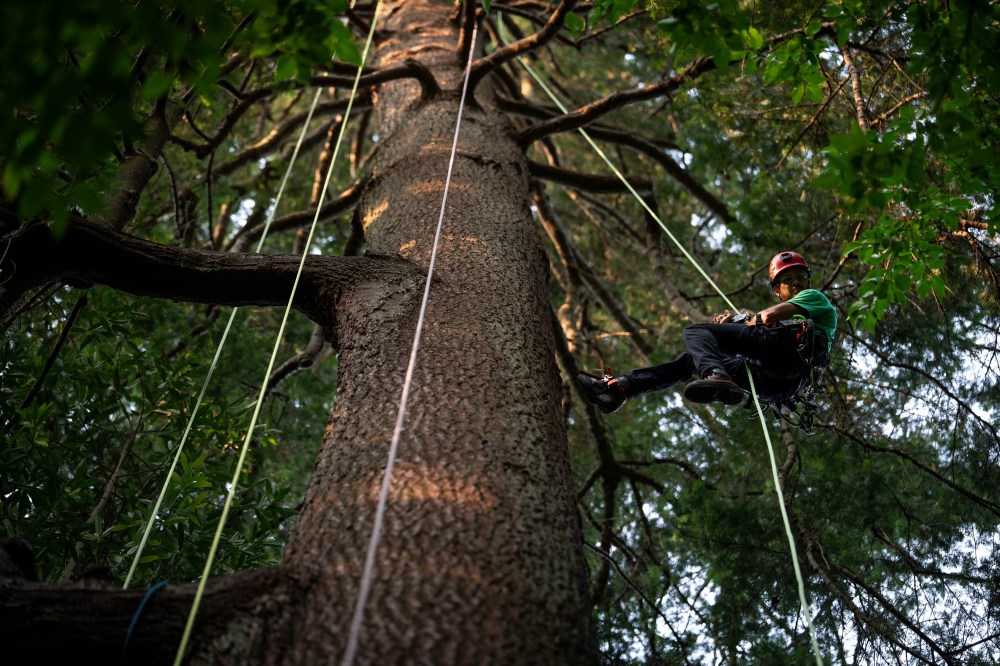
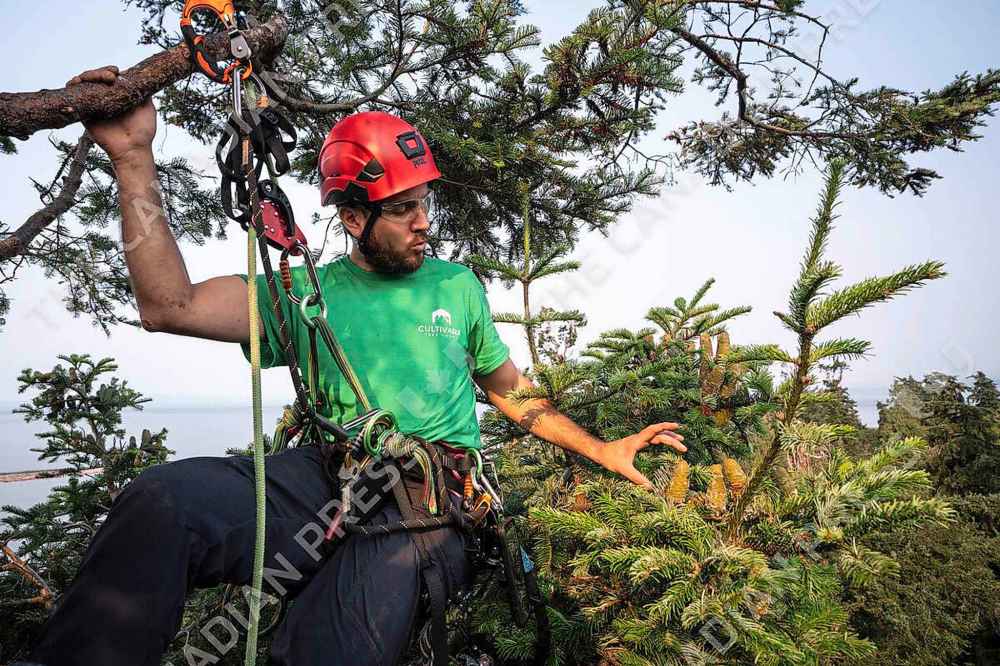
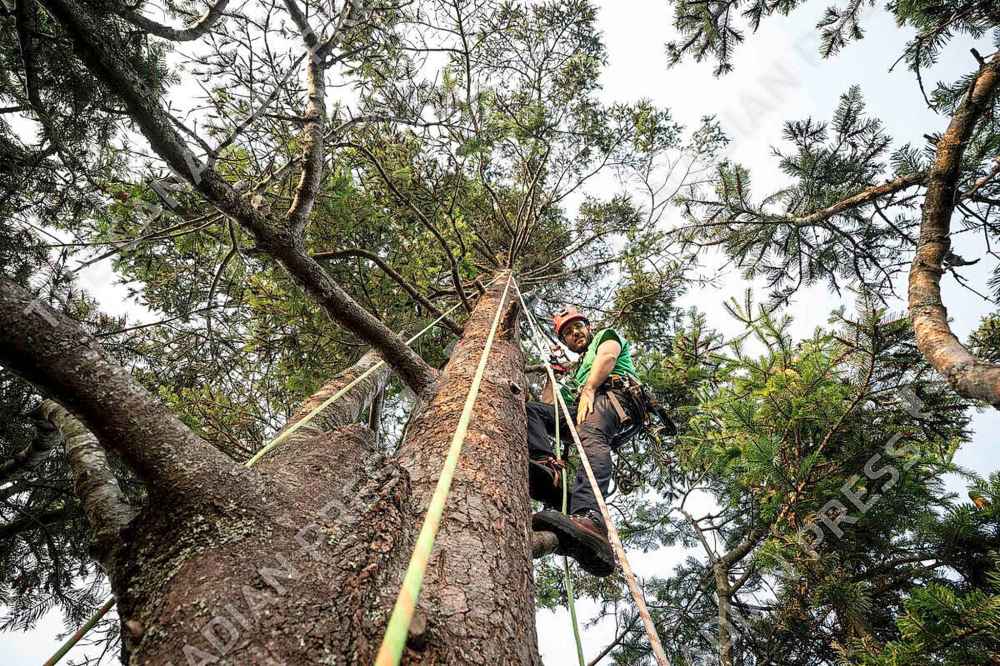
Tree-climbing guide Tom Zadorsky, who uses his feet and ropes to steady himself as he dangles in the air above the University of British Columbia’s Botanical Garden, points to a cluster of upright cones on an uppermost branch of the 150-year-old tree.
“Up here we can see the new growth. This is all from this season,” says Zadorsky, noting that some climbers compare the peculiar cones to pickles. “You can sort of see the refresh, especially in the spring, which is quite nice.”
Zadorsky, who has permission to conduct tree-climbing tours in the garden on the UBC Vancouver campus, is part of a movement that aims to awaken a climbers’ inner child and give a new perspective on B.C.’s forests.
He says it’s more than a fun activity, or a way to get out of your comfort zone — it helps foster an intimate relationship with trees.
“I think that you bring someone up here to 40 or 50 metres off the ground — it really does leave an impression. I hope that through the discussions that we have in the canopy, people are leaving a little bit more educated and engaged,” he says.
Zadorsky recounts his oldest client, a 92-year-old who had spent decades as a volunteer caring for the UBC botanical garden.
When she finally saw the forest from above, she was overcome and wept.
“We’ve also celebrated a grandmother’s 80th birthday in the tree. She was up there with her grandkids and family below. So, there are a lot of moments where people are quite moved by the experience,” says Zadorsky.
A certified arborist, Zadorsky has taken more than 1,000 people into the treetops since launching the tours last May. Some clients get to the top old school, by climbing manually, while others — including a reporter and photographer for The Canadian Press — opt to use a battery-powered lift.
Look down, and a scream might catch in your throat. But look up, and the Salish Sea stretches out on one side, Metro Vancouver on the other, and the North Shore mountains behind.
Guangyu Wang, associate dean with the department of forest resources management at UBC, says the prevalence of wildfires makes education about forests especially important, calling them “dynamic ecological systems, not static landscapes.”
“Better forest literacy helps communities make more informed decisions about wildfire prevention, preparedness, conservation, management and recovery,” he adds.
Dee Ann Benard, director of UBC Botanical Garden, says she has done three climbing tours with Zadorsky and one of her fondest memories was watching sunset over the Salish Sea from the canopy.
She says the garden includes some old-growth trees, 600 to 800 years old, although the area was heavily logged about 150 years ago.
The oldest trees were spared the logger’s axe because of imperfections, says Benard.
“They tend to be a bit bent or twisted or a little bit crooked because back then there were so many trees to choose from. If the trees weren’t really nice, they didn’t bother to log them. So, that’s good for us because they got left behind,” she adds.
Now “we can’t afford to lose any of them,” she says, and every tree carries a survival story.
“I think if people look at an old tree, they really have to think about all the things that that tree had to go through to survive and still be standing in that place today,” she adds.
You don’t have to do a tour to climb a tree.
Steve Gosselin, an engineer and a dad of three daughters from Kelowna, B.C., climbed a 40-metre-tall Sequoia on the median of bustling Cambie Street in Vancouver last year.
The tree is well known to locals as the Cambie climbing tree. It features a tangle of horizontal branches all the way to ground level, and at the top there’s even a few planks that serve as a makeshift viewing platform.
He says he was blown away by the “incredible” views of the city, ocean, and mountains, calling it a “unique experience that one might not expect, being in the middle of a city.”
There are no specific rules against climbing city trees, although Vancouver’s Street Tree Bylaw prohibits damaging trees by attaching ropes or “any contrivance.”
Gosselin, who grew up in Regina, says he did a decent amount of tree climbing when he was a boy.
“But who would think that even as adults, there are proportionately larger trees that we could climb, and that would give a bit of a unique experience compared to rock climbing? For example, just gripping a different surface of wood is almost a more intimate experience with nature,” says Gosselin.
He says that on the Cambie climb, the world became more peaceful the higher they went.
“Especially with urban tree climbing too, there’s often the noise of the city, but as you rise, it can kind of just be muffled and almost fade away,” says Gosselin.
He says there’s “something special about trees, just the smells and the sounds and the rustling of the wind,” and it’s the “next level” compared to hiking in a forest or even hugging a tree.
Zadorsky says he hopes anyone who climbs a tree brings something with them when they come down to earth, too.
“It’s my hope that everyone who goes into the canopy comes down with a bit of a different perspective and starts thinking about them more,” said Zadorsky.
This report by The Canadian Press was first published Aug. 18, 2026.