California farmers are struggling to sell grapes as demand for wine drops
Advertisement
Read this article for free:
or
Already have an account? Log in here »
To continue reading, please subscribe:

Digital Subscription
One year of digital access for only $205*
- Enjoy unlimited reading on winnipegfreepress.com
- Read the E-Edition, our digital replica newspaper
- Access News Break, our award-winning app
- Play interactive puzzles
*First annual payment billed as $205.00 + GST for one year. This annual subscription will automatically renew at $233.00 + GST every 52 weeks (10% off the regular annual price of $259.35). Offer available to new and qualified returning subscribers only. Cancel any time.
To continue reading, please subscribe:
Add Free Press access to your Brandon Sun subscription for only an additional
$1 for the first 4 weeks*
- Enjoy unlimited reading on winnipegfreepress.com
- Read the E-Edition, our digital replica newspaper
- Access News Break, our award-winning app
- Play interactive puzzles
*Your next Brandon Sun subscription payment will increase by $1.00 and you will be charged $17.95 plus GST for four weeks. After four weeks, your payment will increase to $24.95 plus GST every four weeks.
Read unlimited articles for free today:
or
Already have an account? Log in here »
LODI, Calif. (AP) — It’s harvest time in California wine country, but many growers are struggling to sell their grapes as changing drinking habits have caused demand to plunge. The decline is forcing some growers to tear out vineyards that their families have grown for generations.
Wine sales have decreased by more than 20% over a five-year period, causing prices paid for grapes to drop and prompting California growers to take roughly a quarter of the state’s vineyards out of production. Many growers are having to decide whether to harvest at a loss, leave grapes on the vine or replace vineyards with crops more in demand such as almonds, walnuts, pistachios and olives.
Third-generation grower Bill Berryhill said it means another year of losing money and wasting hundreds of tons of healthy grapes.
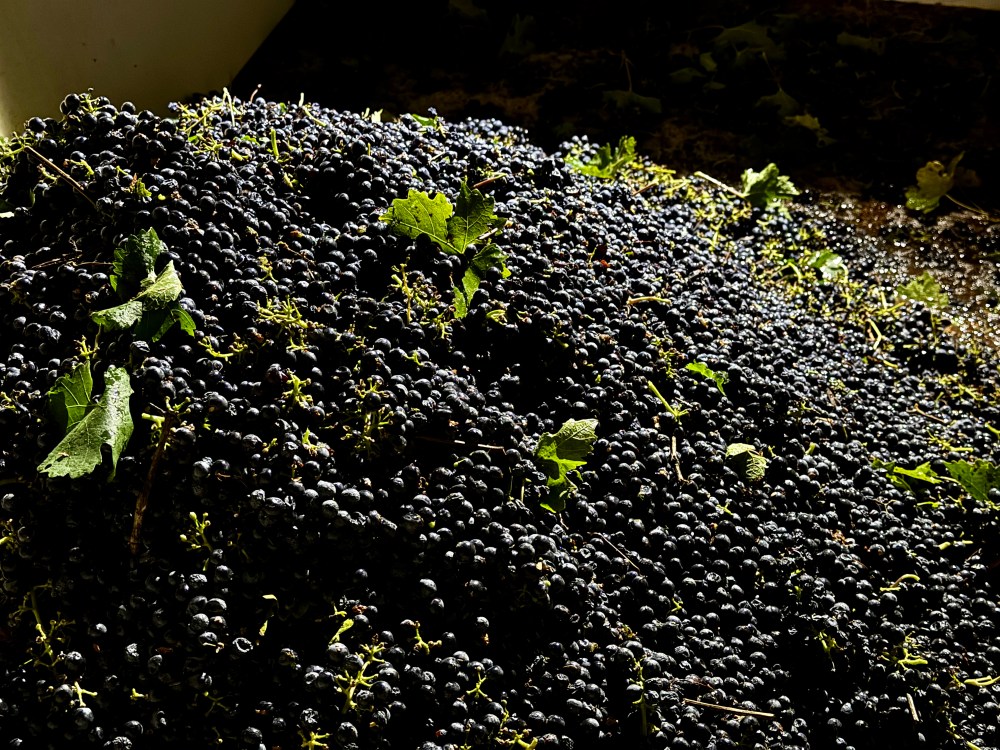
“It’s just sickening,” said Berryhill, standing in a vineyard of unsold merlot grapes. “You raise a beautiful crop, and it’s really a nice vintage this year, and you drop it on the ground. It’s sad. All your work is just down the toilet.”
Berryhill, who owns Berryhill Family Vineyards near Lodi in the San Joaquin Valley, said he can’t find buyers for grapes grown on 200 of his 500 acres (202 hectares). He plans to remove 50 acres (20 hectares) of vineyards when the harvest season is over.
“I will lose money for sure. It’s just a matter of how much,” Berryhill, 68, said. “This has been a big loser for three years now.”
Grape growers take vineyards out of production
At its peak during the pandemic, California had almost 600,000 acres (242,811 hectares) of vineyards, but farmers have removed or stopped actively growing wine grapes on roughly 25% of that land, said Jeff Bitter, president of Allied Grape Growers, which represents about 500 farmers statewide.
This year, about half of California’s wine grape crop entered the harvest season without contracts with buyers, compared with 70 to 80% with contracts in a typical year, Bitter said.
If they’re lucky, growers can sell their uncontracted grapes at a loss to buyers making concentrated syrup.
Even as growers have abandoned or removed tens of thousands of acres of vineyards in California in recent years, too many grapes are still being produced, Bitter said.
“The market is just so depressed that it’s difficult to grow them profitably,” he said. “Demand is not going up. It’s still continuing to decline.”
Kyle Collins, a Lodi-based operations manager with Allied Grape Growers, recently examined ripe grapes in a petite verdot vineyard in Lodi, one of California’s most productive wine regions.
“Unfortunately, we do not have a buyer for these grapes,” Collins said. “That’s unfortunately a reality for not just this vineyard but a lot of us around here.”
Besides hurting vineyards, the drop in sales has hit local businesses and workers, he said.
“That’s not getting into the pockets of the people doing the field labor, the farmworkers,” Collins said. “It does have a trickle effect in the economy.”
Wine sales fall after years of growth
The downturn is a dramatic shift for the wine industry in California, which produces more than 80% of U.S. wine due to its unique geography and Mediterranean climate. For decades, California’s wine industry grew steadily as Americans, particularly baby boomers, developed a taste for cabernet, zinfandel, chardonnay and other varietals.
The most famous wine regions such as Napa and Sonoma Valley produced premium vintages while the Central Valley grew grapes for less expensive labels.
Wine sales peaked during the pandemic in 2021 when restaurants were closed and social gatherings restricted. People stocked up on wine and drank more at home.
But over the past five years, wine sales have declined sharply, and they’re expected to fall further this year.
In the U.S., sales of wine cases declined 23% from 427 million in 2020 to 329 million in 2025, while total wine spending fell 22% from $94 billion to $74 billion, according to First Citizens Bank, formerly Silicon Valley Bank, which produces an annual State of the Wine Industry Report.
Wine industry faces more competition, tariffs and changing tastes
California can’t export its excess inventory because wine consumption is down globally and it’s more expensive to produce in the U.S. than countries such as Argentina and Australia, Bitter said. In 2025, global wine consumption declined 2.7% from 2024 and 14% from 2018, with sharp declines in Europe and China, according to the International Organization of Vine and Wine.
There are a variety of forces driving the decline in wine sales. Baby boomers are aging out of the market while young people are drinking less alcohol due to health and financial concerns. Wine faces competition from craft beer, liquor and canned cocktails as well as cannabis.
“The kids just aren’t drinking as much,” Berryhill said. “And it’s not just wine, it’s whiskey and beer and everything. And then you’ve also got the competition with all the seltzers.”

Tariffs have reduced exports, particularly to Canada, which was the largest foreign buyer of American wine.
“The next step in the healing process is not only balancing supply and demand, but now actually figuring out what it is that the other consumers want,” said Rob McMillan, chief wine strategist at First Citizens Bank.
The industry hopes the market will bottom out soon. Meanwhile, growers are absorbing heavy losses trying to hang on.
Berryhill, whose grandfather started growing grapes nearly 100 years ago, doesn’t plan to give up on wine even though it’s costing him.
“I love growing grapes. It’s in the blood,” Berryhill said. “Because I love them, I can weather this and I’ll fight through it.”