Earth’s driest desert is covered in wildflowers right now

Advertisement

Advertise with us

THE ATACAMA DESERT, Chile (AP) — Spring has finally arrived in the Southern Hemisphere and, in Chile, even the desert is blossoming.

Read this article for free:


or

Already have an account? Log in here »

To continue reading, please subscribe:

Subscribe and receive a limited-edition Free Press branded hat or tote.

Digital Subscription

One year of digital access for only $205*

  • Enjoy unlimited reading on winnipegfreepress.com
  • Read the E-Edition, our digital replica newspaper
  • Access News Break, our award-winning app
  • Play interactive puzzles

*First annual payment billed as $205.00 + GST for one year. This annual subscription will automatically renew at $233.00 + GST every 52 weeks (10% off the regular annual price of $259.35). Offer available to new and qualified returning subscribers only. Cancel any time.

To continue reading, please subscribe:

Add Free Press access to your Brandon Sun subscription for only an additional

$1 for the first 4 weeks*

  • Enjoy unlimited reading on winnipegfreepress.com
  • Read the E-Edition, our digital replica newspaper
  • Access News Break, our award-winning app
  • Play interactive puzzles
Start now

*Your next Brandon Sun subscription payment will increase by $1.00 and you will be charged $17.95 plus GST for four weeks. After four weeks, your payment will increase to $24.95 plus GST every four weeks.

THE ATACAMA DESERT, Chile (AP) — Spring has finally arrived in the Southern Hemisphere and, in Chile, even the desert is blossoming.

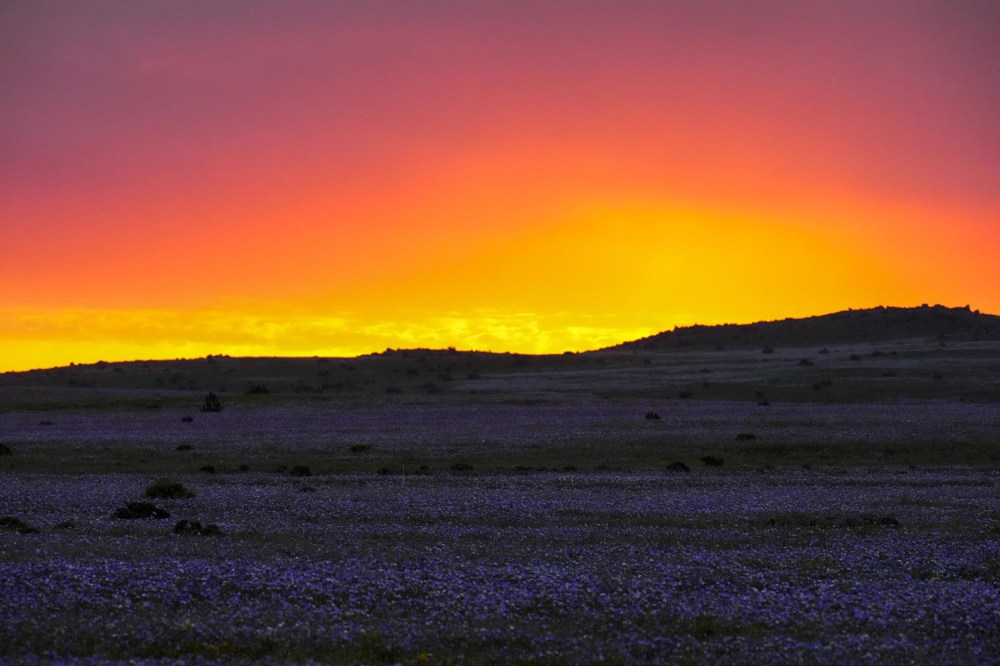
Known as the driest nonpolar desert on Earth, a massive portion of the Atacama Desert has been covered in flowers after the El Niño weather pattern brought heavy rains to the region earlier this year. The unusually large amount of water allowed millions of seeds and bulbs to sprout and bloom, many of them after remaining dormant for decades.

“It is a unique phenomenon; there are more than 200 plant species,” Jorge Carabantes, head of the Protected Areas Department at the National Forest Corporation (CONAF), told The Associated Press. “This is a flowering event that is obviously extraordinary and unusual, very different from other blooms that occur elsewhere on the globe.”
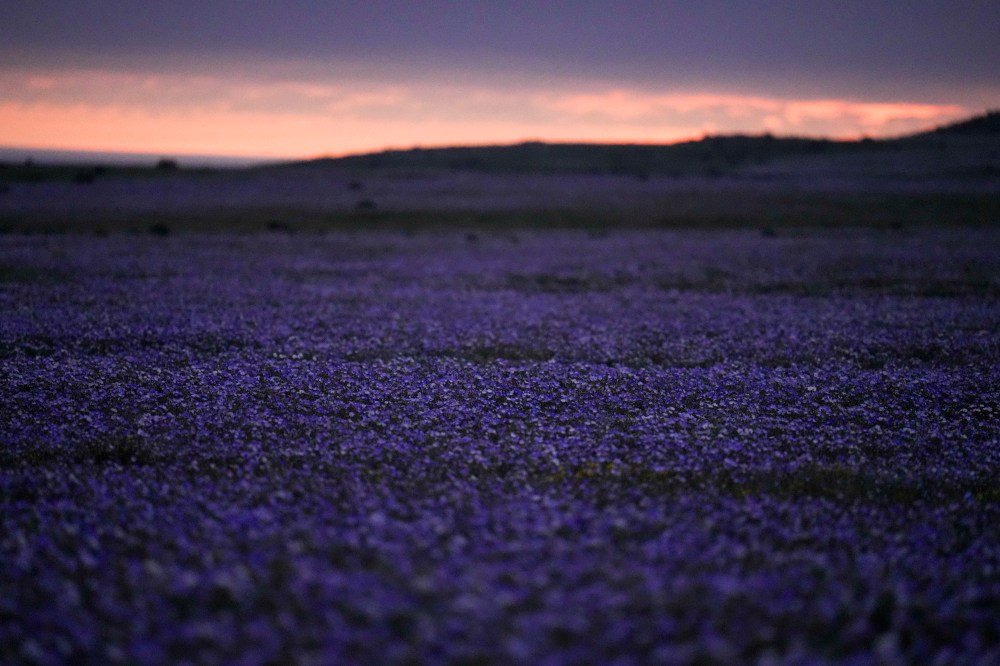
A carpet of flowers covers the Atacama Desert after rains near Copiapo, Chile, Thursday, Sept. 24, 2026. (AP Photo/Esteban Felix)

The Atacama lies between the Pacific Ocean and the Andes Mountains, stretching some 1,600 kilometers (1,000 miles) all the way down the northern coast of Chile.

Although flowering is common during the transition from winter to spring, this year the rocky, brownish dunes that make up the desert’s traditional landscape have turned into a vibrant, colorful carpet of wildflowers during a historic Desierto Florido, or “flowering desert.”

“I always thought it was just going to be brown. That’s my image of a desert, just brown,” said Felix Banda, 51, who was born in Chile but has lived his whole life in Australia. “I knew that it had rained a lot, so I was expecting to see some beautiful greenery, but this is an incredible landscape,” he added about his first visit to the Atacama.

Record rainfall turns into a visual spectacle

Between July and August, Chile recorded record rainfall in several regions, with some levels never seen since measurements began in the 1950s. The heavy precipitation was driven by a super El Niño, a climate phenomenon that causes sharp rises in global temperatures and is becoming increasingly strong.
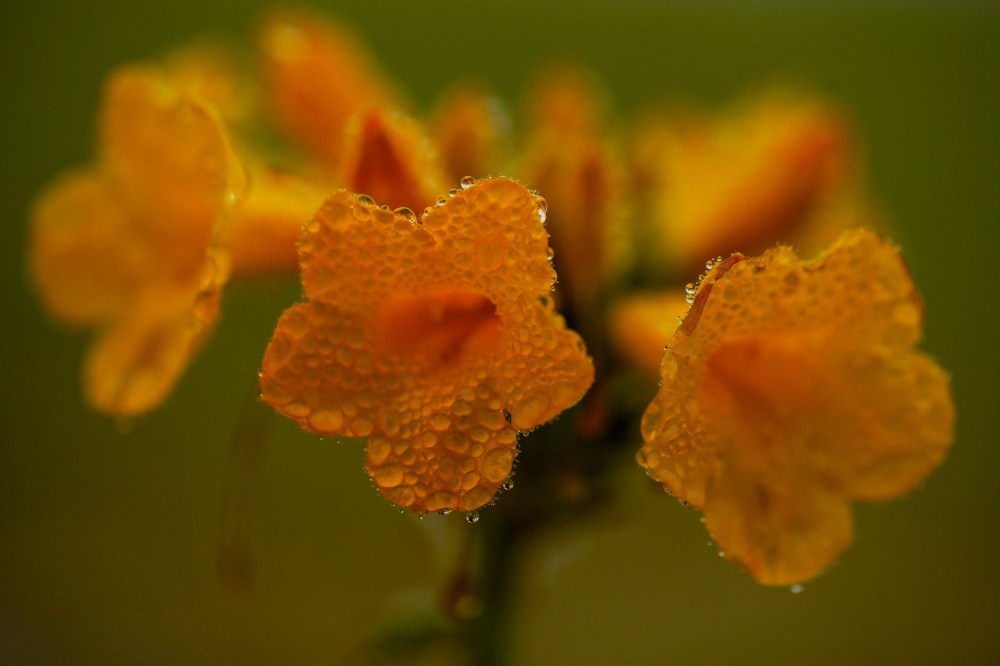
Dew droplets cling to a flower among a carpet of blooms covering the Atacama Desert near Copiapo, Chile, Friday, Sept. 25, 2026.  (AP Photo/Esteban Felix)
Dew droplets cling to a flower among a carpet of blooms covering the Atacama Desert near Copiapo, Chile, Friday, Sept. 25, 2026. (AP Photo/Esteban Felix)

“Since rainfall records began, these are the most significant figures in terms of volume: 160, 180, 190 millimeters (6 to 7 inches) in some locations,” explained biologist César Pizarro, head of the Biodiversity Conservation Section at CONAF Atacama. “What has happened now has an origin, and it is called ‘super El Niño.’”

The storms have caused flooding, havoc and devastation in several parts of Chile. In the north, they have also enabled the historic desert bloom, with an estimated coverage of some 17,000 square kilometers (6,560 square miles) this year. This area is similar in size to the Santiago Metropolitan Region, the country’s largest and most populous area.

According to CONAF projections, this is expected to be the most intense and extensive Desierto Florido since 1997.

That’s because, Pizarro said, the heavy rainfall activated the desert’s biological material, known as germplasm. This includes seeds, bulbs, and tubers but also the eggs of various invertebrates and reptiles.

The result is a true visual spectacle featuring more than 200 species of plants and flowers in a variety of colors, shapes and forms. Red and yellow ñañucas, purple rock purslane, white suspiros, orange terciopelos and the native garra de león, one of the desert’s most iconic species, have transformed the hills, plains and ravines of the Atacama.
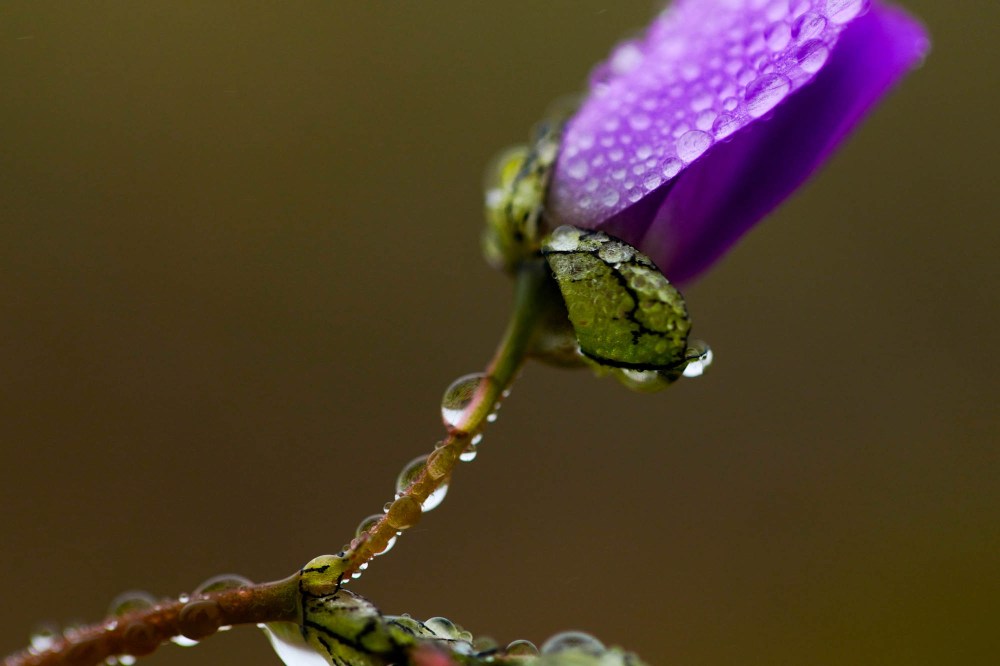
Dew droplets cling to a flower among a carpet of blooms covering the Atacama Desert near Copiapo, Chile, Friday, Sept. 25, 2026. (AP Photo/Esteban Felix)

“There are hills and mountain ranges where no greenery or flowers had been seen for more than 30 or 40 years,” Pizarro added. “This desert germplasm can remain (dormant) for many years, even decades. The hills this year are the best example of that.”

Tourism picks up

Whether arriving from within Chile or overseas, tourists are venturing into the remote, inhospitable areas of the Atacama to admire the millions of flowers adorning vast areas of the desert, stretching from the coast to the horizon.

According to data provided to the AP by the National Tourism Secretariat, the Atacama region is expected to see nearly 300,000 overnight trips by the time the natural phenomenon ends in November, positioning Desierto Florido as one of the region’s main tourist attractions this season.

Chef Franco Moya, 37, and his girlfriend traveled nearly 1,000 kilometers (about 620 miles) from Santa Cruz, a town in central Chile’s Colchagua Valley, to several parts of the desert to celebrate his birthday.
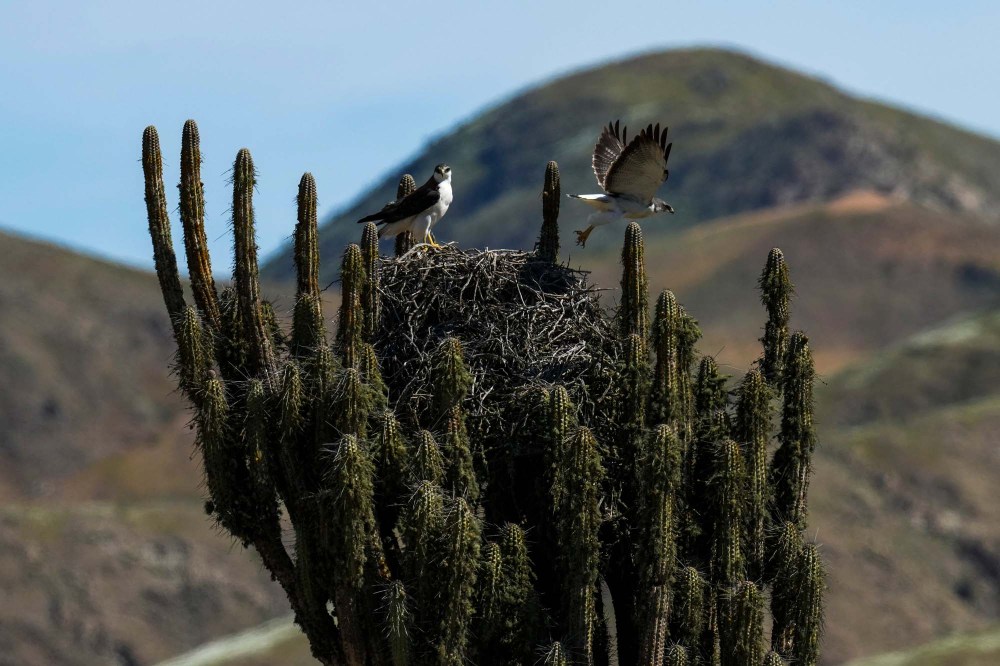
Two eagles guard their nest atop a cactus in a carpet of flowers covers the Atacama Desert after rains near Copiapo, Chile, Thursday, Sept. 24, 2026. (AP Photo/Esteban Felix)

“It was striking to see how the flowers grow in such a dry place,” he said. “It’s my first time here … and it was a truly surprising moment.”
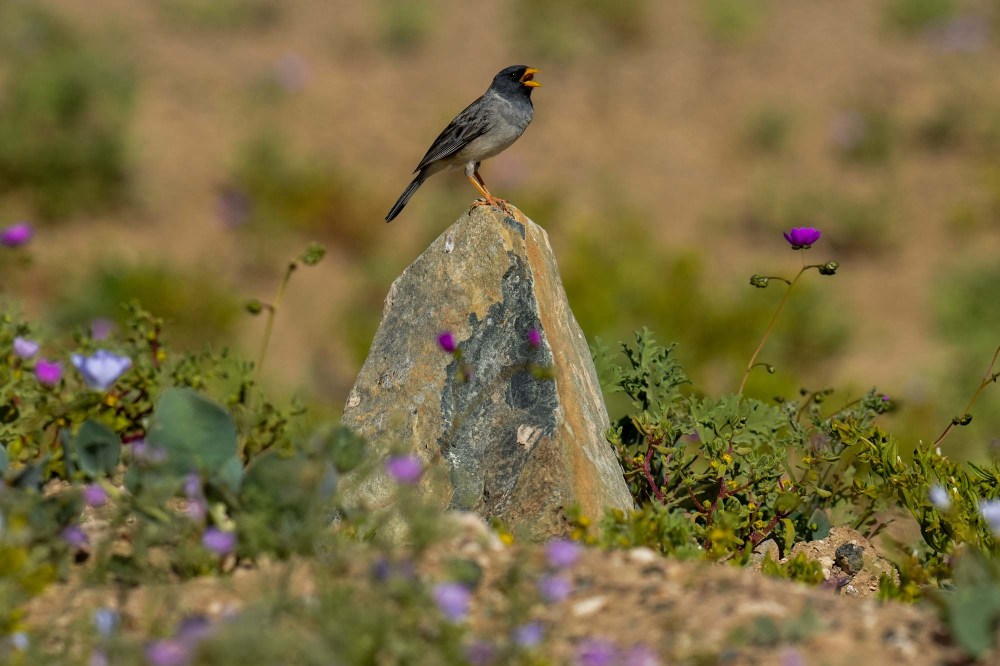
A bird sings on a rock in a blooming Atacama Desert after rains near Copiapó, Chile, Thursday, Sept. 24, 2026. (AP Photo/Esteban Felix)
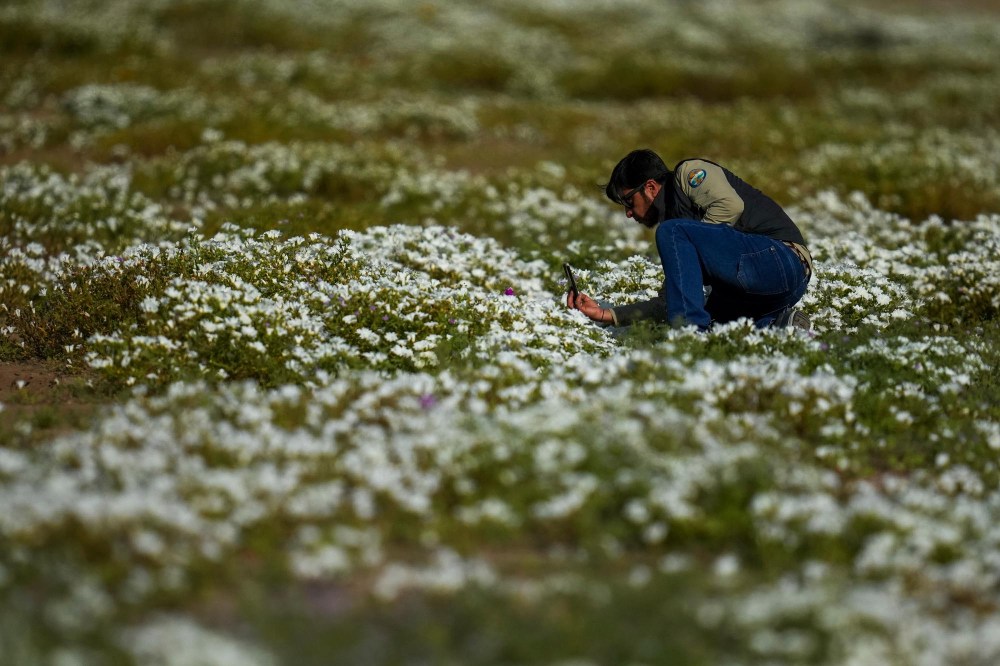
César Pizarro, head of conservation for the National Forestry Corporation (CONAF), takes photos of flowers in a carpet of blooms covering the Atacama Desert after rains near Copiapó, Chile, Thursday, Sept. 24, 2026. (AP Photo/Esteban Felix)
A carpet of flowers covers the Atacama Desert after rains near Copiapo, Chile, Thursday, Sept. 24, 2026. (AP Photo/Esteban Felix)
Report Error Submit a Tip

More Stories

Port of Churchill signs agreement with Dutch port

Aaron Epp 2 minute read Preview

Port of Churchill signs agreement with Dutch port

Aaron Epp 2 minute read Tuesday, Sep. 29, 2026

Arctic Gateway Group, operator of the Port of Churchill, has signed an agreement with the Port of Rotterdam in the Netherlands to attract business and strengthen supply chains linking Western Canada and Europe.

The agreement enables the two ports to work together to develop new trade in critical minerals and energy products, connect Canadian producers with European buyers, and identify opportunities to improve the supply chain from Western Canadian resource projects through Churchill and into European markets.

The Port of Rotterdam is Europe’s largest port and home to more than 3,000 businesses across its industrial complex, serving as a major gateway for critical raw materials and energy.

Meanwhile, the Port of Churchill has been identified as a transformative national strategy for Canada and is emerging as a northern trade corridor connecting Western Canada’s resources to global markets.

Read
Tuesday, Sep. 29, 2026

In a smart-device world, some families keep phone jacked into the wall

Sheldon Birnie 8 minute read Preview

In a smart-device world, some families keep phone jacked into the wall

Sheldon Birnie 8 minute read Tuesday, Sep. 29, 2026

When the phone rings in Kristin Shiach and Jordan Sobkowicz’s Riverview home, their three daughters race to see who can be the first to answer.

“It depends who is closest,” says 13-year-old Emily. “If I’m sitting in my room, I can get to it quickest.”

“That’s because it’s always in your room,” Anna, 10, replies. “You never put it back!”

“Usually, when the phone rings,” explains Sobkowicz, “someone yells really loudly —”

Read
Tuesday, Sep. 29, 2026

‘We’ll stand for the children’: crowds gather for Orange Shirt Day in Winnipeg

Matthew Frank 5 minute read Preview

‘We’ll stand for the children’: crowds gather for Orange Shirt Day in Winnipeg

Matthew Frank 5 minute read Updated: Yesterday at 6:08 PM CDT

A sea of people clad in orange shirts and waving flags marched through downtown Winnipeg to honour those who survived and died in residential schools.

Read
Updated: Yesterday at 6:08 PM CDT

What’s open, what’s closed, what’s up in Winnipeg on National Day for Truth and Reconciliation Sept. 30, 2026

Free Press staff 4 minute read Preview

What’s open, what’s closed, what’s up in Winnipeg on National Day for Truth and Reconciliation Sept. 30, 2026

Free Press staff 4 minute read Sunday, Sep. 27, 2026

The National Day of Truth and Reconciliation, or Orange Shirt Day, as it's known in Manitoba, happens Sept. 30 with many commemorative community events scheduled.

Read
Sunday, Sep. 27, 2026

Eliminating short-term sick notes ‘big step forward’: Doctors Manitoba

Matthew Frank 4 minute read Preview

Eliminating short-term sick notes ‘big step forward’: Doctors Manitoba

Matthew Frank 4 minute read Tuesday, Sep. 29, 2026

Manitoba doctors will no longer be required to issue sick notes for short-term employee absences due to illness or injury, starting Thursday.

The new provincial legislation, which officially passed in June, will only allow employers to request the medical documents when an employee has been absent for more than a week or if they’ve called in sick 10 or more times in a calendar year.

Dr. Nichelle Desilets, Doctors Manitoba board chair, said the legislation will free up time for physicians to concentrate on medical appointments and called the new rules among the strongest in Canada.

“What may be a small change in the labour code can be a big step forward on improving access to medical care for all Manitobans and using our health care resources wisely,” she said during a news conference Tuesday.

Read
Tuesday, Sep. 29, 2026

Who has been invited to the table?

Stephen Borys 6 minute read Preview

Who has been invited to the table?

Stephen Borys 6 minute read 2:01 AM CDT

Last Friday, I spoke at Booth University College’s inaugural Honour and Hope Harvest Dinner in support of Shelter U. I had been asked to speak about the power of art in the community, a subject I have spent much of my professional life thinking about — as a museum director, writer and teacher, and now through my consulting work with Civic Muse.

What continues to interest me is not simply what museums, universities and other public institutions do, but whether their work actually matters — whether they make a difference in the lives of the people and communities around them.

Preparing for the evening brought me back to an even more fundamental question: Who has been invited in?

One of my museum mentors used to remind me that institutions often begin the conversation about public engagement too late. Before engagement comes the welcome, and before the welcome comes the invitation. We can create extraordinary buildings, exhibitions and programs and say that everyone is welcome. But unless people believe that these places are also meant for them, many will never cross the threshold.

Read
2:01 AM CDT