A Cancon icon
Creative powerhouse Perry Rosemond never lost Winnipeg roots

Advertisement
Read this article for free:
or
Already have an account? Log in here »
To continue reading, please subscribe:

Digital Subscription
One year of digital access for only $205*
- Enjoy unlimited reading on winnipegfreepress.com
- Read the E-Edition, our digital replica newspaper
- Access News Break, our award-winning app
- Play interactive puzzles
*First annual payment billed as $205.00 + GST for one year. This annual subscription will automatically renew at $233.00 + GST every 52 weeks (10% off the regular annual price of $259.35). Offer available to new and qualified returning subscribers only. Cancel any time.
To continue reading, please subscribe:
Add Free Press access to your Brandon Sun subscription for only an additional
$1 for the first 4 weeks*
- Enjoy unlimited reading on winnipegfreepress.com
- Read the E-Edition, our digital replica newspaper
- Access News Break, our award-winning app
- Play interactive puzzles
*Your next Brandon Sun subscription payment will increase by $1.00 and you will be charged $17.95 plus GST for four weeks. After four weeks, your payment will increase to $24.95 plus GST every four weeks.
Read unlimited articles for free today:
or
Already have an account? Log in here »
He created King of Kensington, directed the troops in the Royal Canadian Air Farce, and his creative eye was behind the lens for television shows starring Johnny Cash, Tom Jones, Mr. Dress-Up and the Friendly Giant.
He also wrote and developed the Canadian version of Sesame Street during his time as the head of school and preschool programming for CBC in Toronto, and directed a televised special in 2002 for Winnipeg sketch comedy troupe Royal Liechtenstein Theatre Company.
But before his name featured in the credits of some of the most iconic and influential pieces of the Cancon canon, Perry Rosemond was an only child living in a crammed, multi-generational home in Winnipeg’s North End, racing each day to beat the morning bell next door at William Whyte School.

Jack Dobson/The Globe and Mail
CBC producer Perry Rosemond in Toronto
In memoirs that have yet to be published, the late television producer recalled his childhood. “(T)here were 14 of us in the house at 193 Andrews St., and it wasn’t that big of a house,” he writes.
“My mom’s older sister lived upstairs with her husband and their three kids. My grandparents lived on the first floor along with my mother’s brother Charlie, his wife and two kids, plus my parents and me.”
As the youngest in the house — a 1907-built structure that still stands today at the corner of Andrews Street and Manitoba Avenue — Rosemond, who was born Nov. 15, 1936, slept on a small bed in an oversized foyer that ran between the kitchen and the dining room. The youngest member of the Rosemond-Magid family didn’t mind living in the middle of the road.
“That allowed me to stay current on all the events of the household,” wrote Rosemond, who played tackle at St. John’s High School, earning the nickname Tank.
In the multicultural, buoyant, yet still segmented North End, Rosemond received early lessons in diversity and in shared humanity, qualities that informed his contributions to the language of televised Canadian comedy, including King of Kensington. The groundbreaking sitcom, though set in downtown Toronto’s mercantile enclave, largely sprouted from the minds of Winnipeg emigrés.
Following his tenure as the artistic director of the Stratford Festival, when he was named the director of drama for the CBC, John Hirsch was in search of a tentpole sitcom to match the work Norman Lear was making south of the border.
In need of ideas, Hirsch — the founding director of the Manitoba Theatre Centre — called Rosemond, who in the late 1950s and early ’60s was one of Winnipeg’s busiest stage actors.
As the impetuous younger brother in N. Richard Nash’s The Rainmaker, Rosemond was “a complete joy,” the Winnipeg Free Press’s Frank Morriss opined in April 1958. With good notices abounding, Rosemond, who had abandoned plans for a career in law, starred in a pilot for the CBC called The Explorer.
But in the mid-1960s, Rosemond moved behind the scenes, earning grants and industry honours in recognition of his work as a producer on Canadian-made documentary and informational series like Through the Eyes of Tomorrow and The Way It Is, a weekly public affairs series that aired on Sundays through 1969.
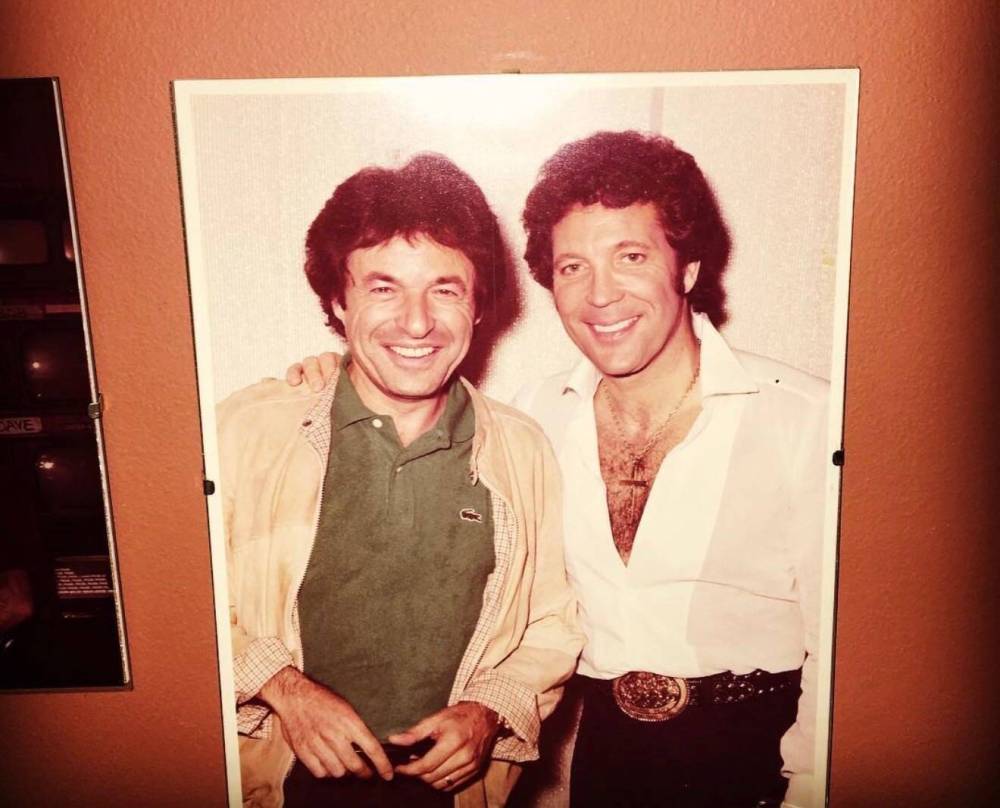
Supplied
Rosemond (left) with crooner Tom Jones
At the same time, Rosemond was the regular director for CBC’s Telescope, assembling TV documentary profiles of people of interest such as Marshall McLuhan, Gordon Lightfoot, Gordon Pinsent, Oscar Peterson, Glenn Gould and Nova Scotian folklorist Dr. Helen Creighton.
Meanwhile, Rosemond, like fellow Winnipeggers David Steinberg and Smothers Brothers writer Allan Blye — who acted with Rosemond in a University of Manitoba production of Julius Caesar — was repeatedly called to bring his expertise to the American networks.
Rosemond’s directing credits from the late 1960s through to the creation in 1975 of King of Kensington include Dean Martin Presents the Golddiggers, The Sonny and Cher Comedy Hour and an episode of super-producer Lear’s Good Times.
So when Hirsch needed a worldly sitcom about the ultimate Toronto everyman, it made sense that Rosemond was at the top of his call sheet.
“I had heard a very arrogant Tony Randall comment that everyone enjoyed his opera radio broadcasts, even ‘carpenters and plumbers,” writes Rosemond in his memoirs.
“I thought of my very own carpenters and plumbers who inhabited the gambling clubs of North Winnipeg, the immigrants. The very ones who would stop the poker game to listen to Louis St. Laurent’s speech and then would argue into the morning more vigorously and incisively than anything I ever heard in parliament.”
In King of Kensington, which premièred in September 1975, corner store owner Larry King (Al Waxman) is the fulcrum of a tightly connected community where strangers were friends and — much to his wife’s (Fiona Reid) and live-in-mother’s (Winnipeg’s Helene Winston) collective chagrin — the door was always open for Larry to help solve their problems.
Crafted with care by a writing staff that included Seeing Things creator Louis Del Grande, Kensington was very much aligned with the North End of Rosemond’s upbringing, with the central character’s relationship to neighbours informed by the generosity of spirit displayed by his own parents, who regularly opened their doors; for a stretch in the 1950s, a young Pinsent slept on a spare mattress at the Rosemond home.
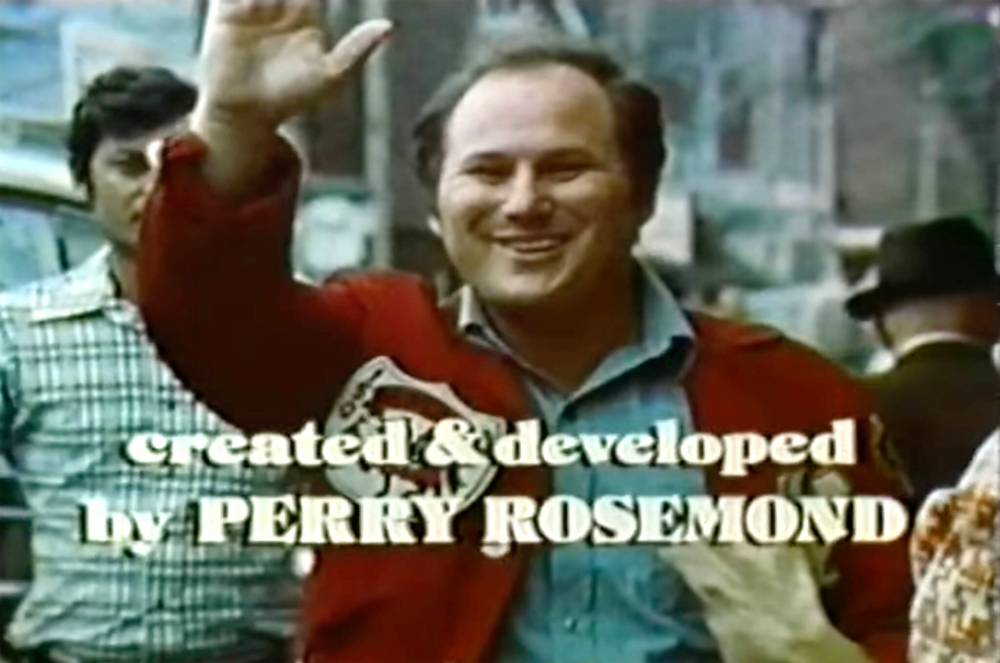
Winnipeg-born Perry Rosemond created the seminal Canadian sitcom King of Kensington.
With plots that dealt with matters such as divorce, infertility and the search for stability amongst the lower and working classes, King of Kensington — despite some episodes that didn’t age well — paved the way for socially conscious comedy of the Lear variety to make its way north, serving as an antecedent to sitcoms such as Kim’s Convenience and Corner Gas.
Cal Rosemond, a Toronto lawyer who often worked with his father on sets for Air Farce and children’s fare like Artzooka in the 1990s and 2000s, says Kensington was Winnipeg and vice versa.
The theme song, a jaunty tune that became iconic in its own right, was written by Rosemond’s childhood friend Aubrey Tadman, who was nominated for an Emmy — along with Dick Van Dyke, Bob (Super Dave) Einstein and Winnipeg’s Ken Finkleman — for 1977’s Van Dyke and Company.
“He finds his fortune in the faces that surround him / His wife says helping other people brings him luck / But then his mother tells a slightly different story / He’s the only king around without a buck,” the theme went as King made his way through the marketplace.
Among the Canadian stars who made cameo appearances on the program were Eugene Levy, Andrea Martin, John Candy, Maury Chaykin and Air Farce’s Luba Goy. Scout’s Honour, a Season 1 episode, features the television debut of a preteen Mike Myers.
After the show wrapped in 1980, Rosemond went on to produce several editions of the Juno and Gemini awards, Hockey Night in Canada and 15 seasons of Royal Canadian Air Farce. In 1999, he helped inaugurate the now-defunct comedy writing program at Toronto’s Humber College, which provided training to comics including Nathan Fielder, Steph Tolev and Debra DiGiovanni.
In 2003, he was made a member of the Order of Canada.
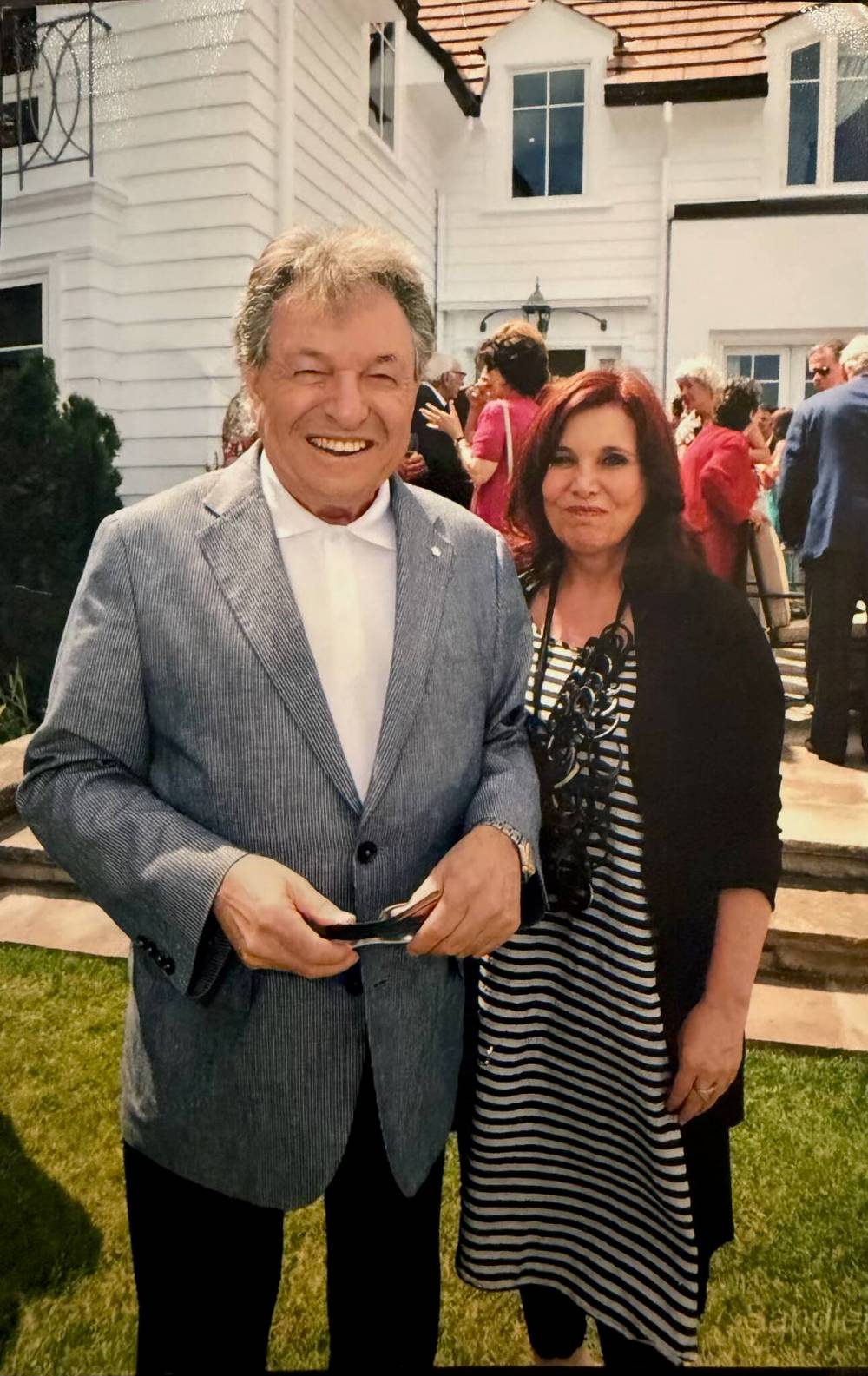
Supplied
Perry Rosemond and his wife Nora
In 2013, he executive produced the documentary feature When Jews Were Funny, which was named the best Canadian film at the Toronto International Film Festival.
Survived by his wife Nora, sons Michael (Erica) and Calvin, and his grandson, Maxwell, Rosemond died on Aug. 20 in Toronto at age 89. In his published obituary, Rosemond requested that donations be made in his memory to the Royal Manitoba Theatre Company.
He never forgot the place where it started.
ben.waldman@winnipegfreepress.ca

Ben Waldman is a National Newspaper Award-nominated reporter on the Arts & Life desk at the Free Press. Born and raised in Winnipeg, Ben completed three internships with the Free Press while earning his degree at Ryerson University’s (now Toronto Metropolitan University’s) School of Journalism before joining the newsroom full-time in 2019. Read more about Ben.
Every piece of reporting Ben produces is reviewed by an editing team before it is posted online or published in print — part of the Free Press‘s tradition, since 1872, of producing reliable independent journalism. Read more about Free Press’s history and mandate, and learn how our newsroom operates.
Our newsroom depends on a growing audience of readers to power our journalism. If you are not a paid reader, please consider becoming a subscriber.
Our newsroom depends on its audience of readers to power our journalism. Thank you for your support.
A LIFE’S STORY
A tribute to those who left a mark on our province
Ben Waldman is a National Newspaper Award-nominated reporter on the Arts & Life desk at the Free Press. Born and raised in Winnipeg, Ben completed three internships with the Free Press while earning his degree at Ryerson University’s (now Toronto Metropolitan University’s) School of Journalism before joining the newsroom full-time in 2019. Read more about Ben.
Every piece of reporting Ben produces is reviewed by an editing team before it is posted online or published in print — part of the Free Press‘s tradition, since 1872, of producing reliable independent journalism. Read more about Free Press’s history and mandate, and learn how our newsroom operates.
Our newsroom depends on a growing audience of readers to power our journalism. If you are not a paid reader, please consider becoming a subscriber.
Our newsroom depends on its audience of readers to power our journalism. Thank you for your support.
Advertisement Advertise With Us
Advertisement Advertise With Us