
What to cut back and what to leave standing in your garden’s fall cleanup

Advertisement

Advertise with us

Fall is garden cleanup time, but that doesn’t mean you should turn your property into a barren wasteland.

Read this article for free:


or

Already have an account? Log in here »

To continue reading, please subscribe:

Subscribe and receive a limited-edition Free Press branded hat or tote.

Digital Subscription

One year of digital access for only $205*

  • Enjoy unlimited reading on winnipegfreepress.com
  • Read the E-Edition, our digital replica newspaper
  • Access News Break, our award-winning app
  • Play interactive puzzles

*First annual payment billed as $205.00 + GST for one year. This annual subscription will automatically renew at $233.00 + GST every 52 weeks (10% off the regular annual price of $259.35). Offer available to new and qualified returning subscribers only. Cancel any time.

To continue reading, please subscribe:

Add Free Press access to your Brandon Sun subscription for only an additional

$1 for the first 4 weeks*

  • Enjoy unlimited reading on winnipegfreepress.com
  • Read the E-Edition, our digital replica newspaper
  • Access News Break, our award-winning app
  • Play interactive puzzles
Start now

*Your next Brandon Sun subscription payment will increase by $1.00 and you will be charged $17.95 plus GST for four weeks. After four weeks, your payment will increase to $24.95 plus GST every four weeks.

Fall is garden cleanup time, but that doesn’t mean you should turn your property into a barren wasteland.

Leaving certain perennials standing over winter can be beneficial. Others, however, need to go. Similarly, some shrubs should be pruned as they wind down, while cutting others back now could adversely affect their performance next year.

Knowing the appropriate end-of-season care for each plant type in your garden is important for overall plant health, disease prevention and bloom maximization.
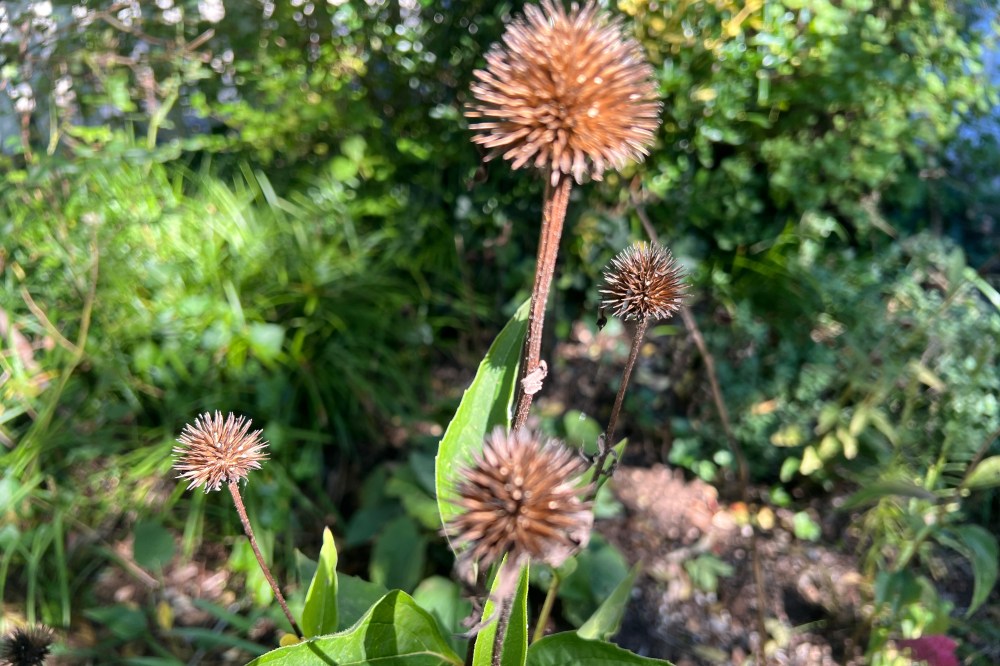
Coneflower seed heads appear in a garden to feed non-migratory birds on Long Island, N.Y., on Oct. 6, 2026. (Jessica Damiano via AP)

Plants to keep during fall garden cleanup

Leave perennials that produce seed heads standing over winter to feed nonmigratory birds and provide shelter for pollinators and beneficial insects.

These include allium, aster, big-leaf lupine, black-eyed Susan, chocolate flower, coneflower, goldenrod, milkweed, rattlesnake master, sneezeweed and trumpet vine, among others.

Most spring-blooming shrubs produce their flowers on “old wood,” which is the prior year’s growth. Cutting them back now would inadvertently remove those burgeoning buds. So avoid trimming azaleas, rhododendrons, forsythia and hydrangeas now. (If any spring-bloomers need pruning to maintain or restore a desirable shape or size, do it no later than two weeks after their spring flowers fade).

Ornamental grasses, too, should be left standing over winter until their spring growth resumes. They provide valuable habitat for overwintering beneficial insects and give you something nice to look at as they sway in winter winds.

Pushing fallen leaves into garden beds will provide even more shelter for those insects, which will pay you back in spring when they attack pests that would otherwise decimate your plants.

Woody or semi-woody perennials, such as Russian sage and lavender, should also be left standing through winter, as their top growth protects their crowns (the juncture where the above-ground part of the plant meets the roots) from frost damage.

What to clear in your garden when fall comes

Faded hosta foliage is a favorite winter hideaway for overwintering slugs and pests, so cut the plants back to ground level at the end of each growing season.

Similarly, irises harbor borer eggs over winter. Left standing, those eggs will hatch in spring, and the insects will ravage your plants. Cut the plants down now to prevent an infestation next year.

Perennials that are generally susceptible to mildew – regardless of whether they were infected this year — should also be cut down. These include herbaceous peonies, bee balm and phlox.

Also cut down any plants that were diseased this year, and completely clear their beds of fallen leaves and other plant parts that would otherwise infect the soil and, ultimately, next year’s plants. This includes annuals, such as zinnias, which are notorious for contracting powdery mildew.

Never add diseased plant parts to the compost bin; discard them in the trash.

Notwithstanding the above guidelines, feel free to remove any individual dead, broken or diseased tree branches or shrub stems at any time of year. Leaving them be would risk the plants’ health, as well as potential injury and property damage if they were to get ripped off during winter storms.

___

Jessica Damiano writes weekly gardening columns for The Associated Press. She publishes the Weekly Dirt Newsletter. Sign up here for weekly gardening tips and advice.

___

For more AP gardening stories, go to https://apnews.com/hub/gardening.

Report Error Submit a Tip

More Stories

Comparing the Iran and Vietnam Wars

Peter McKenna 5 minute read Preview

Comparing the Iran and Vietnam Wars

Peter McKenna 5 minute read Yesterday at 2:00 AM CDT

The other day I asked my students in U.S. foreign policy to think about the relevance of the Vietnam War in relation to the ongoing war in Iran. More specifically, I wanted them to identify the similarities and differences between the two wars.

Read
Yesterday at 2:00 AM CDT

Fire destroys St. Boniface housing unit

By Matthew Frank 3 minute read Preview

Fire destroys St. Boniface housing unit

By Matthew Frank 3 minute read Updated: Yesterday at 4:48 PM CDT

A six-unit housing development in St. Boniface was levelled by fire Tuesday.

The Winnipeg Fire Paramedic Service was notified at 4:50 a.m. that the site on the 800 block of Archibald Street, near Elizabeth Road, was on fire, a city spokesperson said in an email. No injuries were reported.

Firefighters had the blaze under control by about 6:15 a.m. after using an aerial ladder to tackle the flames from above and protect nearby homes, the spokesperson said.

At the site, no signs were present to identify the construction company or developer. The fences of neighbouring homes were burned and rooftop shingles were singed. Ash and fire-retardant foam littered the lawns.

Read
Updated: Yesterday at 4:48 PM CDT

Tenants battling landlords find help in short supply from province

Scott Billeck 14 minute read Preview

Tenants battling landlords find help in short supply from province

Scott Billeck 14 minute read Yesterday at 6:00 AM CDT

For nearly three years, Quincy Houdayer and Avery Helm repeatedly pressed their landlord to address plumbing failures, water damage and other maintenance problems at their West Broadway apartment, with records showing some issues persisted until the couple turned to the Residential Tenancies Branch.

Emails and text messages between the tenants, Clearwater Management and the RTB reviewed by the Free Press document recurring leaks and flooding, periods without heat or hot water, concerns about mould and basement conditions and repeated followups from the couple seeking repairs.

“Most of the experiences we’ve had with them can be boiled down to, like, they either are very dismissive about it, they act like it’s not their problem… or they will just fully, blatantly ignore you,” Helm said, adding that the only way to get Clearwater to respond was to threaten going to the RTB, a provincial government agency.

RTB data obtained by the Free Press also shows 13 orders involving the three-building complex at 193-197 Furby St. in 2026 alone. All but one favoured the tenant, while the remaining order ruled in favour of both the tenant and landlord on different items.

Read
Yesterday at 6:00 AM CDT

MPI not sleeping on ride-share fraud

Editorial 4 minute read Preview

MPI not sleeping on ride-share fraud

Editorial 4 minute read 2:00 AM CDT

Rust never sleeps. You may remember those words as the title of a Neil Young and Crazy Horse album from 1979. You might even recognize an even older use of the words as an advertising slogan for anti-rust paint Rust-Oleum.

Read
2:00 AM CDT

‘People count on this place’: Pembina Hwy. Giant Tiger latest location slated to close

By Matthew Frank 3 minute read Preview

‘People count on this place’: Pembina Hwy. Giant Tiger latest location slated to close

By Matthew Frank 3 minute read Monday, Oct. 12, 2026

Another Giant Tiger store in Winnipeg will shutter next year, leaving some area residents concerned about a lack of affordable groceries in the neighbourhood.

Red papers taped to the front doors of the Canadian retail chain’s location at Pembina Highway and Southpark Drive indicate it will close Feb. 27.

Doreen Yanchuk, a self-described bargain hunter, shook her head when she saw the signs Monday. The 67-year-old said she’s a regular customer at the location because it’s a five-minute drive from her home.

“They have very good sales here, which draws people to the shop because everything is expensive,” Yanchuk said.

Read
Monday, Oct. 12, 2026

Manitoba e-scooter legislation changes set to impose speed limit, age restrictions, sidewalk ban

Matthew Frank 5 minute read Preview

Manitoba e-scooter legislation changes set to impose speed limit, age restrictions, sidewalk ban

Matthew Frank 5 minute read Updated: Yesterday at 11:26 AM CDT

People riding e-scooters and other personal electric vehicles in Manitoba will have to strap on a helmet, stay off sidewalks and follow new age limits once new provincial rules for the devices take effect next year.

The vehicles, which also include electric skateboards, hoverboards and unicycles, will fall under The Highway Traffic Act starting in 2027, according to the province’s website. E-bikes are excluded from the new rules, according to the province’s frequently-asked-questions page.

All riders must be at least 16 years old and wear properly fitting helmets — that goes for passengers, too, the province said.

The proposed new legislation sets a speed limit of 25 km/h and would prohibit personal electric vehicles from sidewalks unless signs specifically allow sidewalk use. Riders would be using shared paths or roads with speed limits of 50 km/hr or less. They won’t be allowed to operate the vehicles under the influence of alcohol or drugs and they must use hand signals and obey traffic signs.

Read
Updated: Yesterday at 11:26 AM CDT




