A jog and some java
Workout pals discover health benefits from chatting after breaking a sweat

Advertisement
Read this article for free:
or
Already have an account? Log in here »
To continue reading, please subscribe:

Digital Subscription
One year of digital access for only $205*
- Enjoy unlimited reading on winnipegfreepress.com
- Read the E-Edition, our digital replica newspaper
- Access News Break, our award-winning app
- Play interactive puzzles
*First annual payment billed as $205.00 + GST for one year. This annual subscription will automatically renew at $233.00 + GST every 52 weeks (10% off the regular annual price of $259.35). Offer available to new and qualified returning subscribers only. Cancel any time.
To continue reading, please subscribe:
Add Free Press access to your Brandon Sun subscription for only an additional
$1 for the first 4 weeks*
- Enjoy unlimited reading on winnipegfreepress.com
- Read the E-Edition, our digital replica newspaper
- Access News Break, our award-winning app
- Play interactive puzzles
*Your next Brandon Sun subscription payment will increase by $1.00 and you will be charged $17.95 plus GST for four weeks. After four weeks, your payment will increase to $24.95 plus GST every four weeks.
Read unlimited articles for free today:
or
Already have an account? Log in here »
Hey there, time traveller!
This article was published 20/02/2018 (3063 days ago), so information in it may no longer be current.
Lynn Turner and Bertha Hewitt meet for coffee most weekday mornings.
The two friends, both in their late 70s and widowed, also work out most mornings, taking weight-training, TRX, circuit and spinning classes at the Wellness Institute. But there is increasing evidence that their daily routine after class plays as much a role in their ongoing health as the regular exercise.
“I always say I’m here for the coffee and the workout is just a bonus,” says Turner with a laugh.
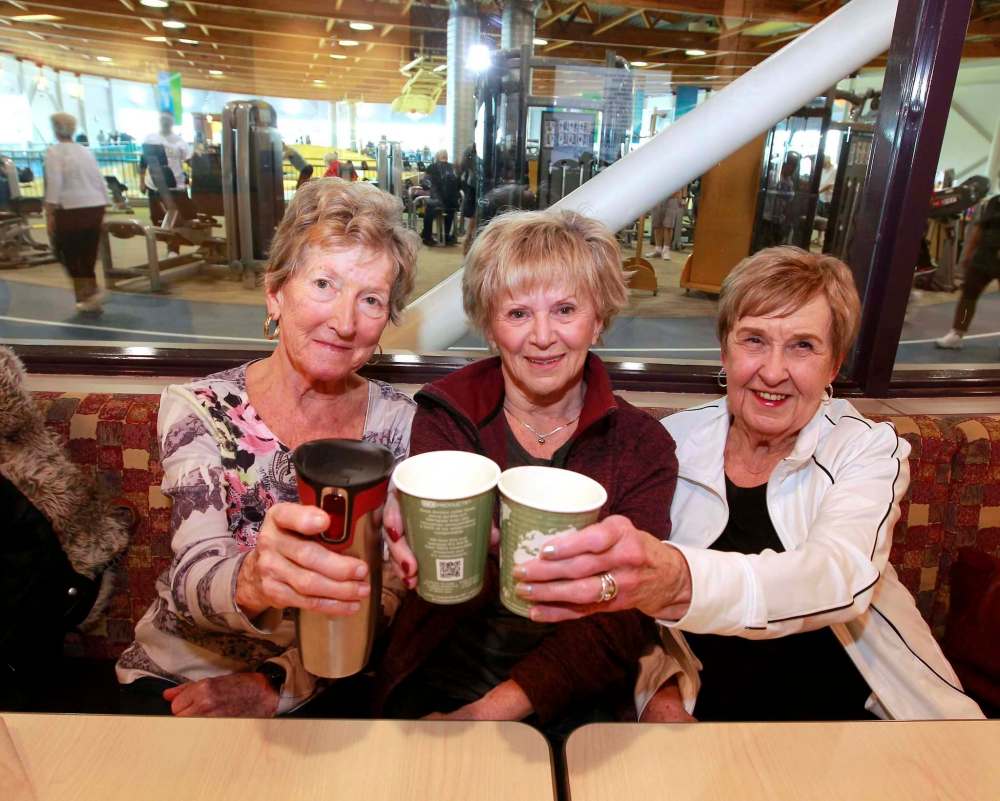
Turner and Hewitt’s paths to the gym couldn’t be more different.
“I started to come (to the Wellness) years ago, because I had quit my job to look after my grandson, who had been sick, so that was kind of my full-time job,” Turner recalls. “When he got to kindergarten, it was like I had nothing to do, nobody to talk to… I thought I would try coming here and I really liked it — I got to know people and it was perfect for me.”
Hewitt joined the Wellness after a hip replacement in 1998; she wanted to work out somewhere that would be able properly assess her abilities.
She met Turner and the eight or so other women in their coffee group through group fitness classes at the gym.
“We actually went to the same high school, but she’s a year younger than me, so we really met here,” Hewitt says.
The friendship has gone beyond the bounds of the gym — the women meet for lunches and parties. They play golf, go bowling; they’ve even teamed up at escape rooms.
They also look out for one another.
“I didn’t come to class for a few days and I got a call from (one of the ladies) to see where I was, because she was concerned,” Hewitt says.
Lydia Pronyk, another member of the group, says the bonds she’s formed through the gym are critical, especially in retirement.
“When I was working, I didn’t have time to hang around after exercising, but now that I’m done working, the socializing has been a real plus,” she says. “I wouldn’t give it up.”
Studies show lonely seniors are more likely to engage in negative behaviour — they drink and smoke more, their daily life is more sedentary and they don’t eat well.
Group exercise programs are a great way to reduce isolation and loneliness, while at the same time improving physical and mental health. In one study, seniors reported increased well-being regardless of whether the activity was aerobic or less strenuous, such as yoga or stretching.
And even if the physical activity itself isn’t a team sport or a group fitness class, meeting up for coffee and a chat after a solo workout or a walk can confer the same kind of social benefits as exercising with others.
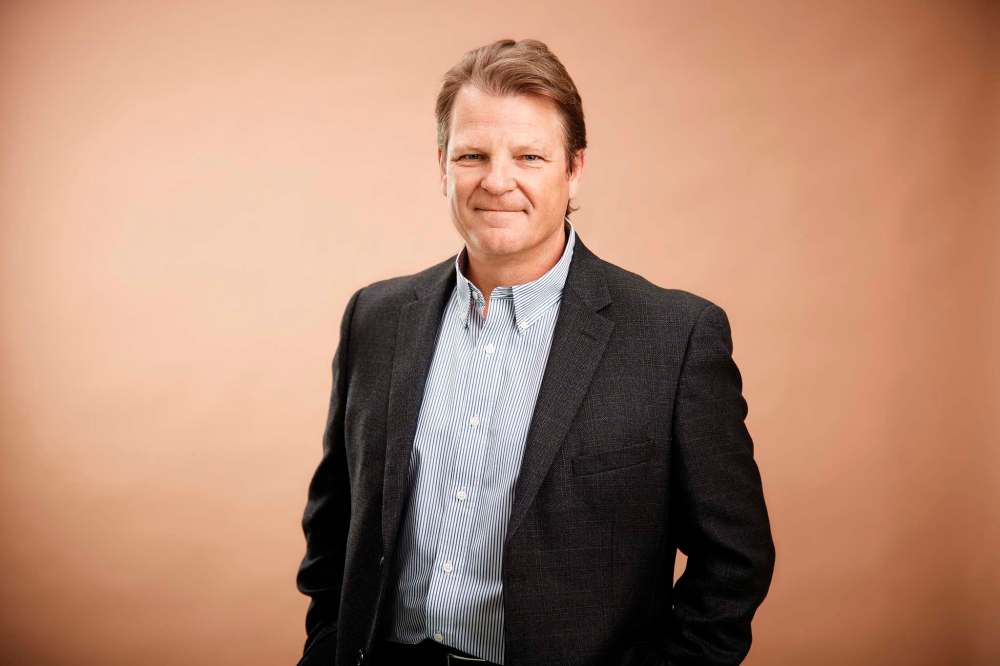
Dr. Kevin Saunders, 57, is the medical director at the Wellness Institute, which he co-founded. He also has a large geriatric practice and knows how important social connections are for his older patients; it was something he considered when planning the fitness centre/rehab facility at Seven Oaks General Hospital.
“When we were conceiving of the Wellness Institute, intuitively — this was 25 years ago — I knew that especially for the elderly and especially here in Winnipeg when it’s 40 below, you can’t just to to the corner park… The social aspect of it draws people in as much as the actual ability to exercise in a facility like ours.
“We have lone wolves out there who like to put on their gear and go for a run by themselves, peace and quiet, but in the big picture, that’s really the minority of folks that I’ve come across over the years. The majority are social creatures and being able to do something for our health where we also get the socialization really reinforces continuing doing it in the long term, makes you less likely to fall off.”
“The fact that the medical evidence supports that lately I don’t think should be a shock to most of us.”
The idea that social connections are correlated with longevity is nothing new. A 1999 study in the British Medical Journal reported that even activities with fewer fitness benefits lower the risk of mortality as much as exercise does. “(The numbers suggest) that in addition to increased cardiopulmonary fitness, activity may confer survival benefits through psychosocial pathways,” the study authors reported. “Social and productive activities that require less physical exertion may complement exercise programs and may constitute alternative interventions for frail elderly people.”
A popular recent Ted talk by developmental psychologist Susan Pinker spotlights a series of studies by Brigham Young University researcher Julianne Holt-Lunstad that looked at the factors involved in longevity.
The strongest predictor of long life? Social integration, or how much you interact with people as you go through your day — not even close friends or family, but casual acquaintances.
In his book The Blue Zones: Lessons for Living Longer From the People Who’ve Lived the Longest, author Dan Buettner convincingly links longevity in certain areas of the world with a number of factors, including daily moderate exercise and engagement in social life.
One of those so-called Blue Zones is Okinawa, Japan, an area known for its concentration of centenarians. It’s also known for its moais, or social support groups (”moai” means “meeting for a common purposes” in Japanese).
The moai concept is something that inspires Jim Evanchuk. The executive director of the Active Living Coalition for Older Adults in Manitoba, which is partnered with the Wellness Institute, sees many levels in how the social aspect of an exercise program reaps health benefits.
“The example that they tout (in The Blue Zones) is a group of older adults who formed a walking moai, but it’s much more than just a ‘walking group’ that walks together on a regular basis. They actually, through the process, forged long-term relationships. If there’s a person living alone, would anybody notice if they’re sick? Well, in this case, people would… they would miss someone if they weren’t there.
“In the book, one of the participants says, ‘It’s much easier going through life knowing that there’s a safety net.’ You’re not alone and there’s even a stress relief in knowing, ‘I can lean on somebody, my friends.’ And what a difference that makes in terms of confidence, self-efficacy and thinking ‘I can do this, I’ve got this.’”
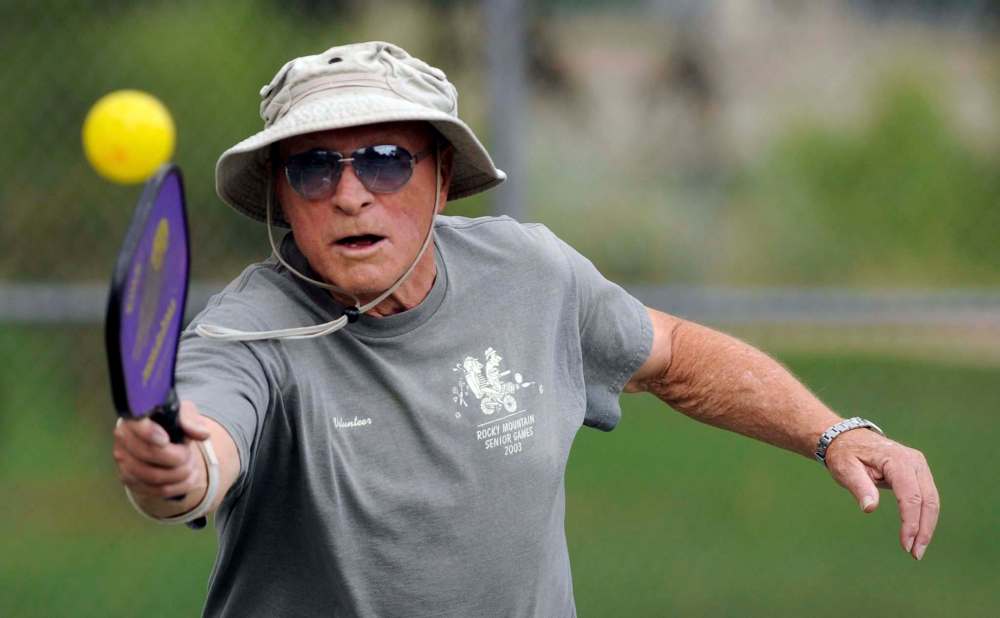
Evanchuk plays pickleball regularly and sees the racket sport as a great entry for seniors looking to get involved with a physical activity — and he sees further benefits from the friendships (and friendly rivalries) that arise on the court.
“The activity is almost incidental because is it about the camaraderie, the friendships, the socializing,” he says. “There is that support, that dynamic that happens naturally when they are connecting with other people their own age, their own ability, their own interests…
“The other part is just the perception,” he continues. “As an individual, we’re looking at the world through our own lens and from within, but hanging out with other people actually enhances the way we interpret information and how we see the world, relating to our own health and well-being and even interpreting the information coming at us. You read something in the paper or hear something and it’s through your own filter, but when you’re with other people, you get multiple perspectives and that really helps out in influencing people to make healthy choices and to discern: ‘What would be good for me?’ “
Having a peer group with whom to discuss medical issues means they are less likely to fester or go untreated; also, friends and acquaintances are likely to notice changes in behaviour or symptoms of illness if they see pals regularly.
Evanchuk points to an example from his own group of workout buddies.
“You’ve been hearing lately in the news about influenza and the impact of that, so I’ve been asking some people (in my pickleball group), ‘Did you get the flu shot?’ Some of them have said, ‘No, but maybe I should, eh?’ Well, yes you should! It’s that conversation that gets them to lean in the direction of doing something about it.”
For men who didn’t grow up with the social outlet team sports or other group-oriented hobbies provide, growing older can become especially lonely.
“They kind of fall into two groups,” agrees Wellness founder Saunders. “An old guy like me, who’s played sports his whole life, I’ve got lots of groups of buddies — I’ve got my golf buddies, I’ve got my hockey buddies, my old coaching buddies — but for men who weren’t used to living like that, men who worked and went home and weren’t active in that sports culture, yeah: brother dies, buddy dies and they’re alone. Gotta get out and meet some new people, where am I going to do this? Don’t go to bars, legions are all closing, so where do we go?
“That’s not a crew that’s on Facebook or Twitter,” he says, adding that he often hears about old North End friends reconnecting at the Wellness.
Dr. Yves Joanette is the scientific director of Canadian Institutes of Health Reseach’s Institute of Aging, which assesses the relevance of Canadian research done on aging.
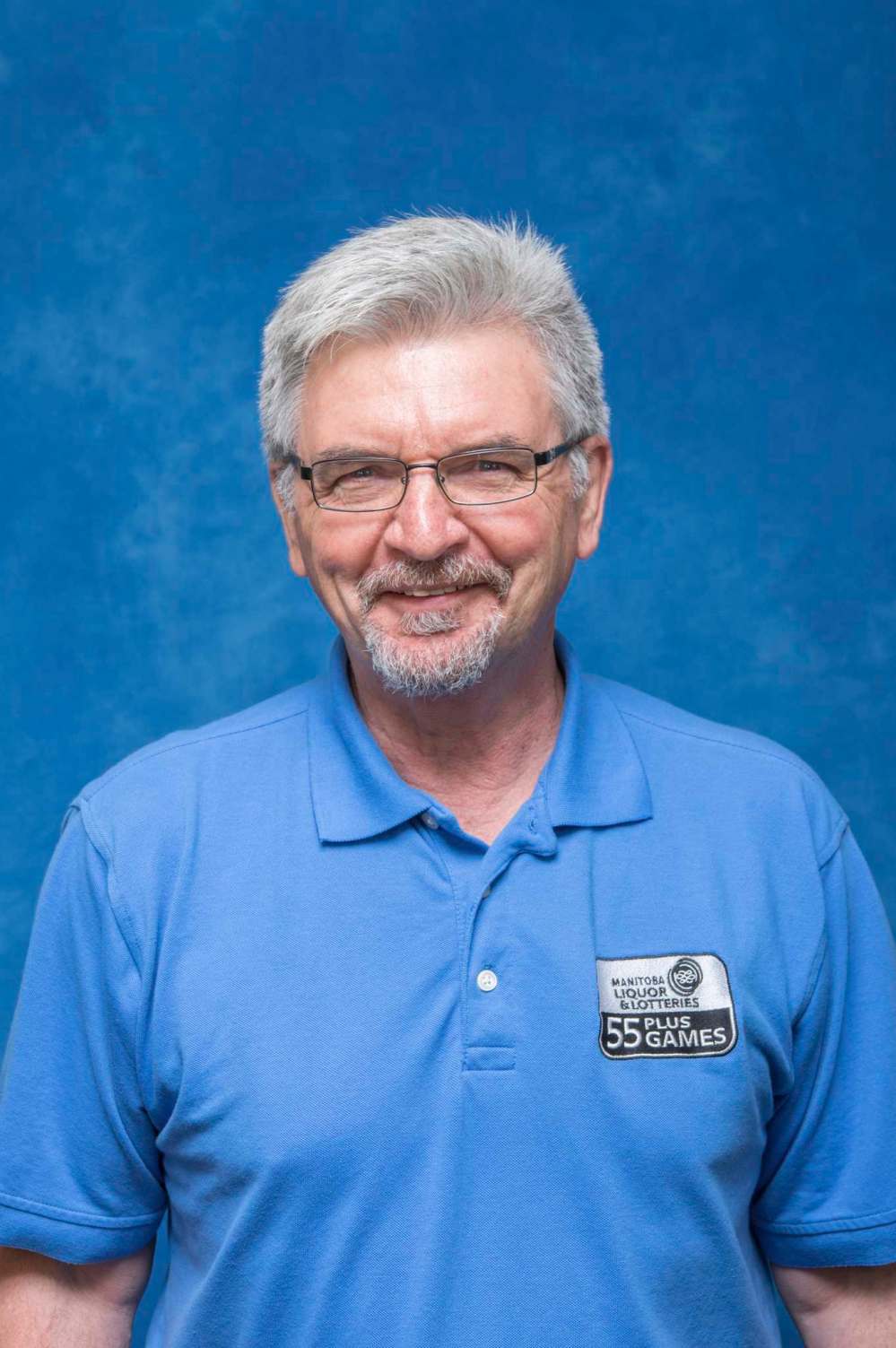
He agrees that it’s more difficult for men to find a like-minded social group as they age; men are also less likely to seek help for their problems.
“Certainly the pattern is very different,” he says. “Let me give you an example. If an older woman has a challenge and if there’s a place with a sign on the door — and this is a metaphor — saying ‘This a place for women to meet and this is going to help you,’ women, generally, will go in. But men will not go. Men will not go to a place where it’s indicated ‘This is to help you for your challenges.’ For some reason — psychology and sex and so on — men will not react to a direct initiation to get help for a health challenge.
“So you have to be indirect,” he says. “And this is a third-level advantage of doing physical activity or any kind of activity together… it’s an indirect invitation to just be around with other men.”

The members of the Wellness coffee group, however, are fully aware of the importance of both the daily activity and the support of their friends.
Both Hewitt and Turner agree they would still attend the gym even if they were unable to drive themselves.
“I would probably move closer!” Hewitt says.
“I would keep coming because of the friendships,” Turner says, “but I also know if I hadn’t started coming many years ago, I would not be in as good shape as I am today.”
jill.wilson@freepress.mb.ca Twitter: @dedaumier
Jill Wilson is the editor of the Arts & Life section. A born and bred Winnipegger, she graduated from the University of Winnipeg and worked at Stylus magazine, the Winnipeg Sun and Uptown before joining the Free Press in 2003. Read more about Jill.
Jill oversees the team that publishes news and analysis about art, entertainment and culture in Manitoba. It’s part of the Free Press‘s tradition, since 1872, of producing reliable independent journalism. Read more about Free Press’s history and mandate, and learn how our newsroom operates.
Our newsroom depends on a growing audience of readers to power our journalism. If you are not a paid reader, please consider becoming a subscriber.
Our newsroom depends on its audience of readers to power our journalism. Thank you for your support.
Double-barrelled benefit
Dr. Yves Joanette, scientific director of Canadian Institutes of Health Reseach’s Institute of Aging, explains that social isolation isn’t a problem that’s unique to the elderly, but seniors almost inevitably become subjected to it.
“The real booming population is the oldest among the older,” says Joanette, who is the chairman of the World Dementia Council. “It’s really the 85-plus, and so you’re losing your friends; they die. You lose your spouse. I wouldn’t say isolation has more impact on older individuals; it’s simply much more frequent. They’re more prone to isolation at a time of your life when you’re a little bit more frail in general, at a time when you would need even more contact.”
To that end, the institute last year offered a funding opportunity to support research projects with the aim of improving the social inclusion of people living with dementia and their carers.
“We’re essentially connected beasts: humans need to be connected,” Joanette says. “I tend to say that we’re probably as evolved as the most evolved cell in the body and the most evolved cell in the body is the brain cell, a neuron. And they have axons, little filaments — they connect to each other. If you cut the axon of those cells, they die. So we’re probably a little like our most sophisticated cell — we need to be connected.”
The Montreal researcher says group physical activity has a double-barrelled benefit when it comes to dementia. “It doesn’t play at the same level, but it synergizes, it converges at two different levels,” he says.
Exercise is crucial in reducing the incidence of the diseases that lead to dementia (among which Alzheimer’s is the most common). And having an active social life with many connections may slow the progression of Alzheimer’s, especially in the early stages of the disease, thereby postponing the manifestation of dementia symptoms.
“If people get together to do exercise, it’s good for their heart, it’s good for their body, it’s good for their brain, and it’s one way of contributing to diminishing the susceptibility of developing a disease of the brain that could cause cognitive impairment and even dementia,” Joanette says. “The exercise part, the muscle and sweat part, is associated with helping to skip or diminish the risk of those diseases.
“At the same time, hanging out with other people and getting to make those contacts contributes to enriching connections. This does not diminish the susceptibility of catching, so to say, or developing a disease of the brain, like the exercise part does, but it’s adding to our resilience to push back the signs of such disease if they have to come.”
— Jill Wilson
Jill Wilson is the editor of the Arts & Life section. A born and bred Winnipegger, she graduated from the University of Winnipeg and worked at Stylus magazine, the Winnipeg Sun and Uptown before joining the Free Press in 2003. Read more about Jill.
Jill oversees the team that publishes news and analysis about art, entertainment and culture in Manitoba. It’s part of the Free Press‘s tradition, since 1872, of producing reliable independent journalism. Read more about Free Press’s history and mandate, and learn how our newsroom operates.
Our newsroom depends on a growing audience of readers to power our journalism. If you are not a paid reader, please consider becoming a subscriber.
Our newsroom depends on its audience of readers to power our journalism. Thank you for your support.
Advertisement Advertise With Us
Advertisement Advertise With Us
History
Updated on Tuesday, February 20, 2018 8:12 AM CST: Adds photos