Ace that wedding speech by putting in a little effort
Advertisement
Read this article for free:
or
Already have an account? Log in here »
To continue reading, please subscribe:

Digital Subscription
One year of digital access for only $205*
- Enjoy unlimited reading on winnipegfreepress.com
- Read the E-Edition, our digital replica newspaper
- Access News Break, our award-winning app
- Play interactive puzzles
*First annual payment billed as $205.00 + GST for one year. This annual subscription will automatically renew at $233.00 + GST every 52 weeks (10% off the regular annual price of $259.35). Offer available to new and qualified returning subscribers only. Cancel any time.
To continue reading, please subscribe:
Add Free Press access to your Brandon Sun subscription for only an additional
$1 for the first 4 weeks*
- Enjoy unlimited reading on winnipegfreepress.com
- Read the E-Edition, our digital replica newspaper
- Access News Break, our award-winning app
- Play interactive puzzles
*Your next Brandon Sun subscription payment will increase by $1.00 and you will be charged $17.95 plus GST for four weeks. After four weeks, your payment will increase to $24.95 plus GST every four weeks.
Read unlimited articles for free today:
or
Already have an account? Log in here »
Hey there, time traveller!
This article was published 15/06/2018 (2957 days ago), so information in it may no longer be current.
The bad wedding speech is a movie trope for a reason: it’s easy to love someone very much and yet hard to express that concisely, in a way that is relevant to a wide audience, without getting caught up in the speaker’s own emotional baggage. Bridget Jones’s Diary, Wedding Crashers and Bridesmaids, among others, all feature versions of wedding or engagement speeches gone horribly wrong.
In real life, I’ve sat with a mix of amusement and dread while listening to a matron of honour read two typed, single-spaced pages — front and back — about all the things she experienced when she got married and started a family, only reserving her last line or two to say: “And I wish all of the happiness that I’ve had for you and your future!” I’ve watched a father of the bride attempt to crack a joke about his daughter’s new husband and instead sound uncomfortably menacing and distrusting of his new son-in-law. I’ve been in huge reception halls that go embarrassingly silent while an inside joke from a best man’s college days with his groom buddy falls completely flat.
Too much alcohol is an easy culprit to blame. But there are other factors at play, many of which can be avoided if the speech-giver can identify them beforehand.
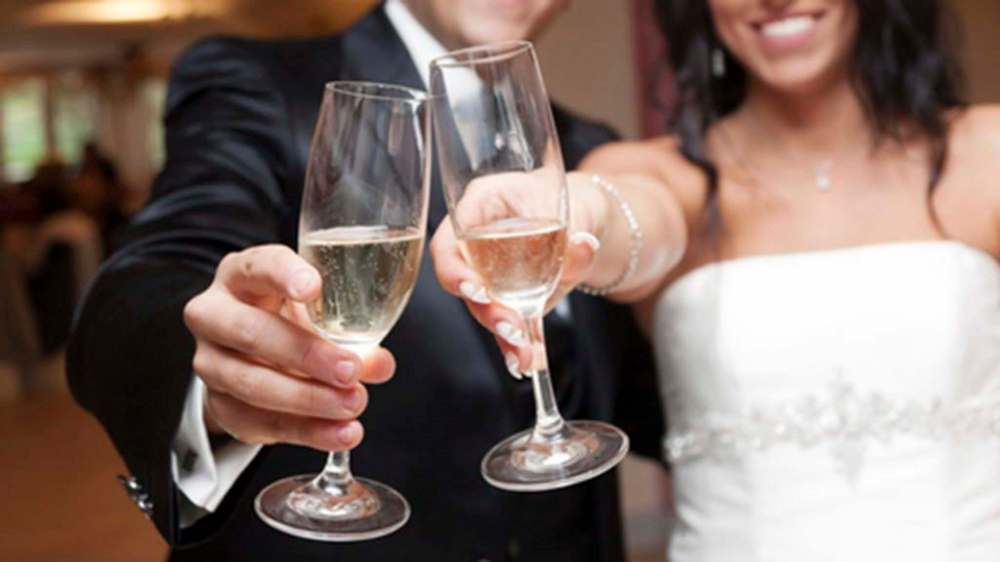
“Most toasts are stories,” says Jane Praeger, who teaches speechwriting at Columbia University and coaches clients privately through her business Ovid. “It’s not any less work than a story you tell in business or in an article. It has to be crafted. You have to know where the story begins and ends, what key points you have to hit. You have to edit out all the extraneous details. People don’t do that because they think, ‘Hey, this is what happened.’ It’s basic story-crafting; people just don’t know how to do it.”
According to Praeger and Ian Karmel, a standup comedian and staff writer for The Late Late Show with James Corden, overtelling a story is just as bad as “winging it.” Without rehearsing, “there’s no story structure,” Karmel stresses, and a speech is mostly doomed to fail.
“People don’t know what the process is for comedians. They think we just came up with all of this while we were standing up there on the stage. Most of the work in standup is finding your voice. There are clunky and clumsy transitions the first hundred times you tell a joke. But an audience sees the seamless finished product,” Karmel says. The people who approach him after shows assume it’s easy to be funny. “Without fail, people always think they’re going to be the exception, the person who will crush it giving a toast.”
Without thinking it through, your focus isn’t where it needs to be. “You have to internalize all your content beforehand,” Praeger says, otherwise, you’re focusing on what you’re saying instead of how you’re saying it. And what’s most important in the moment is your delivery, along with anticipating that you might have an intense reaction while giving the speech. She’s found that people are very aware of the strong connection they have with the person who has asked them to speak, but somehow forget that same emotion might cause them to stumble mid-speech. So, the key is practise. If you know your material, you’re less likely to get tripped up.
Psychotherapist and relationship expert Lisa Brateman notes there are just as many fully rehearsed speeches that fail because of unconscious issues — jealousy, personal unhappiness, self-absorption — that come to the fore at weddings. In reference to the rambling matron of honour speech I sat through, Brateman surmises that the woman might have perceived her speech to be a teaching moment when it should have been a celebration of the couple.
Brateman notes that speakers who focus on themselves are inappropriate for the occasion and boring for the audience.
Praeger emphasizes that people giving a speech or toast should step outside of themselves when crafting their remarks — and keep the audience’s needs in mind. A wedding speech “has to transcend,” Praeger says. “It has to have relevance and meaning” to people beyond the speaker and the bride or groom.

Inside jokes do not transcend. Brateman feels most inside jokes fail because they are indicative of suppressed passive aggression or possessiveness over a bride or groom, à la the duelling engagement party speeches in Bridesmaids, in which two friends try to prove they’re the bride’s one true bestie. That kind of speech becomes a statement of: “They asked me because I am the one person who knows them and you don’t.”
Even something meant to be positive, such as a friend saying a bride or groom is “lucky” to marry their friend, can come off as a dig at the new spouse if it’s done in a way that is not fun and light.
A joke that doesn’t land, depending on the tone, can come across more like a gatekeeper begrudgingly allowing another person into their friend or relative’s life rather than welcoming them. It’s another way of the speaker publicly establishing their importance in the life of the person who asked them to give the speech.
As Praeger teaches her students and clients: “Everything is a lot of work when you want it to be good, whether it’s a keynote speech, a wedding toast or a eulogy. If you really want it to be memorable, you have to put the work in.” For a wedding toast, that might involve genuine self-reflection, as well as keeping it short. Doesn’t matter how good or well-rehearsed your material is if it waxes too long. Three minutes, tops, so everyone can get back to enjoying the reception.
— Washington Post