AP analysis: Unemployment, income affect life expectancy
Advertisement
Read this article for free:
or
Already have an account? Log in here »
To continue reading, please subscribe:

Digital Subscription
One year of digital access for only $205*
- Enjoy unlimited reading on winnipegfreepress.com
- Read the E-Edition, our digital replica newspaper
- Access News Break, our award-winning app
- Play interactive puzzles
*First annual payment billed as $205.00 + GST for one year. This annual subscription will automatically renew at $233.00 + GST every 52 weeks (10% off the regular annual price of $259.35). Offer available to new and qualified returning subscribers only. Cancel any time.
To continue reading, please subscribe:
Add Free Press access to your Brandon Sun subscription for only an additional
$1 for the first 4 weeks*
- Enjoy unlimited reading on winnipegfreepress.com
- Read the E-Edition, our digital replica newspaper
- Access News Break, our award-winning app
- Play interactive puzzles
*Your next Brandon Sun subscription payment will increase by $1.00 and you will be charged $17.95 plus GST for four weeks. After four weeks, your payment will increase to $24.95 plus GST every four weeks.
Read unlimited articles for free today:
or
Already have an account? Log in here »
Hey there, time traveller!
This article was published 18/12/2018 (2775 days ago), so information in it may no longer be current.
NEW YORK – Even your lifespan can be local.
Researchers have long said that health disparities are heavily influenced by where you live. New data from the National Center for Health Statistics show just how much your neighbourhood can impact the length of your life.
In recent years, the U.S. has seen overall life expectancy decrease, from 78.7 years in 2015 to 78.6 years in 2017. Experts have pointed to opioid addiction and an increase in suicides as the main reasons.
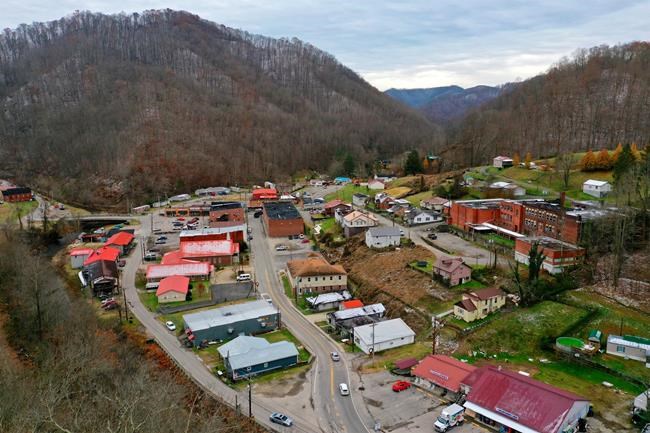
Behind that national average are American neighbourhoods where recently born residents can expect to live much longer, or much shorter, lives.
The Associated Press analyzed life expectancy and demographic data for 65,662 census tracts, which are geographic areas that encompass roughly 4,000 residents. The AP found that certain demographic qualities — high rates of unemployment, low household income, a concentration of black or Native American residents and low rates of high school education — affected life expectancy in most neighbourhoods.
An increase of 10 percentage points in the unemployment rate in a neighbourhood translated to a loss of roughly a year and a half of life expectancy, the AP found. A neighbourhood where more adults failed to graduate high school had shorter predicted longevity.
New York state had the largest range for life expectancy among its neighbourhoods, spanning 34.5 years. The places with the highest and lowest estimates are both in New York City. Children born between 2010 and 2015 in part of the northern half of Roosevelt Island have an estimated life expectancy of 59 years; a child born 6 miles away in Chinatown in lower Manhattan can expect to live 93.6 years.
In one North Carolina neighbourhood — Fearrington Village in Chatham County — a child born between 2010 and 2015 can expect to live 97.5 years, the highest estimated lifespan for any neighbourhood in the U.S. A child in part of Stilwell in Adair County, Oklahoma, can expect 59 years on average, the nation’s lowest.

The AP analysis also found discrepancies among states. Life expectancy in Hawaii topped all other states at 82 years. Mississippi’s estimate of 74.9 was the lowest, followed closely by West Virginia , Alabama, Oklahoma and Kentucky.
The AP analyzed 88.7 per cent of all U.S. census tracts. Maine and Wisconsin were excluded because some of their death records lacked home addresses of the deceased.
The data is part of a new partnership between the National Center for Health Statistics, The Robert Wood Johnson Foundation, The National Association for Public Health Statistics and Information Systems (NAPHSIS), and the National Center for Health Statistics (NCHS). Through the collaboration, researchers used six years of death records and demographic data to create a longevity estimate for nearly every census tract in the country.
___
The Associated Press Health & Science Department receives support from the Howard Hughes Medical Institute’s Department of Science Education. The AP is solely responsible for all content.