

WINTER TEST: 2010 LEXUS HS250h HYBRID: Lowdown on a Lexus
The report card after a winter behind the wheel
Advertisement
Read this article for free:
or
Already have an account? Log in here »
To continue reading, please subscribe:
Digital Subscription
One year of digital access for only $75*
- Enjoy unlimited reading on winnipegfreepress.com
- Read the E-Edition, our digital replica newspaper
- Access News Break, our award-winning app
- Play interactive puzzles
*Billed as $5.77 plus GST every four weeks. After 52 weeks, price increases to the regular rate of $19.95 plus GST every four weeks. Offer available to new and qualified returning subscribers only. Cancel any time.
Monthly Digital Subscription
$4.99/week*
- Enjoy unlimited reading on winnipegfreepress.com
- Read the E-Edition, our digital replica newspaper
- Access News Break, our award-winning app
- Play interactive puzzles
*Billed as $19.95 plus GST every four weeks. Cancel any time.
To continue reading, please subscribe:
Add Free Press access to your Brandon Sun subscription for only an additional
$1 for the first 4 weeks*
- Enjoy unlimited reading on winnipegfreepress.com
- Read the E-Edition, our digital replica newspaper
- Access News Break, our award-winning app
- Play interactive puzzles
*Your next Brandon Sun subscription payment will increase by $1.00 and you will be charged $17.95 plus GST for four weeks. After four weeks, your payment will increase to $24.95 plus GST every four weeks.
Read unlimited articles for free today:
or
Already have an account? Log in here »
Hey there, time traveller!
This article was published 12/03/2010 (5915 days ago), so information in it may no longer be current.
We’ve spent the winter behind the wheel of the Lexus HS 250h hybrid sedan, focusing our reporting until now on how well the hybrid system works in our frigid Canadian clime.
But, aside from fuel consumption (see sidebar), how well does this entry-luxury car that’s available only as a hybrid compete against other sedans in the $40 to 50K snack bracket?
The short answer is that it depends on what you’re looking for.
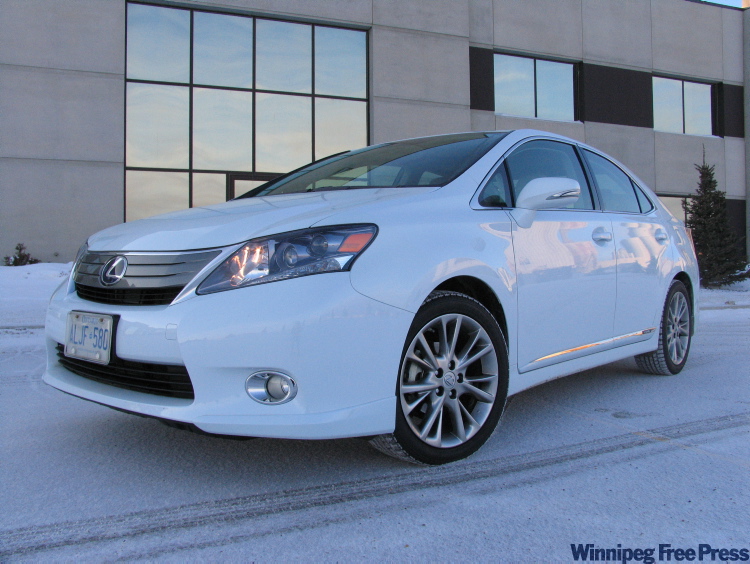
When we began this series, we introduced you to the idea that Lexus is trying to change the definition of luxury, adding "conscience" into the mix. Lexus found 60 per cent of their entry-luxury customers (those looking at the IS- and ES-series cars) want to see a hybrid option in this market segment.
When viewed as the mainstream luxury entry Lexus aspires the HS to be, though, it begins to lose its appeal pretty quickly. Let’s start with the styling: The HS possesses neither the sleek silhouette of a luxury car nor the tautly stretched sheet metal of a sports sedan. Rather, its shape in profile bears an unfortunate resemblance to parent company Toyota’s Corolla compact sedan, a car that can be had for less than half of the HS’s price tag.
To be sure, the HS is much more than a tarted-up Corolla. It’s taller, longer, wider and rides on a longer wheelbase than the Corolla, so that’s where the comparison ends. To borrow a word from the Lexus marketing handbook, the styling does have its "moments" from certain angles, but my bet is most owners don’t want to shell out more than 40 grand only to have the identity of their ride mistaken for that of an economy car.
And then there’s the driving dynamics. On the plus side, the HS is a quiet vehicle and its engine is quite smooth — it’s sometimes difficult to tell whether the engine is actually running. But in terms of ride quality I found the car never quite settles down on less-than-perfect surfaces. Again, it goes down the road like a much less expensive car. This may be partially attributed to the sport suspension fitted to our tester, but we need to be careful not to confuse a jittery ride with sportiness. Steering and throttle response are similarly unsatisfying for this class.
The car also has its quirks, particularly in the area of braking feel. The Lexus HS was included in Toyota’s recall that primarily involved third-generation Prius models, but the HS exhibits the same inconsistent feel reported by Prius owners. It typically happens during moderate deceleration when the anti-lock brakes are engaged — anyone who has approached an icy four-way-stop intersection can relate to this scenario. As soon as the ABS system engages, the car responds as though the brake pedal was partially released, even under constant pressure from the driver’s right foot. My first instinct at that point is to immediately increase braking pressure, and all is well.
Notwithstanding Toyota’s other woes, it’s important to note hybrids have always had what I would consider inconsistent braking feel because of the requirement for a regenerative braking system to recharge the car’s batteries. While the issues have typically been that it’s a challenge to stop smoothly with such a system, this time around it’s a bit more disconcerting, although at no point did it feel like the car was going to have trouble stopping.
There are a few other quirks that are a result of designers just trying too hard to incorporate features they think will help but actually end up just being annoying. For example, I frequently turn off the traction control when I’m driving in deep snow because a little bit of wheelspin is often beneficial (or even required) to get or keep things moving. The only problem is the system automatically resumes traction-control duties at 50 km/h, so I found myself having to push the button at every intersection.
There’s also the car’s refusal to lock if the sunroof is tilted up. Not sure about that one.
And finally, the presence of the battery bank between the trunk and rear seat eats up cargo space and precludes any sort of a pass-through or foldable rear seat. The result? Just 343 litres of trunk volume, which is firmly in compact-car territory.
As far as competitors go, two similarly-priced entry-luxury vehicles come to mind, cars that are far more engaging to drive yet will still satisfy those looking to mitigate their impact on the environment.
The Acura TSX (starting at $34,885) is propelled by a conventional gasoline engine that is at once eager and fairly frugal, with EnerGuide ratings of 9.6 l/100 km in the city and 6.5 on the highway.
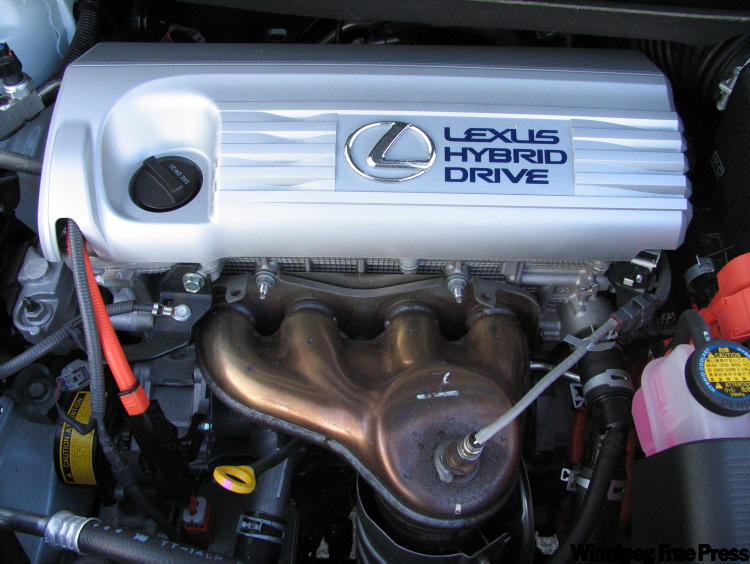
Then there’s the new-for-2010 diesel-powered Audi A3 TDI ($35,300) that has only 140 hp but a stump-pulling 236 lb-ft of torque. It’s rated at 6.7 l/100 km in the city and 4.6 on the highway. It plays the requisite luxury role just fine, thanks to upscale styling and premium interior materials and design. It doesn’t hurt that it’s a hatchback either.
The HS is a unique entry in a crowded field of competitors. It can handle our winter just fine even though real-world fuel-consumption numbers are much higher than official ratings would suggest. However, there are better choices for those who like to stay more involved in the driving experience.
Haney Louka is a Winnipeg freelance writer and member of the Automobile Journalists’ Association of Canada.
autoreviews@mts.net
Discrepancies complicate mileage numbers
THE newest hybrid sedan from Lexus has now completed its two-month stint with us, so it’s time to take a final look at how well it fared in winter fuel consumption.
I went into this long-term test with the intent of finding out how the HS 250h would handle a cold Prairie winter. Much to my chagrin, it hasn’t been all that cold over the last couple of months, but the mercury did dip down into the minus-20s enough for me to get a good idea of how the car would perform through a more normal winter.
Our last update went over the specifics of this hybrid’s fuel consumption. While it’s rated at 5.3 l/100 km in the city and 5.9 on the highway, I reported my city consumption ranged from 7.5 l/100 km in milder winter conditions (between zero and -10) to 9.5 l/100 km in a more normal -20 C environment. I also had single-trip extremes ranging from a low of 4.9 l/100 km to a high of 11.7.
My "urban highway" experience landed me in the low 6s for consumption on roads with a cruising speed of 80 to 90 km/h. I have since taken a highway trip involving a cruising speed of 110 km/h and a trip distance of 100 km at -9 C, and found my average consumption was up at 7.2 l/100 km, which is more representative of what owners might experience on a winter highway trip of their own.
So why the discrepancies? Compared with the official ratings, my observed fuel consumption ranged from 40 to 80 per cent higher in the city and 20 per cent higher on the highway. Before we get into hybrid-specific factors, it’s important to understand there are several reasons you might encounter higher consumption than the ratings indicate, no matter what you drive. As we’ve stated before, factors like driving style, traffic conditions and weather each play a huge role in determining how much fuel will be required to get you between points A and B.
Going into this test, I hypothesized gas-electric hybrids have an advantage over conventional fuel-powered cars in the laboratory tests used to develop the official ratings. This was an assertion I made not based on knowing how the tests were conducted but rather on my own anecdotal evidence.
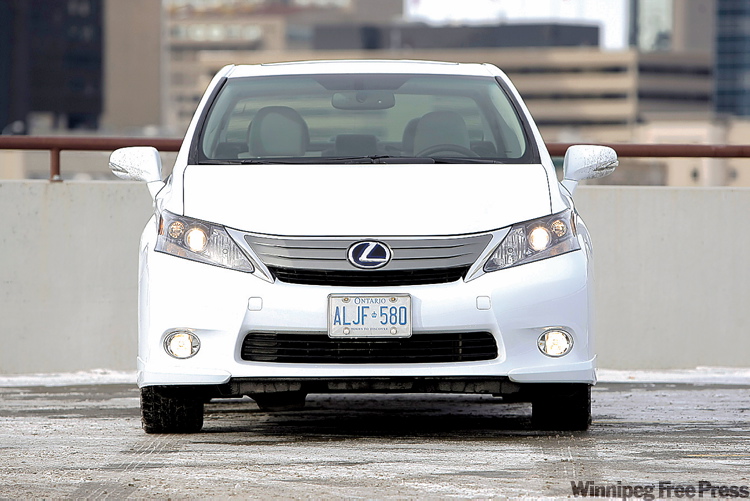
I contacted Natural Resources Canada, the government body that, in conjunction with Transport Canada, approves the fuel-consumption test procedures and collects the results from vehicle manufacturers. Their efforts culminate in the publication of the annual Fuel Consumption Guide containing the EnerGuide numbers that also show up on the window stickers in new car lots across the country. More information can be found at http://vehicles.nrcan.gc.ca.
After a few emails back and forth, it’s now clear exactly why I’ve seen this trend in the hybrids I drive. While our test procedures have been based on those used by the U.S. Environmental Protection Agency for more than 30 years, the EPA adopted new procedures in 2008 that account for higher highway speeds as well as extremes in weather. Let’s hope the Canadian government follows suit.
For now, though, we have to make do with laboratory tests of vehicles that are stored at 23 C prior to the test. So even though the test begins with a "cold" start as far as the car’s fluid temperatures are concerned, the ambient air temperature is much closer to that of a warm summer’s night.

It all comes down to the fact hybrids have very little, if any, fuel consumption advantage over gas-powered vehicles during the warm-up period. So every time the car is started after sitting in sub-zero conditions, the system won’t begin the engine shut-off function (one of the primary features of hybrid vehicles that help them save fuel) until normal operating temperatures are reached.
In my winter experience, that length of time was as little as four minutes at -5 C, but at -20 C the engine didn’t shut off even once during a commute that lasted more than half an hour.
So at the end of the day, it’s important to know what to expect from a hybrid during a Canadian winter. In the case of the HS 250h, one can anticipate a fundamental luxury Canadians look for: quick startup, quick interior warm-up and toasty seat warmers in a short time. But one also needs to be aware fuel consumption in cold weather can deviate significantly from the published ratings — much more so than with vehicles that have conventional gasoline-only powertrains.