

AUTO TECH: How top-choice Voltec system works
Advertisement
Read this article for free:
or
Already have an account? Log in here »
To continue reading, please subscribe:
Monthly Digital Subscription
$1 per week for 24 weeks*
- Enjoy unlimited reading on winnipegfreepress.com
- Read the E-Edition, our digital replica newspaper
- Access News Break, our award-winning app
- Play interactive puzzles
*Billed as $4.00 plus GST every four weeks. After 24 weeks, price increases to the regular rate of $19.95 plus GST every four weeks. Offer available to new and qualified returning subscribers only. Cancel any time.
Monthly Digital Subscription
$4.99/week*
- Enjoy unlimited reading on winnipegfreepress.com
- Read the E-Edition, our digital replica newspaper
- Access News Break, our award-winning app
- Play interactive puzzles
*Billed as $19.95 plus GST every four weeks. Cancel any time.
To continue reading, please subscribe:
Add Free Press access to your Brandon Sun subscription for only an additional
$1 for the first 4 weeks*
*Your next subscription payment will increase by $1.00 and you will be charged $16.99 plus GST for four weeks. After four weeks, your payment will increase to $23.99 plus GST every four weeks.
Read unlimited articles for free today:
or
Already have an account? Log in here »
Hey there, time traveller!
This article was published 09/03/2012 (5149 days ago), so information in it may no longer be current.
Much has been written about the Chevrolet Volt and deservedly so. The Volt has won many awards for its innovative concepts, with the most recent being the Automotive Journalists of Canada (AJAC) award for the Best New Technology.
AJAC’s 12-member technology panel were presented with many new technologies this year and, with the most competitive field of entries ever, the Voltec Propulsion system used to power the Chevrolet Volt came out on top.
Dan Mepham, Product Manager for the Volt in Canada, explained to us that the Volt is a combination of several different powertrain configurations.
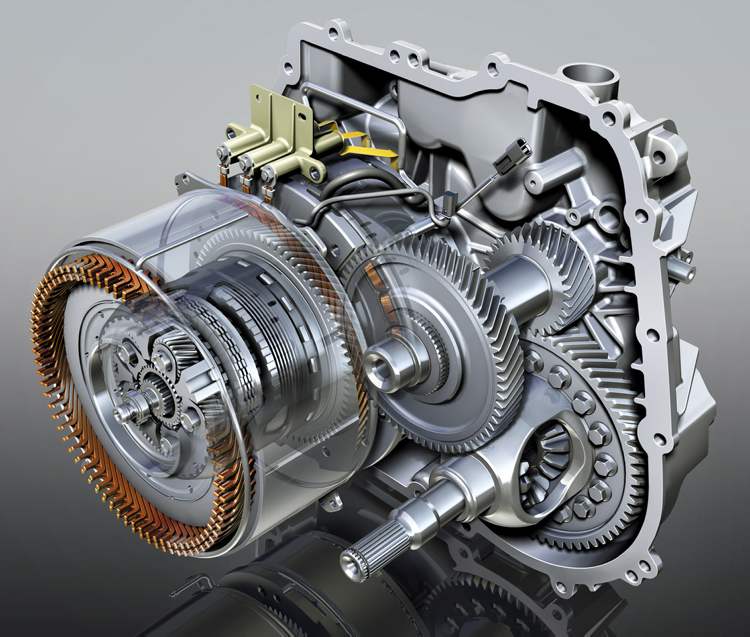
First of all, it’s a direct-driven full-function electric vehicle than can be plugged in to recharge the battery. But it’s also a flexible-series hybrid. A good example of a series hybrid would be a train locomotive. The train’s diesel engine drives a generator, and the power from that generator goes to an electric motor to turn the train wheels. The Voltec system also adds a battery, so that power can be stored from the generator to power the electric motor later.
Finally, the Voltec system can be a parallel hybrid, which means that both the gas engine on the car and the electric motor can be used to power the car at the same time. It’s this feature that has drawn the most controversy. Other manufacturers of hybrid vehicles, which all use a parallel power system, class the Volt powertrain as a hybrid instead of an electric vehicle, while GM continues to call the Volt an electric vehicle.
The truth is between these two but, after taking a look at how the Voltec system really works, it’s much closer to an electric vehicle than a parallel hybrid vehicle.
Several components make up the Voltec system. The lithium-ion battery fits into a T-shaped compartment in the floorpan and can supply 16 kilowatts of energy. In practical terms, the battery can supply a range of 40 to 80 kilometres, which is about the distance of many daily commutes.
Based on data from Volt customers, this means that about two-thirds of kilometers driven in the Volt are in electric-vehicle mode. The average Volt owner drives about 1,600 km between fill-ups and visits a gas station once a month. The average fuel economy is about two litres per 100 km.
Other parts of the Voltec system include two electric motors, a 1.4-litre gasoline engine and a transmission with one planetary gearset and three clutch packs. With this design, the system can operate in four different modes.
Mode 1 is Electric Drive, with power to move the vehicle coming from the electric traction motor. The vehicle is in full electric mode — the way it would operate in most of the time in the city.
In Mode 2, the electric generator motor is added into the power output through the planetary gearset. Although the vehicle can operate full range on only one electric motor, adding the second one improves efficiency at highway speeds. Again, the vehicle is operating as an electric vehicle, but this mode is used more often for highway driving.
Mode 3 gives an extended drive range. When the battery pack becomes depleted, the gas engine starts up and turns the electric generator motor to recharge the battery pack. The vehicle is propelled by the electric traction motor only, with power coming from the battery pack as the gas engine recharges it.
Finally, Mode 4 engages clutches in the transmission so that the gas engine can help the electric traction motor propel the car, while also using the electric generator motor to produce additional power to be stored in the battery pack.
Most driving would occur in Mode 1 or 2, which means that plugging in the Volt to recharge the battery every night could save considerable money at the gas pumps. When you need to travel longer distances beyond the battery capacity, the system would operate in mode 3 or 4, depending on the power requirements to move the car.
So, why is the Voltec Propulsion system worthy of the Best New Technology award? This powertrain design offers fuel economy for urban drivers while providing an extended range when needed. It doesn’t matter whether you call it a plug-in electric, a hybrid or whatever — the Volt with the Voltec system is innovative and offers a glimpse of a future that will enable drivers to travelling while coping with high fuel prices and tougher emission restrictions.
Jim Kerr is an experienced mechanic, instructor and member of the Automobile Journalists’ Association of Canada.