

Engine noise grows louder as Sunfire speeds up
Advertisement
Read this article for free:
or
Already have an account? Log in here »
To continue reading, please subscribe:
Digital Subscription
One year of digital access for only $1.44 a week*
- Enjoy unlimited reading on winnipegfreepress.com
- Read the E-Edition, our digital replica newspaper
- Access News Break, our award-winning app
- Play interactive puzzles
*Billed as $5.77 plus GST every four weeks. After 52 weeks, price increases to the regular rate of $19.95 plus GST every four weeks. Offer available to new and qualified returning subscribers only. Cancel any time.
To continue reading, please subscribe:
Add Free Press access to your Brandon Sun subscription for only an additional
$1 for the first 4 weeks*
- Enjoy unlimited reading on winnipegfreepress.com
- Read the E-Edition, our digital replica newspaper
- Access News Break, our award-winning app
- Play interactive puzzles
*Your next Brandon Sun subscription payment will increase by $1.00 and you will be charged $17.95 plus GST for four weeks. After four weeks, your payment will increase to $24.95 plus GST every four weeks.
Read unlimited articles for free today:
or
Already have an account? Log in here »
Hey there, time traveller!
This article was published 09/12/2016 (3461 days ago), so information in it may no longer be current.
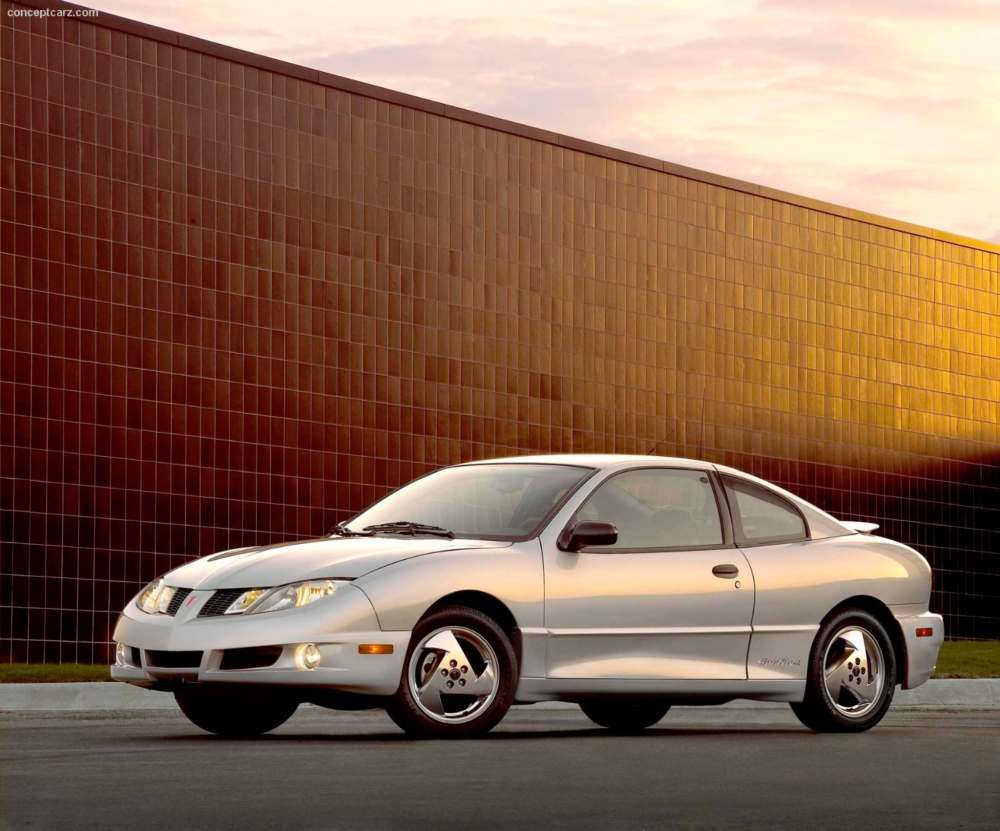
Question: I have a 2004 Sunfire with 220,000 kilometres. I have a quiet engine until I hit 65 kilometres per hour. From 65 to 100 km/h the engine loudness increases dramatically. What are possible causes? — Doug
Answer: This is an unusual question and symptom, but let’s look at possible causes. Noise from the engine compartment could be caused by the engine or the transaxle. You don’t say what the noise sounds like so it could be either. Engine air intake noise can be very loud on some vehicles and it typically sounds like air rushing or a roar.
Normally, the noise is damped by the air cleaner housing and air filter, but if there is a crack in the air intake ductwork from the air filter housing to the engine intake manifold, it is possible that at larger airflow volumes the ductwork is getting pulled open and you are hearing air rushing into the engine. Physically inspect the air intake ductwork for cracks, looseness or other damage.
The noise could be coming from the exhaust. Normally, the exhaust sounds get increasingly louder as you step on the throttle and become quiet when you are decelerating. It is unusual for it to change suddenly at a certain speed, so I don’t think the problem is here.
Mechanical noise from the engine changes more directly with engine speed than vehicle speed. Heavy or deep knocking sounds can be caused by bearing and piston problems. Light ticking sounds are caused more by valve train issues. For the noise to change dramatically, it could be possible for there to be a change in oil pressure and parts are not getting enough lubrication. If the noise sounds mechanical, I would check the oil pressure with a mechanical gauge before investigating further.
Transmissions and transaxles can make many sounds, from a whining sound of gears running against each other to ticking, clunks and bangs. Because of your description, I am wondering if the problem occurs when it shifts into a specific gear, for example fourth gear at 65 km/h. Try manually shifting the transmission into a lower gear to see if the noise goes away.
If it does, then I would suspect you have internal transmission problems. When a transmission starts making loud mechanical noises, then it is common to find metal particles inside from failed parts. For your vintage of car, it would likely be cheaper to find a good used transaxle rather than have your current one repaired.
Question: I recently bought a new Kia Forte5 with the 1.6 litre turbocharged engine. My friend, who has been driving diesel trucks for decades, tells me I need to idle the engine for several minutes before I turn it off, otherwise I will damage the turbocharger. They didn’t say anything at the dealership. What do you think? — Doreen
Answer: Your friend was correct for turbocharged engines built several decades ago and idling the engine for a while will not do any harm, but it isn’t necessary in most situations. The turbocharger is an exhaust-driven air compressor that forces additional air into the engine when more power is requested. It may be turning at 20,000 r.p.m. at idle and may go even to 120,000 r.p.m. under full load. The shaft between the driven and drive wheels is lubricated by engine oil and operates under extreme temperatures because of the closeness to the exhaust gases. When you turn the engine off, the lubricating oil stops flowing, but the turbocharger is still spinning and, in the past, damage could occur to the shaft bearings.
Designs have improved. Better oils, better cooling for the turbocharger (many are cooled by coolant from the engine), lower under hood heat and better engine design that only speeds up the turbocharger when power is needed have all helped to increase turbocharger life. It is no longer necessary to idle the engine for a time period so the turbocharger can cool down before turning it off. If you were on the race track, or pulling a heavy trailer up hills where the turbocharger is working hard and getting very hot, I would recommend idling for a couple minutes before turning the engine off, but these are far from typical driving conditions for your vehicle.

james.kerr@sasktel.net