

Prius still sets the standard
Advertisement
Read this article for free:
or
Already have an account? Log in here »
To continue reading, please subscribe:
Monthly Digital Subscription
$1 per week for 24 weeks*
- Enjoy unlimited reading on winnipegfreepress.com
- Read the E-Edition, our digital replica newspaper
- Access News Break, our award-winning app
- Play interactive puzzles
*Billed as $4.00 plus GST every four weeks. After 24 weeks, price increases to the regular rate of $19.95 plus GST every four weeks. Offer available to new and qualified returning subscribers only. Cancel any time.
Monthly Digital Subscription
$4.99/week*
- Enjoy unlimited reading on winnipegfreepress.com
- Read the E-Edition, our digital replica newspaper
- Access News Break, our award-winning app
- Play interactive puzzles
*Billed as $19.95 plus GST every four weeks. Cancel any time.
To continue reading, please subscribe:
Add Free Press access to your Brandon Sun subscription for only an additional
$1 for the first 4 weeks*
*Your next subscription payment will increase by $1.00 and you will be charged $16.99 plus GST for four weeks. After four weeks, your payment will increase to $23.99 plus GST every four weeks.
Read unlimited articles for free today:
or
Already have an account? Log in here »
Hey there, time traveller!
This article was published 30/06/2017 (3206 days ago), so information in it may no longer be current.
I was able to drive two state-of-the-art hybrid cars recently and had the opportunity to compare them. They were the Toyota Prius C and the Hyundai Ioniq.
The Prius is the hybrid vehicle I use as the standard by which to judge other hybrids. With more than a million Priuses on the road since their introduction in 1997, the iconic teardrop shape has grown to symbolize hybrid vehicles for the motoring public. The Prius has grown from just one model to now include The Prius V (a little larger wagon version) and the Prius C, which is a compact (and I think sporty) version of the Prius. All three models use the same style powertrain, but the Prius C has a smaller 1.5-litre gasoline engine compared to the 1.8-litre engine in the other models. I am using the compact Prius C in this comparison.
Also joining the lineup is the Prius Prime, which is a plug-in hybrid model. Plug-in hybrids have bigger battery capacity and operate longer on electric power.
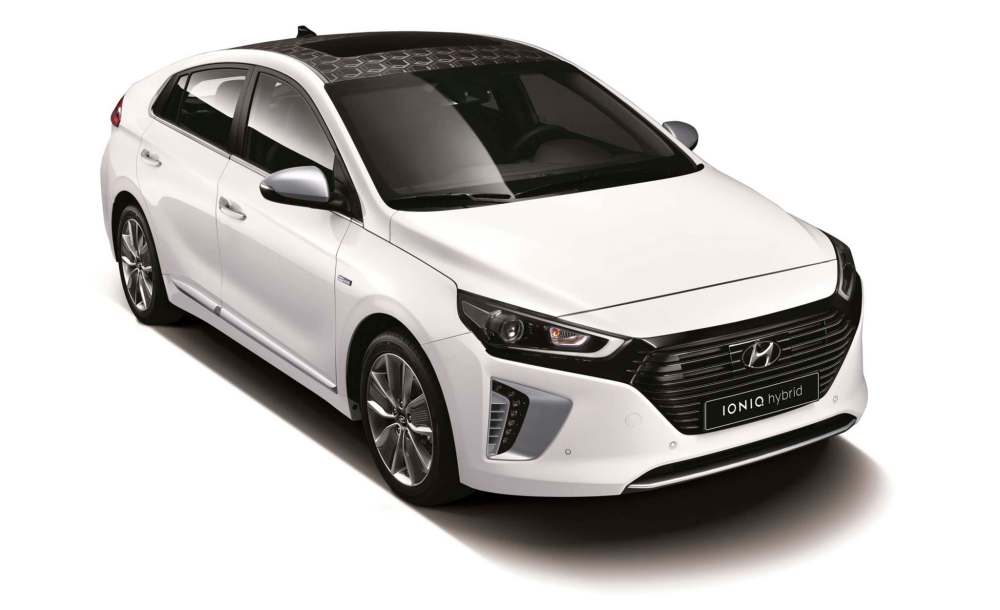
New to the market is Hyundai’s Ioniq. The Ioniq Blue was the hybrid model I tested and Hyundai has announced that a plug-in model and pure electric model of the car will be offered later this year.
So let’s see how the Ioniq compares to the Prius C. The Ioniq uses a 1.6-litre gasoline direct injection four cylinder engine while the Prius C has a 1.5-litre four cylinder engine. Toyota uses the Atkinson cycle design for its hybrid gas engines, which has modified valve timing to reduce the parasitic drag on the engine caused by trying to pull air in when the throttle valve is mostly closed. The Atkinson cycle design improves fuel economy but decreases low r.p.m. torque. Which isn’t a problem on hybrids because electric motors have strong torque at low r.p.m.
Another difference between them is battery power. The Ioniq uses a lithium-ion type of battery while the Prius C uses a nickel-metal hydride battery. Lithium-ion batteries can store a lot of energy and release it quickly.
It shows in the Ioniq’s quicker acceleration and the capability to operate the vehicle up to a maximum of 120 km/h on battery power alone (I was only able to get to 80 km/h on just battery power). The Prius, with its nickel-metal hydride batteries, will operate on electric power at low speeds in stop-and-go traffic. As soon as speeds increase, the gasoline engine will cut in. The Prius does have the advantage of dependability, with battery life that commonly exceeds 10 years in everyday driving.
Another difference is in the transmission. The Ioniq incorporates a dual-clutch six-speed automatic transmission between the hybrid powertrain and the wheels, which gives it excellent acceleration and performance. The Prius C employs an electric continuously variable transmission, which uses the main electric motor as a means of propulsion and regenerative power. A second electric motor operating through a planetary gearset can vary the gear ratio by both the speed and direction of operation of the gearset. It is a compact unit and works well but is accompanied by some gear noise on deceleration.
Given just the performance of the vehicles, I would give the Ioniq an edge over the Prius C, but there is more to owning a vehicle than just performance. I found the Prius C has a better display of hybrid operation on the dash and it was easier to access with the touch sensor steering wheel controls. Fuel economy is similar, with Transport Canada figures giving a slight edge to the Ioniq, but both are close and will save you money.
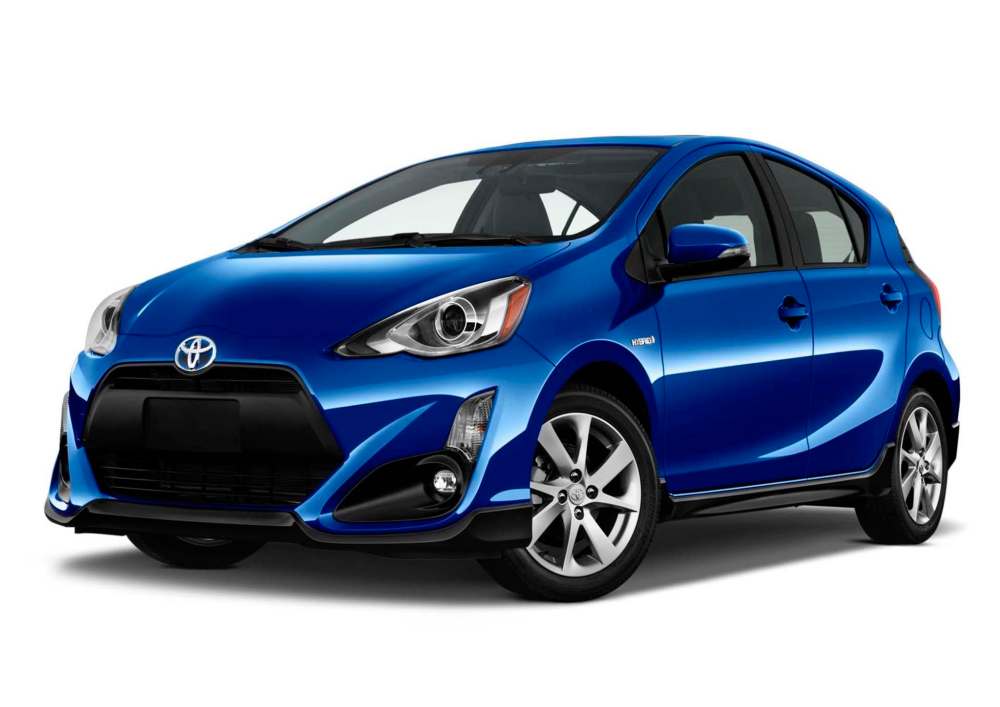
The final verdict: Prius still sets the standard to judge other hybrids, but others have caught up and are improving quickly. The Ioniq is a great performing hybrid and I would be happy to have either in my driveway.
jame.kerr@sasktel.net