Synthetic oil offers best engine protection
Shell at forefront of lubrication technology
Advertisement
Read this article for free:
or
Already have an account? Log in here »
To continue reading, please subscribe:

Digital Subscription
One year of digital access for only $205*
- Enjoy unlimited reading on winnipegfreepress.com
- Read the E-Edition, our digital replica newspaper
- Access News Break, our award-winning app
- Play interactive puzzles
*First annual payment billed as $205.00 + GST for one year. This annual subscription will automatically renew at $233.00 + GST every 52 weeks (10% off the regular annual price of $259.35). Offer available to new and qualified returning subscribers only. Cancel any time.
To continue reading, please subscribe:
Add Free Press access to your Brandon Sun subscription for only an additional
$1 for the first 4 weeks*
- Enjoy unlimited reading on winnipegfreepress.com
- Read the E-Edition, our digital replica newspaper
- Access News Break, our award-winning app
- Play interactive puzzles
*Your next Brandon Sun subscription payment will increase by $1.00 and you will be charged $17.95 plus GST for four weeks. After four weeks, your payment will increase to $24.95 plus GST every four weeks.
Read unlimited articles for free today:
or
Already have an account? Log in here »
Hey there, time traveller!
This article was published 29/06/2018 (2994 days ago), so information in it may no longer be current.
Without lubrication, our vehicle’s moving parts would soon grind to a halt. We seldom give much thought to the importance of things like our engine oil, but fortunately there are teams of engineers working to make oil even better. One of those teams is Shell, and the company has been working for many years to bring the best in synthetic engine oil to the market. It comes under the Pennzoil brand and has PurePlus technology.
Most motor oil starts with crude oil pumped from the ground. Impurities are removed and additives mixed in to provide the finished product. Shell scientists started with a whole different concept. They are producing synthetic oil from natural gas, and the result is a base oil stock that is 99.5 per cent pure, hence the name PurePlus.
The concept of taking a vapour such as natural gas and changing it into a liquid oil may seem difficult, but you can compare it to how water vapour in the air condenses on the outside of a cold glass of liquid, although producing the oil is much more complex.
The first step is to mix oxygen with the methane in the natural gas to make a synthetic gas. This gas is then fed through a reactor and converted to a liquid called syncrude. The syncrude then goes to a hydrocracker which passes the liquid through several different catalytic converters to break down the molecules and form new ones. These new molecules are distilled into gas-to-liquid (GTL) products which form the base oil. Simple, huh?
Part of the magic (or science, if you prefer) in this process is how the new molecules are formed. The molecules are 99.5 per cent pure and can be combined in the process to form complex molecular chains. These long chains form the basis for the synthetic oil that flows between moving parts in our engines to prevent metal-to-metal contact, which is what wears out an engine. Long and strong molecular chains protect better than the molecular chains found in conventional oils. This base-stock synthetic oil is as clear as water and flows like water, so it is excellent at flowing in cold-weather engine starts to protect moving parts.
Oil does more than just lubricate. It also cools parts and cleans contaminants from the engine. The low viscosity of the oil (ability to flow easily) helps transfer heat from engine parts to the outside of the engine. Other additives are mixed with the base oil, with the base oil forming about 75 to 80 per cent of the finished oil and the additive package making up the rest. The additives perform many functions, including cleaning parts, neutralizing acids, helping gaskets and seals to seal and reducing the foaming action of the oil as it is churned by moving parts.

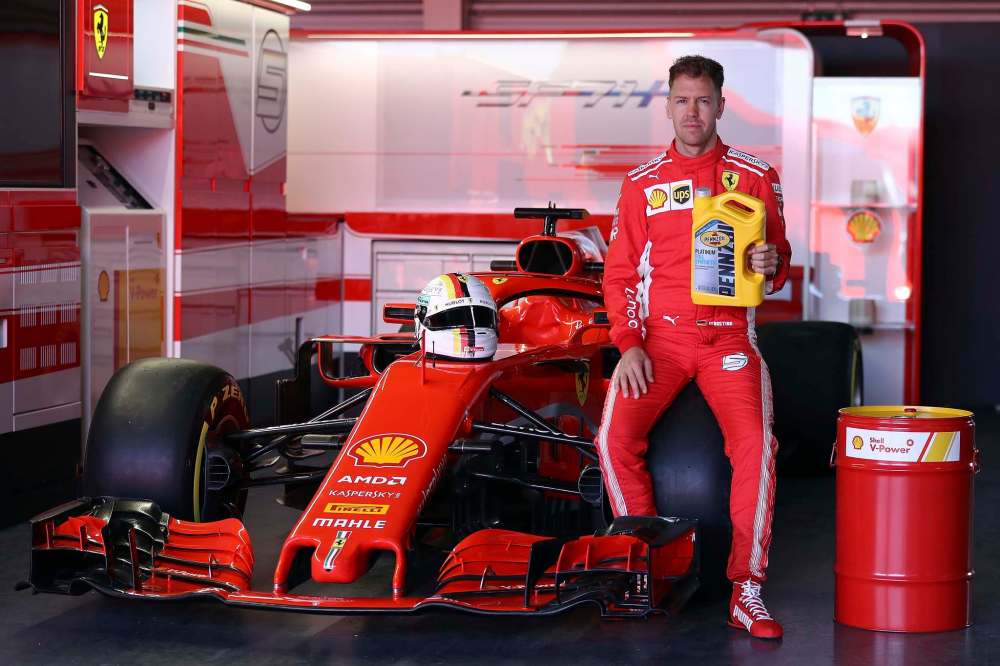
“To our knowledge, Shell is the only manufacturer to have produced base oils from natural gas on a commercial scale, and it’s exciting to pave the way for others to follow.” Dr. Richard Dixon, technology manager of Shell North America Motor Oil, said. Pennzoil Synthetic Motor Oils with PurePlus technology are the only lubricants recommended by Ferrari North America, and the race lubricant used by Scuderia Ferrari in their Formula 1 cars contains Shell PurePlus technology.
Canada is the fourth-largest producer of natural gas in the world, which is mostly used now to produce electricity and heat our buildings.
But with the technology developed by Shell, natural gas could supply the lubricants critical for everything that moves in our world, not just automobiles.
Shell is leading the future of synthetic oils with its Pennzoil PurePlus technology.
james.kerr@sasktel.net