The Chinese are coming… or are they?
Trade deal opens door to Chinese EVs, but appetite for adapting to Canadian regulations is unclear

Advertisement
Read this article for free:
or
Already have an account? Log in here »
To continue reading, please subscribe:

Digital Subscription
One year of digital access for only $205*
- Enjoy unlimited reading on winnipegfreepress.com
- Read the E-Edition, our digital replica newspaper
- Access News Break, our award-winning app
- Play interactive puzzles
*First annual payment billed as $205.00 + GST for one year. This annual subscription will automatically renew at $233.00 + GST every 52 weeks (10% off the regular annual price of $259.35). Offer available to new and qualified returning subscribers only. Cancel any time.
To continue reading, please subscribe:
Add Free Press access to your Brandon Sun subscription for only an additional
$1 for the first 4 weeks*
- Enjoy unlimited reading on winnipegfreepress.com
- Read the E-Edition, our digital replica newspaper
- Access News Break, our award-winning app
- Play interactive puzzles
*Your next Brandon Sun subscription payment will increase by $1.00 and you will be charged $17.95 plus GST for four weeks. After four weeks, your payment will increase to $24.95 plus GST every four weeks.
Read unlimited articles for free today:
or
Already have an account? Log in here »
Hey there, time traveller!
This article was published 23/01/2026 (259 days ago), so information in it may no longer be current.
When Canada opens the door to Chinese EVs, expect a trickle, not a flood.
The limit is 49,000 for the first year, or 2.6 per cent of Canada’s total market (1.9 million vehicles sold), so don’t expect to see Chinese EVs dominating local dealer lots anytime soon. If those vehicles were distributed equally to Canada’s 3,783 dealerships, that’s 12 each.
A lot must happen before the first Chinese EV arrives: Canada has committed to working with manufacturers for certification to Canadian safety standards, but that won’t be immediate and will be expensive.
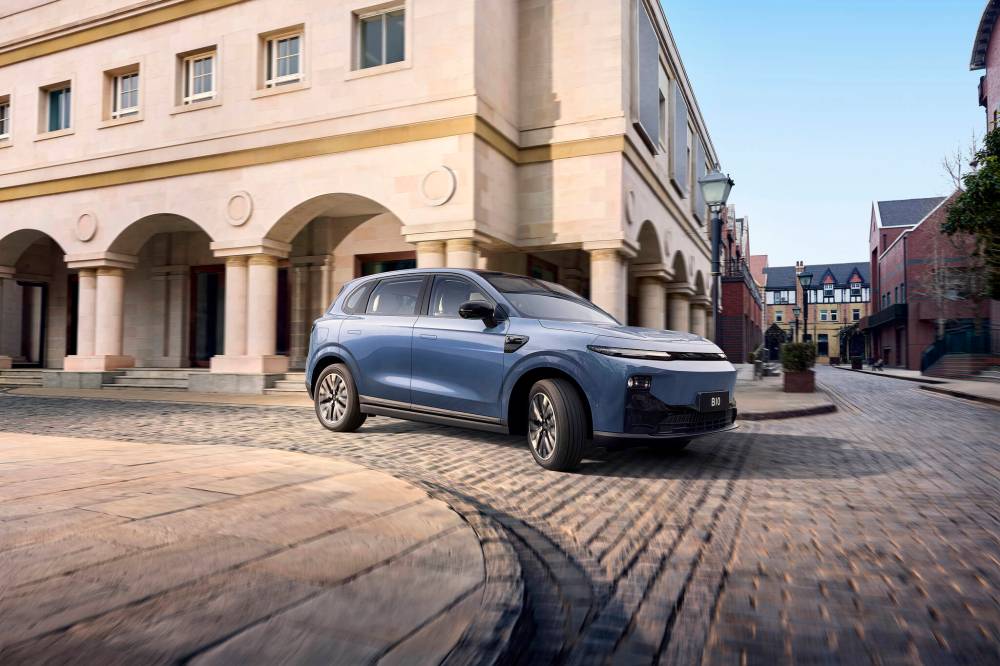
Supplied
The Leapmotor B10, if it comes to Canada, would arrive to an established dealer network. Leapmotor is affiliated with Stellantis, which has 440 dealerships.
Assuming this opens the door to vehicles we haven’t seen yet — the Volvo EX30 is built in China, as are some Teslas and Hyundais — the brand with the most interesting prospects might be Leapmotor. It already has an extensive dealership network in Canada: it only needs to add its name beside signs for Dodge, Ram, Chrysler and Fiat. Leapmotor is associated with the current owner of those brands, Stellantis, which has 440 dealerships in Canada.
As a crossover, the Leapmotor B10 speaks to a core segment of Canadian buyers. It features a 56 kwh or 68 kwh battery, accepts 170 kw DC fast charging and claims a range of 450 km. Starting at AUD$38,990 in Australia (chosen for comparison due to the similarities in currency and market), it could well hit the market in Canada at Prime Minister Mark Carney’s target price for half of the Chinese EVs of $35,000.
Reviewers in other markets noted mediocre driving dynamics and cheap-feeling interior pieces, but considering the people who shelled out for Ladas and Yugos, such complaints may not be deal-breakers.
Perhaps the leader in EV technology is BYD, which is using lithium-iron-phosphate (LFP) battery chemistry and a unique blade design for the cells: the LFP cells survived the infamous nail-puncture test, which typically causes nickel-magnesium-cobalt batteries to erupt into a massive fireball. The LFP blade battery trades some capacity for greater safety, as it’s considered far less likely to experience thermal runaway, which also creates massive fireballs even when not triggered by damage.
The BYD Atto3 or Atto1 may be the most interesting: they’re smaller crossovers but with less range than the Leapmotor B10.
How’s this for an interesting Chinese brand? MG. Yes, that MG, the brand that launched the compact roadster segment when it was British but is now owned by Shanghai Automotive Group. Its MG4 is a sharp-looking compact crossover available with rear- and all-wheel drive. It offers 450 km of range and in Australia is priced between AUD$36,000 and AUD$57,000. (C$33,000 and C$53,000).
There will be an adjustment period for Canadian drivers: many of the Chinese EVs are rear-wheel drive, but many of those are also rear-engine models. With the 50:50 weight distribution many Chinese EVs claim, the driven end may not be as relevant in winter as it was for the V-8 engine, front-heavy cars of the 1960s and 70s. Still, some models are available in all-wheel drive but are likely to hit the market in Canada at about the $50,000 level.
Another possibility are some Chinese plug-in hybrids, such as the Jaecoo 7. As a plug-in, it claims 90 km of EV range before the gas motor kicks in. Such would mean, as it does for other PHEVs on the road, that most Canadians’ daily drives would be in pure EV mode. As a PHEV, it retails for AUD$47,990 in Australia, or C$44,820.
Size is going to be another consideration. The MG4 may look like a crossover, but it’s actually smaller than a Nissan Leaf.
The Jaecoo 7, in contrast, is about the same size as a BMW X5, so more closely matches its size to what Canadian buyers expect.
What impact a trickle of Chinese EVs may have on pricing on other EVs sold in Canada is unknown. The models sold here now are on pretty thin margins as it is: how much pencil-sharpening is possible is up for debate.
“Introducing some entry-level EVs to the market will help Canadian buyers who see so few choices in this price range,” said Sam Fiorani, vice-president, global vehicle forecasting, for AutoForecast Solutions. “If the existing players want to keep Chinese brands from taking over, they’ll need to compete on price and technology. If they’re not ready, the Chinese will be.”
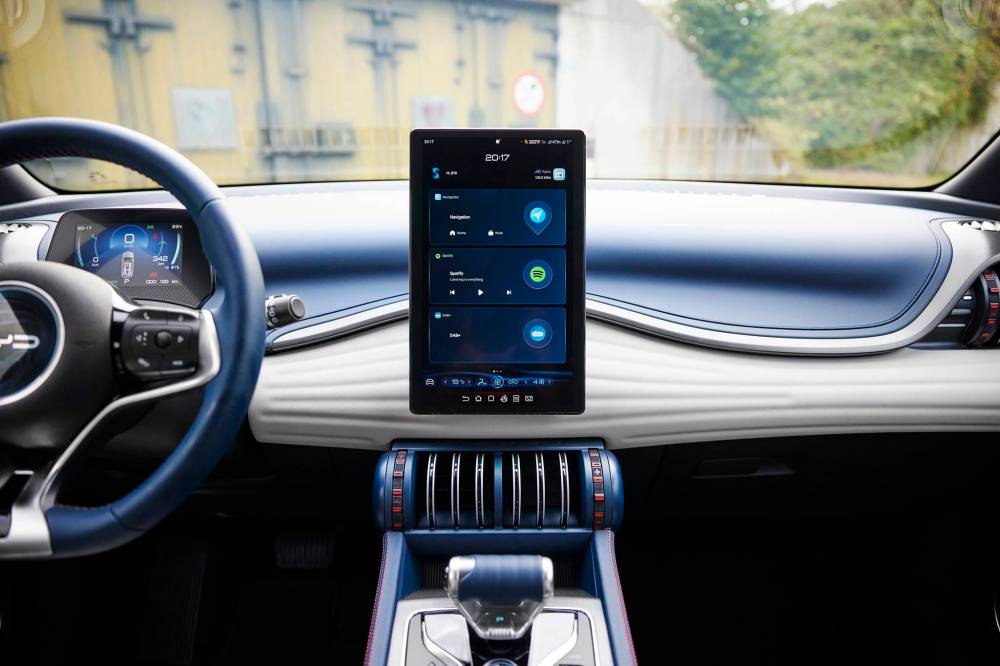
By comparison, the Nissan Leaf starts at C$45,000 and the Chevrolet Bolt, which returns later this year for the 2027 model year, is expected to start at C$39,999.
Fiorani expects local production of Chinese EVs is not far behind. He told Automotive News Canada earlier this month that Canada has been on China’s radar “for some time.” Such announcements, if they come, are unlikely before signatures are on a renewed Canada-U.S.-Mexico Agreement, he said.
“The added competition will put downward pressure on pricing and make more vehicles available to the buyers who can’t afford the C$63,000 average price today.”
Reaction to the trade deal was swift and in some cases severe.

“That is a horrific mistake,” Ontario Minister of Economic Development Vic Fedeli told Bay Today, a North Bay, Ont., newspaper. “Bringing in cars that are made with no environmental concerns, cars that are made with no employment standards.”
Global Automakers of Canada, which may well represent any Chinese automakers that do enter Canada, expressed “cautious concern” about the deal.
“Our members are concerned that this announcement just adds one more piece of uncertainty into a highly uncertain environment for the automotive industry with a myriad of other issues impacting the operations of all manufacturers and distributors in Canada,” said David Adams, president, in a news release.
More important, the news release suggests, would be providing clarity on the federal government’s plans to mandate 100 per cent new-car sales of EVs by 2035, which Global Automakers of Canada, the Canadian Automobile Dealers Association and Canadian Vehicle Manufacturers Association have all labelled as unachievable given current EV adoption rates.
kelly.taylor@freepress.mb.ca
Kelly Taylor
Copy Editor, Autos Reporter
Kelly Taylor is a copy editor and award-winning automotive journalist, and he writes the Free Press‘s Business Weekly newsletter. Kelly got his start in journalism in 1988 at the Winnipeg Sun, straight out of the creative communications program at RRC Polytech (then Red River Community College). A detour to the Brandon Sun for eight months led to the Winnipeg Free Press in 1989. Read more about Kelly.
Every piece of reporting Kelly produces is reviewed by an editing team before it is posted online or published in print — part of the Free Press‘s tradition, since 1872, of producing reliable independent journalism. Read more about Free Press’s history and mandate, and learn how our newsroom operates.
Our newsroom depends on a growing audience of readers to power our journalism. If you are not a paid reader, please consider becoming a subscriber.
Our newsroom depends on its audience of readers to power our journalism. Thank you for your support.
Kelly Taylor
Copy Editor, Autos Reporter
Kelly Taylor is a copy editor and award-winning automotive journalist, and he writes the Free Press‘s Business Weekly newsletter. Kelly got his start in journalism in 1988 at the Winnipeg Sun, straight out of the creative communications program at RRC Polytech (then Red River Community College). A detour to the Brandon Sun for eight months led to the Winnipeg Free Press in 1989. Read more about Kelly.
Every piece of reporting Kelly produces is reviewed by an editing team before it is posted online or published in print — part of the Free Press‘s tradition, since 1872, of producing reliable independent journalism. Read more about Free Press’s history and mandate, and learn how our newsroom operates.
Our newsroom depends on a growing audience of readers to power our journalism. If you are not a paid reader, please consider becoming a subscriber.
Our newsroom depends on its audience of readers to power our journalism. Thank you for your support.
Related Articles
Chinese ambassador pitches new EVs as first step to new Canadian jobs, cheaper cars


Advertisement Advertise With Us
Advertisement Advertise With Us