BC study suggests there’s strong support for policies that encourage vaccination

Advertisement

Advertise with us

VANCOUVER - Most British Columbians support policies aimed at encouraging vaccinations, such as requiring parents to report their child's immunization status when they enter school, but punitive measures are less popular, a new study suggests.

Read this article for free:

or

Already have an account? Log in here »

To continue reading, please subscribe:

Subscribe and receive a limited-edition Free Press branded hat or tote.

Digital Subscription

One year of digital access for only $205*

  • Enjoy unlimited reading on winnipegfreepress.com
  • Read the E-Edition, our digital replica newspaper
  • Access News Break, our award-winning app
  • Play interactive puzzles

*First annual payment billed as $205.00 + GST for one year. This annual subscription will automatically renew at $233.00 + GST every 52 weeks (10% off the regular annual price of $259.35). Offer available to new and qualified returning subscribers only. Cancel any time.

To continue reading, please subscribe:

Add Free Press access to your Brandon Sun subscription for only an additional

$1 for the first 4 weeks*

  • Enjoy unlimited reading on winnipegfreepress.com
  • Read the E-Edition, our digital replica newspaper
  • Access News Break, our award-winning app
  • Play interactive puzzles
Start now

*Your next Brandon Sun subscription payment will increase by $1.00 and you will be charged $17.95 plus GST for four weeks. After four weeks, your payment will increase to $24.95 plus GST every four weeks.

Hey there, time traveller!
This article was published 23/04/2019 (2655 days ago), so information in it may no longer be current.

VANCOUVER – Most British Columbians support policies aimed at encouraging vaccinations, such as requiring parents to report their child’s immunization status when they enter school, but punitive measures are less popular, a new study suggests.

Lead author Julie Bettinger, an investigator with the Vaccine Evaluation Centre at BC Children’s Hospital, said governments across Canada would benefit from seeking input on attitudes toward vaccine-preventable diseases before implementing policies that could backfire.

Ontario and New Brunswick are the only provinces requiring proof of vaccination for school entry, though both allow exemptions for medical, philosophical or religious reasons.

In response to a recent increase in the number of measles cases in British Columbia, the province has indicated it will make it mandatory for parents to report their child’s immunization record starting in September, but the measure will not require children to be vaccinated in order to attend school.

More than 80 per cent of 1,300 people surveyed online in April 2017 were in favour of such a policy being adopted in B.C., Bettinger said of the study that was published Wednesday in CMAJ Open and includes a subset of about 300 parents with young children. About 42 per cent of respondents had no children.

Less than 40 per cent of those surveyed supported penalties, Bettinger said, noting that could include fines like those introduced in Italy, where parents may risk paying up to 500 euros, or about $750, if they don’t provide a doctor’s note showing their children received 10 compulsory vaccines before starting school.

The policy in Italy is based on a law enacted in 2017 following a measles outbreak and means children up to age six could be banned from attending school if they are not vaccinated against the highly contagious viral illness that spreads through the air by coughing and sneezing.

Parents and younger survey responders, even if they did not have children, favoured rewards such as a tax break or credit if kids received all age-recommended vaccinations, Bettinger said.

“Interestingly enough, they were less likely to support the idea of banning children, who were not immunized, from school,” she said.

“Ideally, these types of results would encourage others in some of our other provinces to find out what people think there as well and if they’re really interested in seeing immunization rates increase, implement policies that are acceptable to the majority of people,” she said, adding that would prevent backlash such as in Italy and elsewhere.

Legislators in Washington state passed a bill last week removing personal belief from a list of exemptions parents have used to shun immunizing their children. Medical and religious exemptions could still be used.

In neighbouring British Columbia, an increase in the number of measles cases to 27 since February prompted Health Minister Adrian Dix to launch a three-month measles immunization catch-up drive this month for children in kindergarten to Grade 12 as the province aims to ensure they have up-to-date vaccinations. The first is provided at age one, followed by the second between the ages of four and six.

“All of this will assist us in the fall when we bring in the mandatory registration program for all schools, both public and independent,” Dix said, adding his ministry will provide more details next month to ensure parents have the information they need to get their children vaccinated.

“What I want to make sure is that we don’t just have a short-term increase,” Dix said of vaccination rates, adding 82 per cent of seven-year-olds in B.C. were vaccinated against measles in 2018, down from 90 per cent in 2014, following 342 cases of the disease.

“It’s a sustained approach to raise the rates,” he said of the catch-up campaign, adding the government will report monthly statistics on the number of children who have been immunized, starting in the first week of May, and those numbers will provide some information on the public’s attitude toward vaccination.

Symptoms of measles include fever, cough, runny nose and a rash that starts on the face and spreads to the chest. If the disease is not treated early enough, complications such as pneumonia and hearing loss can result in children.

Measles was declared eradicated in Canada 1998 but there is no national immunization registry as the disease makes a comeback, sometimes spread by those who have travelled elsewhere, including Vietnam, the Philippines and the Washington state area, Dix said of some of British Columbia’s recent cases.

— Follow @CamilleBains1 on Twitter.
Report Error Submit a Tip

More Stories

Saying goodbye to a friend I never met

Pam Frampton 5 minute read Preview

Saying goodbye to a friend I never met

Pam Frampton 5 minute read Yesterday at 2:00 AM CDT

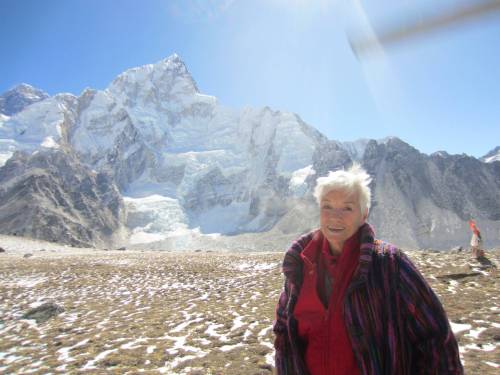
Hedie Epp and I first connected over a column I wrote in October 2023 about my mother’s dementia. Now I find myself awash in sadness for the loss of this person I will never get to meet.

Read
Yesterday at 2:00 AM CDT

Leave lonely lake life and get back to busy

Maureen Scurfield 4 minute read Yesterday at 2:00 AM CDT

DEAR MISS LONELYHEARTS: I’m going crazy! My husband and I are living up at a lake for the first summer after buying a beautiful new cabin. I thought it was going to be heaven, but it’s been hell for me.

I’m not retired, but I’m able to work at my office job remotely for the summer. The problem is, I’m already lonely and bored while my husband is out fishing. My man goes off in the boat with his buddies in the early morning, often for the whole day and the early evening, too. Now he says he’s “in fisherman’s heaven” with his retired buddies who go explore the many great angling lakes around us.

If it goes on all summer and into early fall, and I’ll be out of my mind by then. Most of the other guys’ wives stay back in the city now. They learned early on it’s a drag to be a fisherman’s “widow.”

I called my boss this morning after my husband left to go fishing. My manager says they’re really busy right now, and could use me there ASAP. Yay! I can come back to the office as soon as I want, but I feel guilty about leaving my husband alone. What should I do?

Bracket creep: A stealthy tax increase

Gage Haubrich 4 minute read Yesterday at 2:00 AM CDT

About $2,100. That’s how much Premier Wab Kinew’s bracket creep tax hike could cost your family by 2030, depending on how much you make.

Bracket creep is an income tax hike that happens when the government stops indexing tax brackets to inflation. That means that after getting a cost-of-living raise, taxpayers can be bumped into a new tax bracket and have their tax bill increased even though they can’t afford to buy more.

Think about it this way: A raise that only covers higher grocery prices isn’t a real raise. You’re not richer. Your cart costs the same. But the bigger number on your paycheque bumps you into a higher bracket. That means higher taxes on a paycheque that buys the exact same number of groceries as last year.

That’s why most provincial governments and the federal government adjust income tax brackets with inflation.

Girl pleads guilty to assaulting fellow student

Tessa Adamski 3 minute read Preview

Girl pleads guilty to assaulting fellow student

Tessa Adamski 3 minute read 2:01 AM CDT

BRANDON — A high school student who admitted to attacking another girl in the hallway says she is taking responsibility for her wrongdoing.

The 15-year-old, who can’t be named under the Youth Criminal Justice Act, pleaded guilty to assault in Brandon provincial court on Tuesday.

“I do feel terrible about what I did. I should not have done it. She’s a good person and she never deserved that,” the teen said.

On Feb. 9, the accused came up behind the girl near her locker at Vincent Massey school, pulled her hair and punched her in the head, according to an agreed statement of facts.

Read
2:01 AM CDT

Decision on corridor for Trans-Canada twinning near Ontario border expected this fall, province says

Chris Kitching 4 minute read Preview

Decision on corridor for Trans-Canada twinning near Ontario border expected this fall, province says

Chris Kitching 4 minute read Updated: Yesterday at 5:24 PM CDT

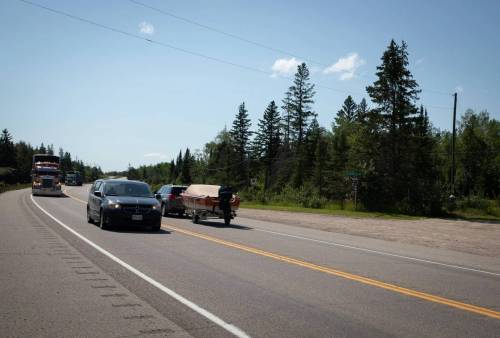
The Manitoba government is taking more time to evaluate and select a preferred corridor for the twinning of a 16-kilometre section of the Trans-Canada Highway near the Ontario boundary.

An earlier timeline indicated Manitoba Transportation and Infrastructure expected to choose an alignment by the fall of 2025. A provincial spokesperson told the Free Press on Monday a decision is expected this winter, but a different spokesperson said Wednesday a decision is expected this fall.

“The department continues to evaluate corridor alternatives and will undertake additional geotechnical, environmental and design work as part of the (functional design study) to support the selection of a preferred corridor,” the spokesperson said in a statement.

The study, which will include Crown-Indigenous and public consultation, is expected to be completed in late 2027, with a detailed design to follow.

Read
Updated: Yesterday at 5:24 PM CDT

South Osborne residents fail in bid to prevent construction of 131-unit apartment tower

Malak Abas 3 minute read Preview

South Osborne residents fail in bid to prevent construction of 131-unit apartment tower

Malak Abas 3 minute read Yesterday at 3:01 PM CDT

A proposed 10-storey highrise on an empty south Osborne lot will move forward despite concerns from residents about the impact the building will have on nearby parking and traffic.

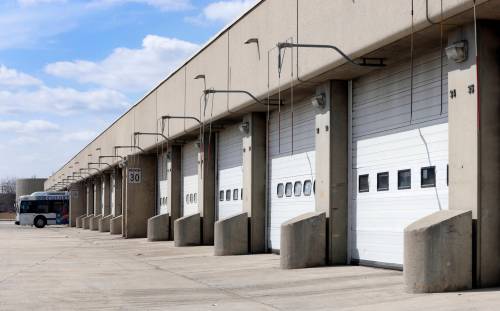
The city-owned lot at 425 Osborne St., which previously served as a gas station but has long sat vacant, will be developed into a mixed-use residential building with 131 units, 39 of which would be affordable, along with additional office space for the adjacent Winnipeg Transit garage and the Transit customer service centre across the street, along with a two-level parkade for tenants and Transit employees.

The property is being developed by the University of Winnipeg Community Renewal Corp. 2.0, and designed by Prairie Architects Inc.

At a meeting held by city council’s appeal committee Wednesday, several residents said while they supported the idea of more housing in the Lord Roberts neighbourhood, they had lingering concerns about the impact the development will have on the already-busy area.

Read
Yesterday at 3:01 PM CDT