California winery and Oregon meet to defuse labeling dispute
Advertisement
Read this article for free:
or
Already have an account? Log in here »
To continue reading, please subscribe:

Digital Subscription
One year of digital access for only $205*
- Enjoy unlimited reading on winnipegfreepress.com
- Read the E-Edition, our digital replica newspaper
- Access News Break, our award-winning app
- Play interactive puzzles
*First annual payment billed as $205.00 + GST for one year. This annual subscription will automatically renew at $233.00 + GST every 52 weeks (10% off the regular annual price of $259.35). Offer available to new and qualified returning subscribers only. Cancel any time.
To continue reading, please subscribe:
Add Free Press access to your Brandon Sun subscription for only an additional
$1 for the first 4 weeks*
- Enjoy unlimited reading on winnipegfreepress.com
- Read the E-Edition, our digital replica newspaper
- Access News Break, our award-winning app
- Play interactive puzzles
*Your next Brandon Sun subscription payment will increase by $1.00 and you will be charged $17.95 plus GST for four weeks. After four weeks, your payment will increase to $24.95 plus GST every four weeks.
Read unlimited articles for free today:
or
Already have an account? Log in here »
Hey there, time traveller!
This article was published 29/11/2018 (2817 days ago), so information in it may no longer be current.
SALEM, Ore. – Oregon regulators and a California winery accused of misrepresenting the Oregon origins of its bestselling pinot noir, an act which infuriated local winemakers, said Thursday after a preliminary meeting they’re hopeful they can resolve the dispute.
The owner and a vice-president of Napa Valley’s Copper Cane winery flew to Portland to meet Wednesday with the Oregon Liquor Control Commission Executive Director Steven Marks. The commission earlier found Copper Cane had committed seven violations with labeling and that it wants to revoke its ability to sell within Oregon.
Its pinot noir grapes are grown in three Oregon wine regions and trucked to California, where it is made into wine. At issue are labels on California winemaker Joe Wagner’s Elouan Pinot Noir and Willametter Journal wines that refer to Oregon’s winegrowing regions.
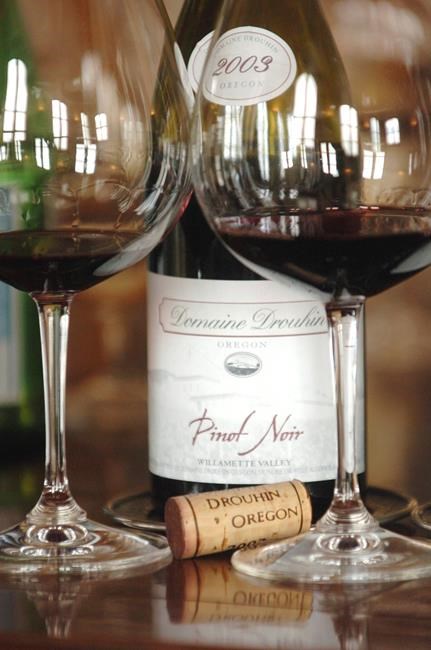
Also at issue: Copper Cane’s wine is more pronounced than the more nuanced and delicate pinot noirs produced in Oregon, and has cheaper prices. Local winemakers say Copper Cane’s Oregon-centric marketing is going to confuse consumers and erode a growing industry here.
Jim Blumling, Copper Cane’s vice-president of operations, said in a phone interview that he and Wagner had a “collaborative conversation” with Marks to come to an amicable solution.
State liquor commission spokesman Matthew VanSickle agreed, saying “overall, it was a good preliminary meeting.”
Copper Cane has a right to a hearing to dispute the charges and the proposed revocation of its ability to sell its products in Oregon, but must request to reserve this right by Dec. 20, which it hasn’t yet done.
Blumling said both the commission and Copper Cane want the winery to keep buying grapes from Oregon vineyards.
Rep. David Gomberg, a member of the Oregon Legislature and a critic of Copper Cane, said the winery is cutting into the “prestige” of Oregon pinot noir.
Last year, 120,000 cases of Copper cane’s Elouan wine — the vast majority being pinot noir — were sold nationwide, Blumling said. In comparison, 70 per cent of Oregon wineries produce fewer than 5,000 cases of wine per year, according to the Oregon Wine Board.
Oregon wineries also tend to charge more than other states, with the finicky pinot noir being the main seller.
Consumers recognize and are willing to pay for that premium quality, the Wine Industry Advisor, an online industry publication, recently noted.
Wagner’s Elouan and Willametter Journal wines refer in labels and shipping and display cartons to Oregon’s Willamette Valley, Rogue Valley and Umpqua Valley wine regions.
The Oregon liquor commission says only wines “finished” in Oregon can claim association with an Oregon wine region.
And a label may cite a wine region only if 95 per cent of the grapes are from that particular region, according to the Oregon Wine Board.
___
Follow Andrew Selsky on Twitter at https://twitter.com/andrewselsky