Manitoba asks Ottawa for clarity on pot legalization

Advertisement

Advertise with us

The government of Manitoba wants Ottawa to provide "further clarity" on how exactly it will support provinces in implementing Bill C-45, the Cannabis Act.

Read this article for free:


or

Already have an account? Log in here »

To continue reading, please subscribe:

Subscribe and receive a limited-edition Free Press branded hat or tote.

Digital Subscription

One year of digital access for only $205*

  • Enjoy unlimited reading on winnipegfreepress.com
  • Read the E-Edition, our digital replica newspaper
  • Access News Break, our award-winning app
  • Play interactive puzzles

*First annual payment billed as $205.00 + GST for one year. This annual subscription will automatically renew at $233.00 + GST every 52 weeks (10% off the regular annual price of $259.35). Offer available to new and qualified returning subscribers only. Cancel any time.

To continue reading, please subscribe:

Add Free Press access to your Brandon Sun subscription for only an additional

$1 for the first 4 weeks*

  • Enjoy unlimited reading on winnipegfreepress.com
  • Read the E-Edition, our digital replica newspaper
  • Access News Break, our award-winning app
  • Play interactive puzzles
Start now

*Your next Brandon Sun subscription payment will increase by $1.00 and you will be charged $17.95 plus GST for four weeks. After four weeks, your payment will increase to $24.95 plus GST every four weeks.

Hey there, time traveller!
This article was published 12/09/2017 (3292 days ago), so information in it may no longer be current.

The government of Manitoba wants Ottawa to provide “further clarity” on how exactly it will support provinces in implementing Bill C-45, the Cannabis Act.

In a Tuesday press release, Manitoba Justice Minister Heather Stefanson described cannabis legalization as “a significant shift in public policy with many challenges for the provinces and territories to address.”

Road safety is an area of particular concern, said Stefanson, who expects that topic to be front and centre when justice ministers from the federal, provincial, and territorial governments meet in Vancouver from Sept.13 to 15.
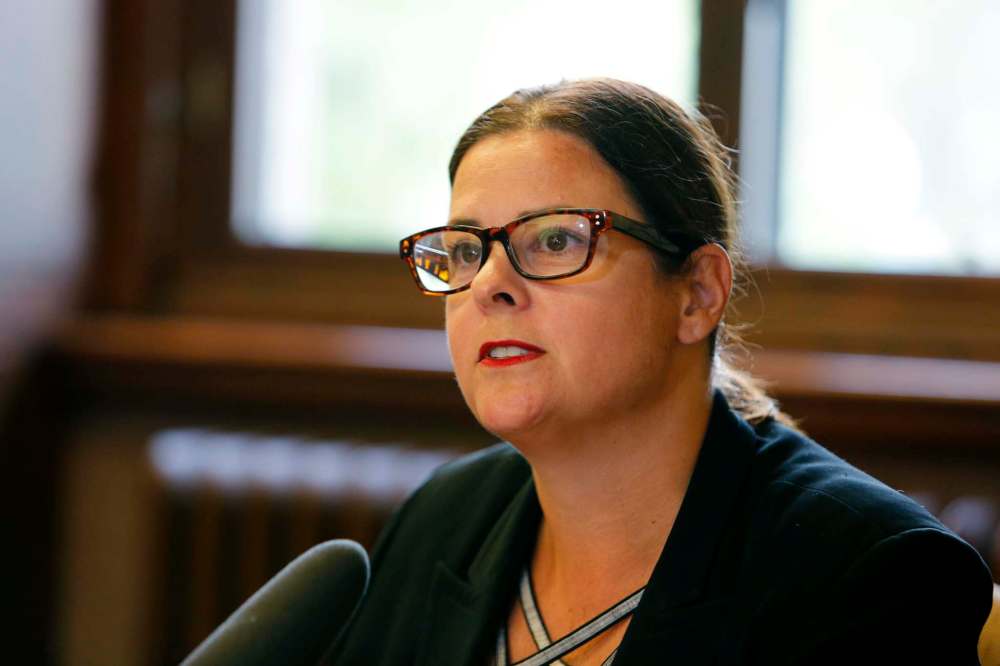
JUSTIN SAMANSKI-LANGILLE / WINNIPEG FREE PRESS
Provincial Justice Minister Heather Stefanson
JUSTIN SAMANSKI-LANGILLE / WINNIPEG FREE PRESS Provincial Justice Minister Heather Stefanson

Stefanson told the Free Press she’s particularly concerned about ensuring roadside testing devices are available to police officers, as well as ensuring proper training for police.

“And so I would fully agree with the Canadian Association of Chiefs of Police in their statement today that they would like to see a postponement of the date of legalization,” she said, referring to that organization’s Tuesday presentation to the House of Commons Standing Committee on Health, which is holding a weeklong hearing on Bill C-45. The police called for the federal government to consider postponing legalization in order to give law enforcement more time to prepare. Legalization of cannabis is currently scheduled to take place by July 2018.

Along with Alberta Justice Minister Kathleen Ganley, Stefanson is co-chair of a provincial-territorial working group exploring various aspects of cannabis legalization including drug-impaired driving, taxation, regulation, production and distribution.

That working group is due to present its findings to provincial and territorial premiers by November 1, according to Stefanson’s press secretary. The premiers will then decide whether to formally ask the federal government for a delay in legalization. Manitoba Premier Brian Pallister has previously called for legalization to be delayed by one year.

“Our primary concern regarding the legalization of marijuana is the health and safety of Manitobans,” said Stefanson in Tuesday’s press release.

“The federal government must recognize that rushing into something of this magnitude presents tremendous risks, which is why our working group will continue to seek clarity on federal support while provinces make progress on numerous policy areas related to Bill C-45.”

The government of Manitoba has not yet determined exactly how legalization will work in the province. An expression of interest that sought industry input on how to produce, distribute, and sell cannabis in Manitoba closed last Friday. The expression of interest drew “nearly 60 submissions,” which are now being evaluated by the Department of Growth, Enterprise and Trade, according to the press release.

solomon.israel@freepress.mb.ca

@sol_israel
Report Error Submit a Tip

More Stories

‘One of a kind’: CEO, philanthropist Doug Harvey dies at 72

Morgan Modjeski 5 minute read Preview

‘One of a kind’: CEO, philanthropist Doug Harvey dies at 72

Morgan Modjeski 5 minute read Updated: 12:57 PM CDT

Doug Harvey, a Winnipeg business titan and philanthropist, has died after battling cancer for more than a decade.

Harvey gave millions of dollars to Winnipeg organizations while he was CEO of DLH Group, a nationwide network of businesses that support heavy duty truck and trailer users.

Loren Remillard, CEO and president of the Winnipeg Chamber of Commerce, said the business community is mourning the loss of the influential businessman who helped shape Winnipeg.

“We are a transportation and logistics hub in Winnipeg and it was partly the result of geography, and a big part because of leaders and visionaries like Doug Harvey,” he said.

Read
Updated: 12:57 PM CDT

Puzzles Palace

1 minute read Monday, Jul. 27, 2026

To solve our puzzles, please subscribe with this special offer: |

Food literacy curriculum on the menu

Maggie Macintosh 5 minute read Preview

Food literacy curriculum on the menu

Maggie Macintosh 5 minute read Yesterday at 2:01 AM CDT

Manitoba has a new recipe for health class and “food literacy” is a key ingredient.

The in-class portion of phys-ed has historically involved lessons about puberty, the risks of consuming drugs and dissecting Canada’s food guide.

A new pilot program asks teachers to expand their nutrition units and include in-depth discussions about how everything from diet culture to food insecurity affects eating habits.

“This is really moving beyond a conception of food as only fuel, where you just boil down food to its calories, its vitamins,” said Sarah Elvins, a food historian at the University of Manitoba who researches popular culture and marketing.

Read
Yesterday at 2:01 AM CDT

Online fundraiser for ‘polite, modest farmer’ facing firearms charges sending message, neighbour says

Nicole Buffie 4 minute read Preview

Online fundraiser for ‘polite, modest farmer’ facing firearms charges sending message, neighbour says

Nicole Buffie 4 minute read Yesterday at 5:45 PM CDT

Thousands of dollars have been raised to help cover the legal fees of a Manitoba man charged after he allegedly fired a gun at thieves during a theft on his farm in August.

Read
Yesterday at 5:45 PM CDT

Bell network problem behind 90-minute overnight 911 outage in Manitoba, five other provinces

Chris Kitching 4 minute read Preview

Bell network problem behind 90-minute overnight 911 outage in Manitoba, five other provinces

Chris Kitching 4 minute read Updated: 1:19 PM CDT

A 911 outage that lasted about 90 minutes in Manitoba and other provinces Thursday morning was caused by a problem with Bell’s next-generation network amid concerns about recurring disruptions.

It’s not yet known how many Manitobans were unable to get through to 911 after the outage was detected at 2:13 a.m. Service was restored at 3:40 a.m., Bell spokeswoman Elise von Scheel said.

“We continue to investigate the root cause of the issue,” she wrote in an email.

A backup system was used during the disruption. Von Scheel said the “vast majority” of calls from Bell customers were immediately picked up by software and rerouted to 911 communications centres, or public safety answering points.

Read
Updated: 1:19 PM CDT

Winnipeg, police and downtown crime

Editorial 4 minute read Preview

Winnipeg, police and downtown crime

Editorial 4 minute read Yesterday at 2:01 AM CDT

A safer downtown is not much use if people are still afraid to walk there.

That is the uncomfortable message from Winnipeg’s latest police citizen survey, and one city council should take seriously.

Downtown crime has fallen this year, according to the most recent police statistics. Violent crime is down even more. But for most Winnipeggers, the downtown still feels like a place to avoid, particularly after dark.

Only 44 per cent of survey respondents said they feel very or reasonably safe walking alone downtown during the day. At night, that number plunges to just eight per cent. Among women, it is an appalling three per cent, compared with 14 per cent of men.

Read
Yesterday at 2:01 AM CDT